If you’re an American living in Croatia, or planning the move, you answer to two tax systems at once. Croatia taxes its residents on worldwide income. The US taxes its citizens wherever they live. The treaty meant to coordinate them is signed but not yet in force. Until the treaty enters into force, you should not assume that its reduced withholding rates, pension protections, or treaty tie-breaker rules are available to you.
In this guide I will help explain US-Croatia cross-border tax as it stands in October 2026: when you become resident, what you still file at home, how each income type is taxed, and where double taxation hides.
Hi, I am Prof. Dr. Stjepan Gadžo, a lawyer and partner at Mandracchio Capital d.o.o., as well as Vice-Dean for International Affairs and Professor of Financial Law at the University of Rijeka. At Mandracchio Capital, I work alongside a multidisciplinary team of over 8 legal, tax, and business experts, combining academic expertise with practical experience to support clients in navigating complex legal, tax, and cross-border business matters in Croatia.
If you want a broader overview of how Croatia taxes income earned abroad, see our guide to whether Croatia taxes foreign income. This article focuses specifically on the US–Croatia tax situation for American citizens living in or moving to Croatia.
US–Croatia cross-border tax at a glance
| Question | Short answer |
|---|---|
| Does Croatia tax my foreign income? | Yes, if you are a Croatian tax resident: all your worldwide income |
| Do I still file in the US? | Yes, every year, as a US citizen |
| Is there a US–Croatia tax treaty? | Signed in 2022, amended in 2026, not yet in force |
| How is double tax avoided today? | Through credits in each country’s own law |
| Is there a social security agreement? | No |
| Do the two countries share account data? | Yes, under an agreement in force since 2016 |
Who Needs to Understand US-Croatia Taxes?
This guide is for 3 groups:
- US citizens and green-card holders who live in Croatia or plan to move here. Both are taxed by the US on worldwide income.
- Americans who own property or investments in Croatia without living here full time.
- US employers sending American staff to Croatia, and the advisers who support them.
When Do You Become a Croatian Tax Resident?

Everything starts here. Croatian residents pay tax on their worldwide income, while non-residents pay only on income from Croatian sources.
You become a Croatian tax resident when you meet either of the core criteria under Article 38 of the Croatian General Tax Act, as administered by the Croatian Tax Administration (Porezna uprava)
Read our detailed guide to the main triggers for Croatian tax residency, including the 183-day rule, home-availability test and centre of vital interests.
The property trap for American homeowners
The home test doesn’t ask whether you live in the home. It asks whether you own or have real estate available for an uninterrupted 183 days in one or two calendar years. Whether you actually stay there doesn’t decide it.
Picture a retired couple from Ohio who buy a stone house on Brač. They spend June to August there, about 90 days, and lock it up the rest of the year. They see themselves as tourists. Under the home test, they can be Croatian tax residents, with their US pensions and brokerage income inside the Croatian net.
If you own property in Croatia, check your status before your first full year ends.
Croatian Tax Residency vs. Residence Permits
Americans can stay in Croatia for 90 days in any 180 without a visa. Longer stays need a permit. Croatia has no dedicated retirement permit. Temporary residence for other purposes runs for up to one year, and a new application is possible only six months after it expires. Remote workers can apply for the digital nomad permit, covered below.
Keep the two questions apart. A permit decides whether you may stay. The tax rules decide whether Croatia taxes you.
Dual Tax Residency and the Treaty Tie-Breaker Rules
Today, each country applies its own rules. The US taxes you as a citizen. Croatia taxes you as a resident. Most Americans who live in Croatia are therefore taxed by both, and relief comes from credits.
Once the treaty applies, it breaks the tie for treaty purposes. The order is a permanent home first, then the centre of your personal and economic relations, then where you habitually live, then nationality, and finally agreement between the two tax authorities.
One catch matters for every American: the saving clause. Even if the treaty assigns you to Croatia, the US keeps taxing you as a citizen. We explain this in the treaty section below.
US Tax Filing Requirements for Americans Living in Croatia
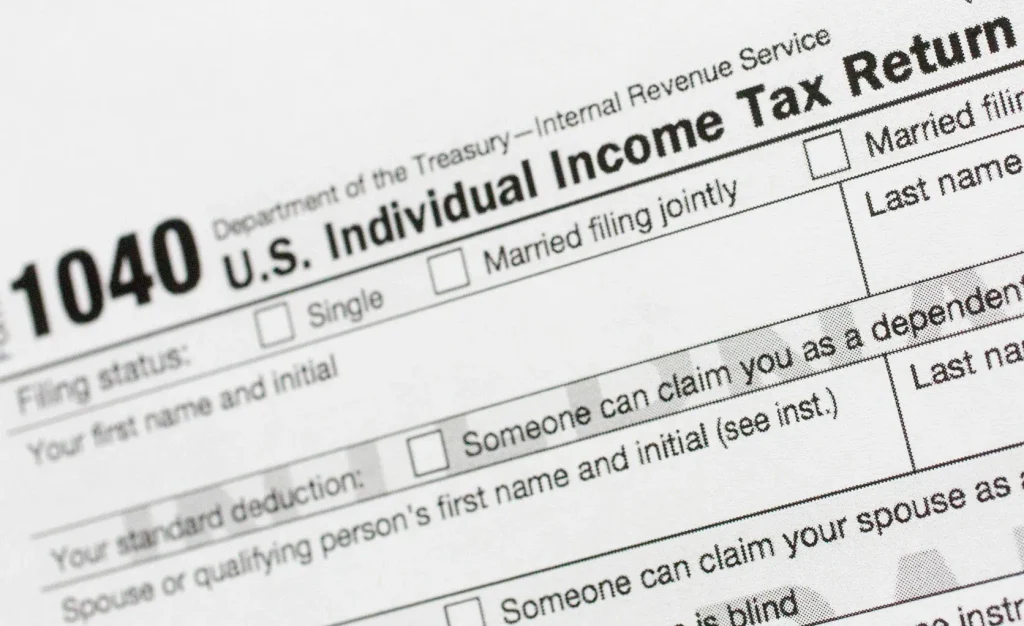
Citizenship-based taxation
Moving to Croatia changes where you live, not what you file. You still file a US federal return on your worldwide income every year. Croatia adds a second layer. It doesn’t replace the first.
The foreign earned income exclusion and the foreign tax credit
The US gives you two tools against double taxation. The foreign earned income exclusion lets you exclude up to $132,900 of foreign earned income for the 2026 tax year, if you meet the physical presence test or the bona fide residence test. The physical presence test requires 330 days abroad within 12 months. The exclusion covers earned income only: wages and self-employment income, not dividends or gains (source: U.S. House Office of the Law Revision Counsel – 26 U.S.C. § 911 and IRS – Physical Presence Test)
The foreign tax credit reduces your US tax by the foreign tax you paid on the same income.
Here is the point most guides miss. Both tools lower your US bill. Neither lowers your Croatian bill by a cent. A remote worker earning $120,000 who excludes all of it in the US can still owe Croatian tax on it, unless the digital nomad exemption applies (Narodne novine (Official Gazette of Croatia) – NN 138/2020, Income Tax Act Amendment Art. 9(1)(26))
Foreign account reporting
Two US reports apply to your Croatian accounts. The Report of Foreign Bank and Financial Accounts (FinCEN Form 114) is required when your foreign accounts together exceed $10,000 at any time in the year. Form 8938 applies to single filers living abroad above $200,000 at year-end or $300,000 at any point, and to joint filers above $400,000 or $600,000.
Your Croatian current account, savings account and any Croatian investment account all count toward these thresholds.
Your former state may still tax you
Leaving the US doesn’t always end your state tax ties. Each state applies its own residency rules. Property you keep, your voter registration and where your family lives can all matter. Check your last state’s rules before you leave.
Croatian banks report your accounts
Assume both tax authorities can see your accounts. The US–Croatia agreement under the Foreign Account Tax Compliance Act has been in force since 27 December 2016. It works both ways: Croatian banks report US account holders to the Croatian authorities, who pass the data to the Internal Revenue Service, and the US sends Croatia similar information about Croatian residents with US accounts.
How Croatia Taxes Different Types of US Income
Croatia doesn’t tax all income the same way. Salary and pensions go through progressive rates. Investment income is taxed at flat rates, separately.
| Income | Croatian rate for residents |
|---|---|
| Salary, including from a US employer | Local rates: 15–23% up to €5,000 a month of taxable income |
| Dividends and interest | Flat 12% |
| Gains on shares, funds and crypto | 12% if sold within 2 years; exempt after 2 years |
| Crypto-to-crypto swaps | N/A |
| Rental income | 12%, after a fixed 30% expense deduction |
| Pensions and Social Security | Taxed like salary, with a 50% reduction on the advance tax |
US Salary and Remote Work Income
If you are resident and work from Croatia for a US employer, Croatia taxes the salary as employment income. Each city and municipality sets its own rates within national ranges. Municipalities set a lower rate of 15–20% and a higher rate of 25–30%. Smaller towns use 15–21% and 25–31%. Large cities and county seats use 15–22% and 25–32%. Zagreb uses 15–23% and 25–33%.
The basic personal allowance is €600 a month, in place since 1 January 2025. The lower rate applies to taxable income up to €60,000 a year, and the higher rate to the part above it. Social security contributions are a separate issue, covered under double taxation below.
US Dividends, Interest, and Capital Gains
Interest and capital gains are taxed at 12% (Croatia Capital gain tax). Dividends are also taxed at 12%. This tax sits outside your salary calculation, and no personal allowance applies to it.
Croatia’s Two-Year Capital Gains Tax Exemption
Croatia rewards patient investors. Gains on financial assets, including shares and crypto, are taxed at 12% only when sold within 2 years of purchase. After 2 years, the gain is exempt.
Running a US Company While Living in Croatia
If you own a US company and run it from Croatia, two separate questions arise. How does Croatia tax what you take out of the company? And does managing the company from Croatia give Croatia a claim on the company itself? The answers depend on how the company is set up and where its decisions are made. Our guide to Legal Considerations for Entrepreneurs Moving to Croatia
covers the options.
Croatia’s Digital Nomad Tax Exemption for Americans
Croatia offers remote workers a real exemption, but a narrow one. Under Article 9(1)(26) of the Income Tax Act, people with digital nomad status pay no Croatian tax on income from employment or self-employment for an employer not registered in Croatia. Beside that, there are limits that apply
Avoid Double Taxation Between the US and Croatia
With no treaty in force, each country relies on its own rules. Until ratification is complete, Croatia should be treated as a non-treaty country for US tax purposes.
Two rules of thumb cover most situations.
Work done in Croatia. Your salary is Croatian-source income. Croatia taxes it first. The US then credits the Croatian tax against your US tax on the same income.
US-source passive income, such as dividends from US companies. The US taxes it first. The US generally doesn’t credit foreign tax on its own-source income without a treaty. Relief therefore has to come from Croatia, which credits tax paid abroad against Croatian tax on the same income, up to the Croatian amount.
Croatian compliance runs on short deadlines:
- Register. Register with your local Tax Administration office on the RPO form within eight days of your first foreign payment, with proof of the income attached. This applies to foreign pensions even when they turn out to be untaxed.
- Report gains. Holders of financial assets report the previous year’s capital gains, net of losses, on the JOPPD form by the end of February.
- Claim tax paid abroad. For foreign income on which you pay tax abroad, such as a US pension, the INO-DOH form is due by 31 January for the previous year, and the foreign tax certificate can follow until 30 November at the latest (Source: Pravilnik o porezu na dohodak).
How Croatia taxes US brokerage accounts
A US brokerage account doesn’t stay a US-only matter once you are a Croatian resident. Croatia taxes your dividends and interest at a flat 12%. Gains on shares and funds sold within 2 years are taxed at 12%. Gains on assets held longer are exempt in Croatia. You report gains each year by the end of February.
The US keeps taxing the same account under its own rules. So every sale and every dividend now has two tax answers. Before you move, check with your broker whether your account can stay open once your address is Croatian.
How Croatia taxes Roth IRAs
A Roth IRA (individual retirement account) is tax-free in the US when the conditions are met. Croatia does not automatically follow that treatment while the treaty is not in force (Source: Porezna uprava – Tretman inozemnih mirovinskih fondova i isplata). For a Croatian resident, Roth withdrawals fall within the Croatian tax net in principle.
The treaty changes this. Once in force, a payment from a pension fund that would be exempt in the country where the fund is based is also exempt in the country of residence, provided the person was resident in the fund’s country when first contributing. Income earned inside the fund can’t be taxed to the individual until it is paid out.
How Croatia taxes traditional IRAs and 401(k) plans
Withdrawals from a traditional IRA or a 401(k) plan are taxable in the US. If you are a Croatian resident, they also fall within Croatian tax. How Croatia classifies the withdrawal decides the rate you pay.
The treaty, once in force, sets clear rules (Source: U.S.–Croatia Tax Treaty – Article 17, paragraph 1(b)). Payments from a pension fund may be taxed in the recipient’s country of residence. The fund’s country may also tax them, but no more than 10% of the gross payment. For US citizens, the saving clause keeps US tax in place, and Croatia credits only what the treaty would allow the US to charge a non-citizen.
How Croatia taxes US pensions and Social Security
Croatia treats a resident’s foreign pension as employment income and taxes it like a Croatian pension, unless a treaty with the paying country says otherwise. With no US treaty in force, that includes US Social Security.
The tax is calculated on the pension after the personal allowance, at the lower rate up to €5,000 a month and the higher rate above, and the resulting advance tax is then reduced by 50% (Porezna uprava – Obavijest umirovljenicima).
For a €2,000 monthly pension in Split, the numbers work
The US–Croatia tax treaty: status and what changes
Croatia has done its part. The treaty takes effect once the US side completes ratification.
With the treaty versus without it
| Income | Today, without the treaty | Once the treaty applies |
|---|---|---|
| Salary for work in Croatia | Taxed in Croatia; US credits | Same in practice (Article 14) |
| Dividends | Each country taxes under its own law | US source tax capped at 5% or 15% (Article 10) |
| Interest | Each country taxes under its own law | Generally taxed only where you live (Article 11) |
| Royalties | Each country taxes under its own law | Source tax capped at 5% (Article 12) |
| Gains on shares | Each country taxes under its own law | Generally taxed only where you live, except real estate (Article 13) |
| US Social Security | Taxed in Croatia | Taxed only in the US (Article 17) |
| Pension fund payments | Taxed in Croatia | Taxed where you live; US capped at 10% for non-citizens (Article 17) |
| US government pensions | Taxed in Croatia | Taxed only in the US, with one exception (Article 19) |
| Double tax relief | Each country’s own credit rules | Credits in both directions (Article 23) |
For an overview of Croatia’s tax treaty network with other countries, see our guide to double taxation agreements involving Croatia.
When Should You Seek Tax Advice?
You may not need specialist help if you stay under the residency thresholds, own no Croatian property, have only US income, and already use a US preparer who understands expat returns.
Get a review before your first full year if any of these apply:
- You own or rent long-term property in Croatia.
- You receive meaningful US dividends or sell investments.
- You work remotely for a US employer without a digital nomad permit.
- You take withdrawals from a Roth IRA, traditional IRA or 401(k) plan.
- You run a US company from Croatia.
- You are in your first year of Croatian residency.
Fixing a residency or credit position after the fact costs far more than setting it up correctly.
At Mandracchio Capital, our lead lawyer, Šime Jozipović leads strategy and dealings with the Croatian Tax Administration. I prepare written opinions on residency and foreign-income questions, the area of my academic research. We handle the Croatian side and work alongside your US preparer, so both returns tell the same story.
If you are planning a move or already live here, you can book a consultation with us.
Frequently asked questions
Do I pay tax in both the US and Croatia on the same income?
Often, yes, but credits reduce the overlap. The US taxes you as a citizen. Croatia taxes you as a resident. For work done in Croatia, Croatia taxes first and the US credits. For US investment income, the US taxes first and Croatia credits. The digital nomad exemption removes Croatian tax on qualifying salary.
Does the US–Croatia treaty cover inheritance tax?
No. The treaty covers income taxes only. Inheritance and gift tax stay under each country’s own rules.
I’ve lived in Croatia without registering. What should I do?
Register with the Tax Administration now and bring your past foreign income into order. Acting first puts you in a stronger position than waiting for a query. Get advice before you file the past years, so they are presented correctly from the start.