
If you are earning income in Croatia while living abroad, or planning to relocate to Croatia from the United Kingdom, the United States, or Australia, understanding how double taxation agreements work is one of the most important steps you can take before making any financial or residency decisions, especially when dealing with the double taxation agreement Croatia framework governing cross-border income.
Double taxation, where the same income is taxed by two different countries simultaneously, is a genuine risk for international residents, investors, and retirees. Tax treaties exist to prevent this, but the rules are more nuanced than most general guides suggest, and the legal status of Croatia’s treaties differs significantly depending on which country you are coming from.
My name is Šime Jozipović, founder and CEO of Mandracchio Capital, a Croatian lawyer based in Split, holding an LL.M. in Tax Law from Harvard Law School and specializing in international tax planning for cross-border individuals. Having advised clients relocating from the U.S., UK, and other jurisdictions, and having lived and worked in the United States, I understand both the legal framework and the practical challenges of navigating two tax systems simultaneously.
This guide explains the current status and practical implications of Croatia’s double taxation agreements with the UK, the US, and Australia, and sets out the key concepts you need to understand to protect your income and remain compliant across borders.
Does Croatia have double taxation agreements?
A double taxation agreement Croatia refers to a bilateral tax treaty between Croatia and another country that determines which jurisdiction has the primary right to tax specific types of income. These agreements are designed to prevent individuals and businesses from paying tax twice on the same earnings when they have financial ties to two countries.
Croatia currently maintains over 60 double taxation agreements with countries including the United Kingdom, Germany, Austria, Italy, and Australia. These treaties typically regulate the taxation of employment income, dividends, interest, royalties, pensions, and business profits. When applicable, they also allow taxpayers to claim foreign tax credits or exemptions, ensuring income is not taxed twice across jurisdictions.
Without such an agreement, individuals could legally be required to pay full income tax in both countries on the same earnings.
For individuals relocating to Croatia, the implications are significant.
Once you establish Croatian tax residency, Croatia gains the primary right to tax most of your worldwide income.
This generally occurs when:
- you spend more than 183 days in Croatia in a calendar year
- you establish a habitual residence there
- your centre of personal or economic interests is located in Croatia
The applicable double taxation agreement then determines:
- whether your home country retains any taxation rights
- whether a tax credit or exemption mechanism applies to prevent double taxation
Understanding the treaty is not just an administrative formality.
It determines:
- how much tax you pay
- which country you pay it to
- what income you must report
- which professional advice you need
How Croatian Tax Residency Is Determined
Under Croatian tax law, you are considered a Croatian tax resident if:
- you maintain a permanent home in Croatia
- you spend more than 183 days in Croatia during the relevant tax period
- your centre of personal or economic interests is located in Croatia
The 183-day rule is the most common trigger for British, American, and Australian nationals relocating to Croatia.
However, residency can also arise even with fewer days present if:
- your main financial activities are based there
- your family lives in Croatia
- your primary home is located there
Read next: Tax in Croatia for Foreigners: How Croatian Tax Residency Is Determined
For a full structural breakdown of how taxation is organised across national and local levels, see our detailed pillar guide on the Croatia Tax System Overview.
Tie-Breaker Rules
When both Croatia and your home country claim tax residency over you simultaneously ,which can happen during a transitional year or when you maintain strong ties to both countries, the applicable tax treaty contains tie-breaker provisions to resolve the conflict.
These provisions work through a sequential hierarchy: first, which country you have a permanent home in; second, where your centre of vital interests lies; third, where you have habitual residence; and finally, your nationality. These rules follow the OECD Model Tax Convention framework, which underpins most of Croatia’s bilateral treaties.
Croatia Tax Treaties with Key Countries
Croatia maintains a broad network of double taxation agreements based largely on the OECD Model Tax Convention. These treaties define how cross-border income is taxed, allocate taxing rights between jurisdictions, and provide mechanisms to eliminate double taxation.
However, not all treaties are equal. Their practical impact depends on whether they are in force, how they treat specific income types, and the domestic tax systems of the countries involved.
Below is a breakdown of key jurisdictions relevant to expatriates, investors, and internationally mobile individuals considering Croatia.
Croatia UK Double Taxation Agreement

The double taxation agreement between Croatia and the United Kingdom entered into force in 2015.
This treaty is highly relevant for British nationals relocating to Croatia.
It covers:
- pensions
- employment income
- dividends
- interest
- royalties
- capital gains
How the UK-Croatia Treaty Treats Pensions
Pension taxation is one of the most important and frequently misunderstood elements of the UK-Croatia treaty. The treaty draws a clear distinction between two major pension categories.
UK government service pensions, covering former civil servants, military personnel, teachers, NHS employees, police officers, and firefighters, remain taxable exclusively in the United Kingdom, regardless of where the recipient lives. Croatia has no right to tax these pensions, and this position does not change when you establish Croatian tax residency. If you receive a government service pension, it will continue to be taxed at source in the UK, and you will not be required to declare it as taxable income in Croatia.
Private pensions and the UK State Pension, however, are treated differently. Once you become a Croatian tax resident, the treaty allocates primary taxing rights over these income streams to Croatia. This means you should formally notify HMRC of your Croatian residency status, which will typically result in those pensions being paid gross from the UK, without UK tax deducted at source, with your tax obligation transferring to Croatia instead.
Failure to notify HMRC can result in continued UK withholding on income that Croatia now has the right to tax, creating temporary double taxation that must be reclaimed through a formal process.
Investment Income, Dividends, and Interest
Under the UK-Croatia treaty, withholding tax rates on cross-border payments, including dividends and interest, are generally reduced below domestic rates, and a foreign tax credit mechanism typically prevents double liability on UK investment income retained after your move.
UK Rental Income
If you retain UK rental property, that income remains taxable in the UK but must also be declared in Croatia, with a credit applied for tax already paid, a dual reporting obligation that requires organised records and, in most cases, advisors in both countries.
UK residents receiving Croatian-source income can claim foreign tax credit relief through HMRC Self Assessment, and a certificate of Croatian tax residency from Porezna uprava may be required to support that claim.
Claiming Relief Through HMRC
UK residents or former residents now living in Croatia who receive income from Croatian sources may claim Foreign Tax Credit Relief through the HMRC Self Assessment system.
This mechanism prevents Croatian-source income from being taxed twice by both Croatia and the UK.
To support your claim, you may need to provide:
- documentation of Croatian tax already paid
- proof of income received from Croatian sources
- a certificate of Croatian tax residency
The residency certificate can be obtained from the Croatian Tax Administration (Porezna uprava).
Our Recommendation: Do not wait until your first Croatian tax year is complete before addressing your UK tax position. Notify HMRC of your change in residency in advance of the move, engage a UK accountant to handle your final UK Self Assessment return, and simultaneously brief a Croatian tax advisor on your income mix. The interaction between government service pension exclusivity and private pension transfer of taxing rights requires coordinated handling from both sides.
Croatia – US Tax Treaty 2026 Update
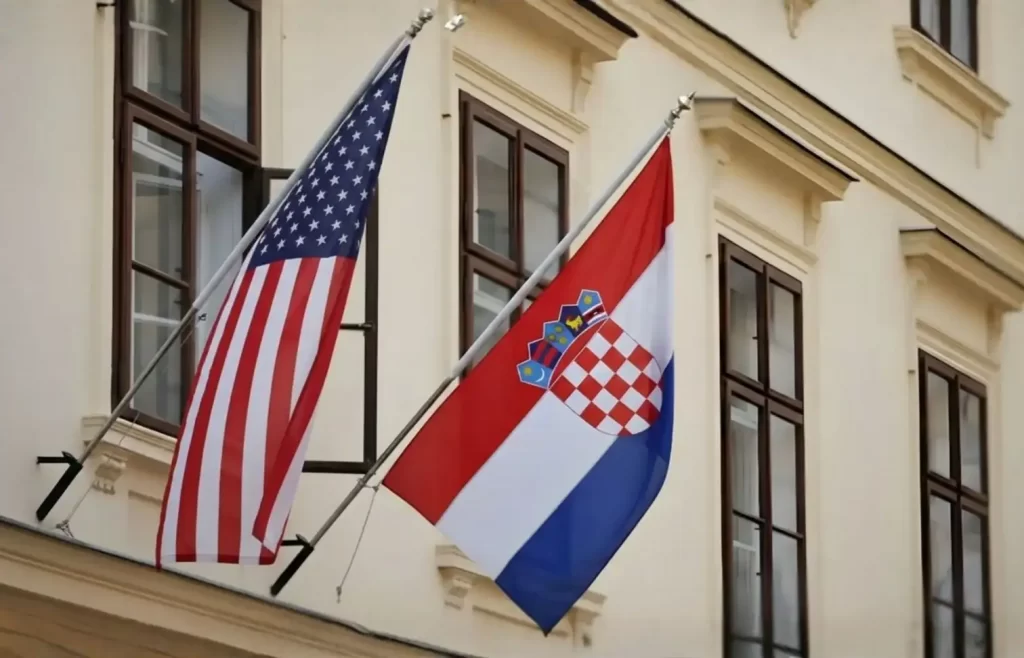
The United States and Croatia signed a comprehensive income tax treaty on December 7, 2022. However, the treaty has not yet entered into force.
In April 2026, the two countries signed a protocol amending the 2022 treaty. The protocol revises several provisions, including the rules concerning relief from double taxation and the limitation-on-benefits provisions. The treaty and protocol are expected to proceed together through the U.S. ratification process. As of September 2026, the treaty and protocol have not yet completed the procedures required for entry into force.
Becoming a Croatian tax resident does not generally end a U.S. citizen’s U.S. tax obligations.
A U.S. citizen living in Croatia may therefore need to consider:
- Croatian income tax on income taxable in Croatia
- U.S. federal income tax reporting on worldwide income
- Foreign Tax Credit (FTC) relief for qualifying Croatian taxes paid
- the Foreign Earned Income Exclusion (FEIE) for qualifying foreign-earned income
- reporting requirements for foreign bank and financial accounts
- the tax treatment of pensions, retirement accounts, investments and property in both countries
The appropriate treatment depends heavily on the type and source of income, as well as the individual’s Croatian tax-residency position.
Croatia’s personal income tax rates also depend on the taxpayer’s municipality or city. Under the current framework, local authorities can set lower and higher rates within statutory ranges, with the higher rate applying above an annual tax base of €60,000.
These issues become particularly important for U.S. retirees, entrepreneurs, and investors with financial interests in multiple countries.
Before establishing Croatian tax residency, it may be appropriate to review:
- the timing of the move and the individual’s tax residency position for the relevant year
- IRA, 401(k), pension, and Social Security income
- dividends, investment income, and capital gains
- the planned sale of U.S. real estate
- foreign bank accounts and other financial assets
- Croatian prebivalište and boravište status
- available foreign tax credits and other mechanisms for relieving double taxation
- the interaction between Croatian domestic tax rules and the Croatia–U.S. tax treaty framework
For U.S. citizens with multiple sources of retirement income, significant investments, or substantial assets in the United States, obtaining a cross-border tax assessment before relocating or completing a major transaction can help identify potential Croatian and U.S. tax exposure in advance.
What is the double tax agreement between Australia and Croatia?

The most recent development in Croatia’s tax treaty network involves Australia.
Croatia and Australia signed a new Double Taxation Agreement on 24 November 2025.
However, like the U.S. treaty, the agreement is still pending ratification by both countries and has not yet entered into force.
Until ratification is complete, the treaty cannot yet be used to:
- allocate taxing rights between the two countries
- reduce withholding taxes
- resolve tax residency disputes
The Current Position for Australian Residents
Until the Croatia–Australia treaty becomes effective, Australian nationals earning income connected to Croatia must rely on Australian domestic tax rules to avoid double taxation.
The primary relief mechanism is the Foreign Income Tax Offset (FITO).
FITO allows Australian taxpayers to:
- offset foreign income tax paid abroad
- against their Australian tax liability on the same income
However, the offset is limited to the amount of Australian tax that would otherwise apply to that income.
Worldwide Taxation for Australian Residents
Australian tax residents are generally taxed on their worldwide income.
If you relocate to Croatia but retain financial ties to Australia, you may still have obligations related to:
- superannuation accounts
- investment portfolios
- Australian rental properties
- other Australian-source income
Without an active treaty, potential double taxation must be managed using domestic tax relief mechanisms.
What the Australia-Croatia Treaty Will Provide
Once ratified, the Australia–Croatia Double Taxation Agreement is expected to follow the OECD Model Tax Convention framework.
This means the treaty will likely provide:
- reduced withholding tax rates on dividends, interest, and royalties
- tie-breaker rules for dual tax residency conflicts
- clearer taxation rules for pensions and retirement income
- provisions addressing superannuation structures
These rules are particularly important because Australian superannuation systems differ significantly from traditional pension systems used in Europe.
Finland- Croatia Tax Treaty: Capital Gains on Immovable Property
Under the Finland–Croatia tax treaty (originally concluded with Yugoslavia and assumed by Croatia), capital gains from immovable property are primarily taxed where the property is located.
Key points:
- Taxation Rights: If a Finnish resident sells real estate in Croatia (or vice versa), the gain may be taxed in the country where the property is situated.
- Scope: “Immovable property” includes land, buildings, and related real estate assets under local law.
- Real Estate Companies: Gains from selling shares in companies whose value mainly comes from real estate can also be taxed in the property’s location country (aligned with OECD/MLI updates).
- Double Tax Relief: The country of residence typically provides a tax credit to avoid double taxation.
- Local Rates:
- Croatia: 12% capital gains tax (+ local surtax if applicable)
- Finland: 30% (up to €30,000) and 34% (above €30,000)
Practical takeaway: The source country (where the property is located) has primary taxing rights, but your home country still matters for reporting and relief so structuring and timing remain critical.
Practical Steps for Managing Cross-Border Tax Obligations
Regardless of your country of origin, several practical steps apply universally when dealing with double taxation and relocation to Croatia.
1. Obtain a Certificate of Tax Residency
One of the most important documents in cross-border tax planning is a certificate of tax residency.
This certificate is often required when:
- claiming treaty benefits
- requesting reduced withholding taxes
- proving residency status to foreign tax authorities
You can obtain this certificate from your home country:
- United Kingdom: HMRC Certificate of Residence
https://www.gov.uk/guidance/get-a-certificate-of-residence - United States: IRS Form 6166
https://www.irs.gov/forms-pubs/about-form-6166 - Australia: ATO Certificate of Residency
https://www.ato.gov.au/forms/certificate-of-residency/
The document may need to be presented to the Croatian Tax Administration (Porezna uprava).
2. Register With the Croatian Tax Administration
After establishing residency in Croatia, you should register with the Croatian Tax Administration (Porezna uprava) as soon as possible.
Key steps include:
- obtaining an OIB (Croatian tax identification number)
- confirming your tax residency status
- understanding Croatian annual reporting obligations
Croatian residents with income above certain thresholds must file annual personal income tax returns.
Late or incomplete filings may lead to financial penalties.
3. Work With Cross-Border Tax Specialists
Managing taxes across two jurisdictions is rarely straightforward.
The interaction between:
- tax treaties
- domestic tax relief mechanisms
- Croatian municipal surtaxes
- foreign reporting obligations
can create significant complexity.
For this reason, individuals relocating to Croatia should consider consulting cross-border tax professionals who understand both:
- Croatian domestic tax law
- the tax system of their home country
Generalist accountants often lack the specialized expertise required to navigate international tax treaty interactions effectively.
Professional Legal and Tax Support in Croatia
Navigating Croatia’s double taxation framework, whether under the active UK treaty, the pending US agreement, or the newly signed Australian treaty, requires advisors who understand how Croatian tax law operates in practice, not just in principle. Mandracchio Capital is a Croatia-based legal advisory firm specialising in residency structuring, cross-border taxation, and international compliance for expatriates and investors.
The firm’s advisory work is led by Prof. Dr. Šime Jozipović, Associate Professor of Tax Law and European Business Law at the University of Split and a recognised legal scholar in international tax and European business law. With over a decade of academic and professional experience advising international clients on Croatia’s tax treaty network, Prof. Dr. Jozipović brings a depth of technical and practical knowledge that is rarely found in generalist advisory practices.
For individuals relocating from the UK, US, or Australia, Mandracchio Capital offers structured consultations to assess your specific income composition, residency timeline, and cross-border tax obligations, giving you a clear picture of your position before you commit to the move.
Frequently Asked Questions – Double Taxation Agreement Croatia
Does Croatia have a double taxation agreement with the UK?
Yes. Croatia and the UK have a Double Taxation Convention that entered into force in 2015 and is currently active. It covers employment income, pensions, dividends, interest, royalties, and capital gains, and determines which country has the primary right to tax each income category depending on your residency status.
Does Croatia have a double taxation agreement with the US?
Croatia and the US signed a Double Taxation Agreement on 7 December 2022, but it has not yet entered into force as of early 2025, pending ratification by the US Senate and the Croatian Parliament. US citizens currently rely on the Foreign Tax Credit and Foreign Earned Income Exclusion to manage double taxation.
Will my UK State Pension be taxed in Croatia?
Once you establish Croatian tax residency, the UK State Pension generally becomes taxable in Croatia rather than the UK under the provisions of the UK-Croatia treaty. You should notify HMRC of your residency change so that your pension can be paid gross, with tax obligations transferred to Croatia. Government service pensions are an exception, these remain exclusively taxable in the UK.
What is the Foreign Income Tax Offset for Australian residents?
The Foreign Income Tax Offset (FITO) is an Australian domestic mechanism that allows Australian tax residents to offset foreign taxes paid, including Croatian income tax, against their Australian tax liability on the same income. It operates in lieu of a formal treaty until the Australia-Croatia agreement enters into force.
How do I establish Croatian tax residency?
Croatian tax residency is established if you spend more than 183 days in Croatia within the relevant tax period, maintain a permanent home there, or have your centre of personal and economic interests in Croatia. You should register with the Croatian Tax Administration (Porezna uprava) and obtain your OIB number upon establishing residency.
Does Croatia have a double taxation agreement with Finland?
Yes. Croatia and Finland have a double taxation agreement designed to prevent the same income from being taxed in both countries. The treaty follows the OECD Model Tax Convention and regulates how income such as employment income, pensions, dividends, interest, and capital gains are taxed between the two jurisdictions
How are capital gains from immovable property taxed under the Croatia–Finland tax treaty?
Under Article 13 of the Croatia–Finland Double Taxation Agreement, capital gains from the sale of immovable property may be taxed in the country where the property is located. This means that if a Finnish resident sells real estate located in Croatia, Croatia generally retains the primary right to tax that capital gain.
Editorial Note: This article has been prepared from a legal advisory perspective and is intended as general informational guidance only. It does not constitute legal or tax advice. Individual circumstances vary significantly; readers are strongly encouraged to seek qualified professional advice before making any tax, residency, or financial decisions.