To relocate to Croatia, you must apply for a temporary residence permit through the Ministry of Interior (MUP) or a Croatian embassy after choosing a qualifying pathway like digital nomad status, employment, or business ownership.
For foreign nationals, the process to relocate to Croatia usually start with choose a temporary residence permit, which may be based on employment, business activities, digital nomad status, investment structures, or family reunification.
Understanding the correct legal pathway from the beginning can make the difference between a smooth relocation and months of administrative complications.
Hi, my name is Šime Jozipović, founder and CEO of Mandracchio Capital. I am a Croatian lawyer based in Split, holding an LL.M. in Tax Law from Harvard Law School specializing in international tax planning, with 10+ years of professional experience supporting international clients moving to Croatia.
Note: Navigating these pathways often requires professional support. For personalized guidance, consider a Croatia immigration lawyer consultation to ensure your application is accurate. If you need help with the documents required for Croatian residency or need a legalizing foreign documents for Croatia (Apostille guide), our team at Mandracchio Capital is here to help you secure the best immigration services for Croatia.

Why is Croatia an ideal destination for foreigners?
Quality of life and work-life balance
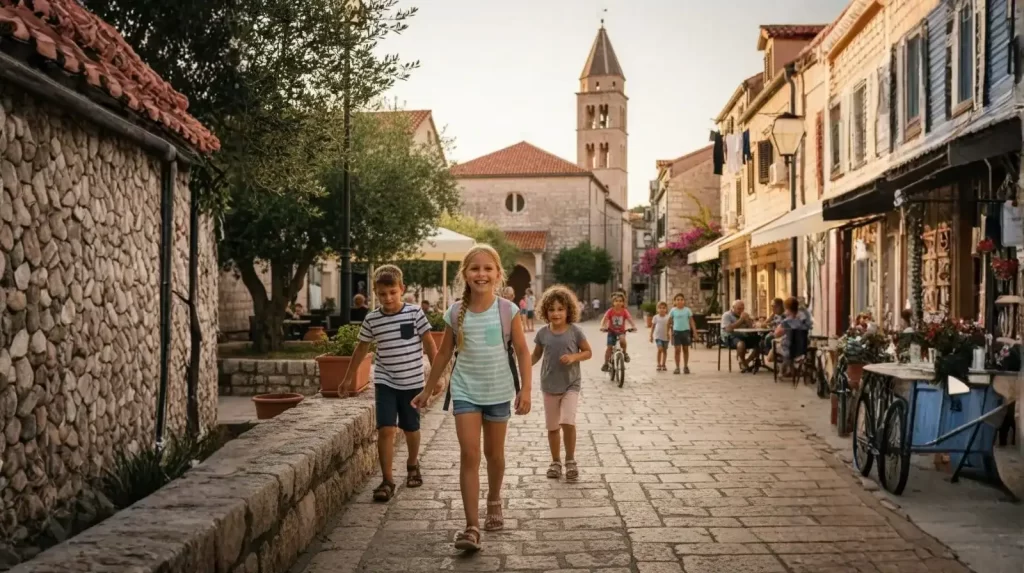
Croatia offers a Mediterranean lifestyle that prioritizes well-being and personal fulfillment. Unlike the fast-paced, high-pressure environment of cities such as Dubai, London, or New York, life in Croatia moves at a slower, more intentional rhythm. This cultural difference is reflected in daily routines, social interactions, and professional expectations.
Expats who relocate to Croatia often discover that the pros and cons of living in Croatia for expats lean heavily toward the benefits. The country provides more time for family, outdoor activities, and a healthier daily routine. The Adriatic coastline, national parks, and islands offer countless opportunities for recreation, including sailing, hiking, cycling, and wine tourism.
Work-life balance is deeply embedded in Croatian culture. The standard workweek is typically 40 hours, and overtime regulations help protect personal time. Compared to many Western economies, the concept of “living to work” is far less dominant.
Additionally, the cost of living, particularly outside Zagreb and major tourist hubs remains relatively affordable. Housing, groceries, and utilities cost less than in most Western European capitals, allowing expats to maintain a comfortable lifestyle without the financial pressure common in larger EU cities.
Tax Benefits and Business Opportunities in Croatia
From a business and investment perspective, Croatia also offers a relatively competitive tax framework within the European Union. Advantages include:
- Corporate tax as low as 10% for smaller companies
- 10% dividend tax
- Access to the EU single market
- Strong banking compliance and AML standards
Croatia also maintains double taxation agreements with numerous countries, which helps international entrepreneurs structure cross-border income and avoid being taxed twice on the same earnings. If you plan to keep a foreign company, overseas investments or clients abroad after relocating, see our guide on how Croatia can tax your foreign income.
In certain investment scenarios, long-term capital gains may be tax exempt, making Croatia an attractive jurisdiction for investors and founders managing international assets.
If you want a deeper explanation of tax obligations for international residents, see our full guide on tax system in Croatia.
Economic advantages and investment environment in the EU
As a member of the European Union since 2013 and the Schengen Area since 2023, Croatia provides a stable and regulated economic environment. These memberships create strategic advantages for investors, entrepreneurs, and international professionals.
Application fees, legal costs, and everyday living expenses are generally lower, making Croatia an accessible entry point into the EU market.
Croatia’s economy is growing steadily, supported by sectors such as tourism, technology, maritime industries, and renewable energy. The government has also introduced incentives for digital nomads, startups, and foreign investors.
Corporate tax rates remain competitive, and special economic zones provide additional benefits for companies operating in specific industries.
For remote professionals and digital entrepreneurs, Croatia offers modern infrastructure including high-speed internet, coworking spaces, and an expanding international professional community. Cities such as Split, Dubrovnik, and Rijeka have become emerging hubs for remote workers seeking a balance between productivity and lifestyle.
Social safety and stability
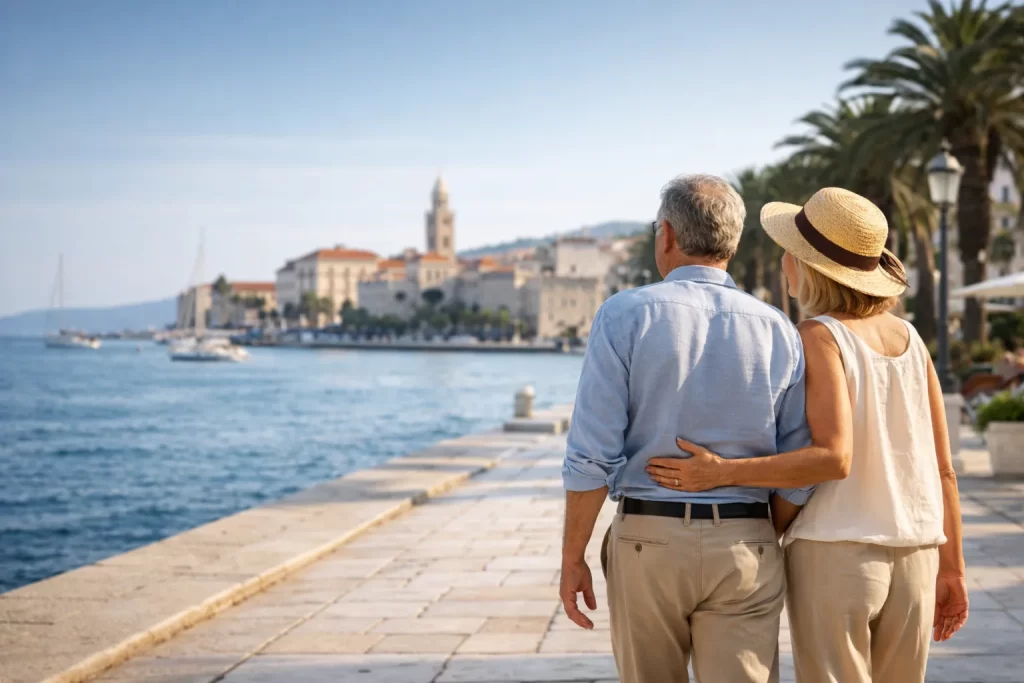
Croatia consistently ranks among the safest countries in Europe. According to international crime statistics and the Global Peace Index, violent crime is rare and petty crime remains low compared to many Western European destinations.
For families, this stability is a major attraction. Children can often walk to school, play outdoors, and explore neighborhoods with a high level of safety.
Relocation to Croatia: Key Statistics
Croatia remains an attractive destination for expats seeking access to the EU market, a safer lifestyle, and a lower-cost base than many Western European countries. According to the Croatian Bureau of Statistics, Croatia’s mid-2024 population estimate was 3,866,233, showing a slight year-on-year increase.
Official migration data also shows that in 2024, 81.1% of immigrants to Croatia were foreign nationals, confirming the growing role of international migration in Croatia’s demographic and labor-market trends. Croatia has been a member of the European Union since 1 July 2013, and joined both the euro area and Schengen Area on 1 January 2023, which has further increased its appeal for mobile professionals, entrepreneurs, and investors.
How to relocate to Croatia?
Before planning long-term residence, it’s important to understand Croatia’s visa rules. As part of the EU and the Schengen Area, Croatia follows standard Schengen entry policies.
Many nationalities can enter visa-free for up to 90 days within any 180-day period for tourism or business visits,but not for work. Others must apply for a short-stay (Type C) visa.
If you plan to stay longer than 90 days, you will need a long-stay (Type D) visa, which is typically the first step toward obtaining a temporary residence permit.
For a full breakdown by nationality and visa type, see: Do I Need a Visa to Enter Croatia?
1. Digital nomad visa
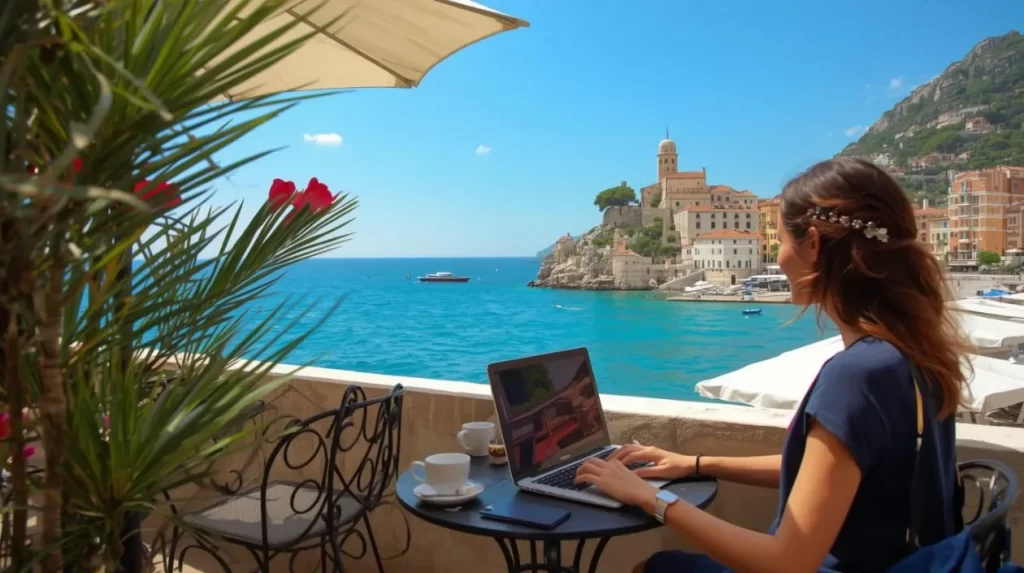
Croatia introduced its digital nomad visa in 2021, becoming one of the first EU countries to provide a dedicated residence option for remote workers.
Applicants must prove they work for a company outside Croatia or operate a remote business. They must also demonstrate sufficient income currently about €3,700 per month (in 2026).
The permit is valid for up to 12 months and may be extended for another year. However, time spent under the Croatia digital nomad permit does not count toward permanent residence or citizenship.
2. Work and Stay residence permit
The EU Blue Card Croatia is a residence and work permit for highly qualified non-EU professionals with a qualifying degree and employment contract in Croatia. It can be particularly suitable for professionals seeking a long-term residence pathway for themselves and their families, as Blue Card residence can count toward long-term residence.
Eligible family members, including a spouse and minor children, can apply for family reunification without the waiting period that applies to some other residence permits. Family members may also have the right to work in Croatia without obtaining a separate work permit.
For example: a highly qualified professional relocating to Croatia with a spouse and a minor child can apply for the Blue Card while the family members apply for residence through family reunification, allowing the family to establish their residence in Croatia together.
3. Residence in Croatia Through Business Ownership
Foreign nationals can, in certain circumstances, obtain a Croatian residence and work permit through business ownership and self-employment. However, establishing a company in Croatia does not automatically grant the owner the right to reside or work in the country. Applicants must meet the applicable legal requirements and demonstrate genuine business activity.
Croatia provides a route for third-country nationals to obtain a residence and work permit for self-employment through a company in which they hold at least a 51% ownership share, or through a qualifying sole proprietorship.
Under this route, the applicant may start a business in Croatia, subject to the applicable immigration and employment requirements.
Unlike the standard employment route, which may require a labour market test to determine whether a suitable Croatian candidate is available for a position, the self-employment route operates under a separate set of statutory conditions. However, this does not mean that establishing a company automatically exempts its owner from all employment-related requirements.
The value of the company’s share capital, or the assets of a limited or general partnership, must exceed EUR 26,544.56, as specified in the applicable legal provisions. The company, branch or representative office of a foreign company must employ at least three Croatian nationals on a permanent, full-time basis.
4. Immigration based on Croatian descent
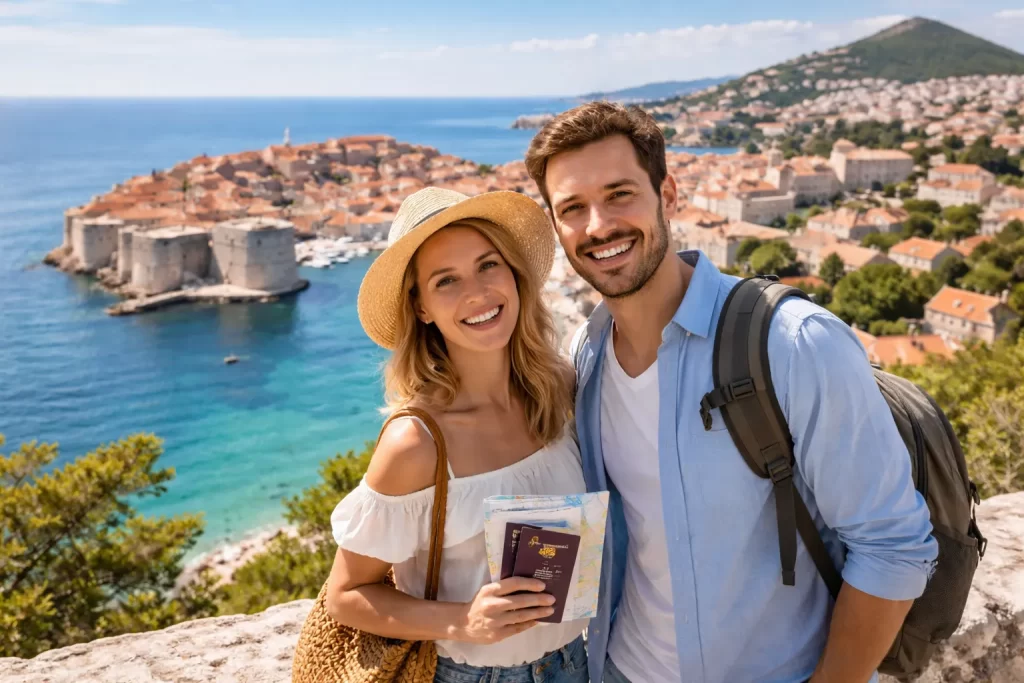
Individuals with Croatian heritage may qualify for residency and citizenship through descent. This pathway often waives specific financial and language requirement.
Path way to PR and citizenship
A temporary residence permit is typically granted for one year and must be renewed annually. This permit is issued for a specific purpose such as employment, business activity, study, family reunification, or digital nomad status. Holders may live and work in Croatia as long as the conditions of the permit remain valid.
To get permanent residency in Croatia: In most cases, applicants must maintain continuous legal residence for five years under temporary residence permits. During this period, they must not spend more than ten consecutive months outside Croatia. Applicants must also demonstrate basic knowledge of the Croatian language, Latin script, and elements of Croatian society.
Croatia citizenship by naturalization requirements are stricter. Applicants typically must reside legally in Croatia for at least eight years. They must pass a Croatian language examination, demonstrate knowledge of Croatian culture and constitutional order, and meet additional legal requirements. Citizenship grants full rights, including a Croatian passport and unrestricted access to live and work anywhere within the European Union.
If you’re planning to relocate to Croatia with the right legal guidance, working with an experienced Croatia immigration lawyer can help avoid delays and rejections.
| Stage | Typical Duration | Key Requirement |
|---|---|---|
| Temporary residence permit | 1 year (renewable) | Work, business, study, family |
| Long-term residence | 5 years | Continuous legal stay |
| Croatian citizenship | 8 years | Language test + integration |
How to prepare your application
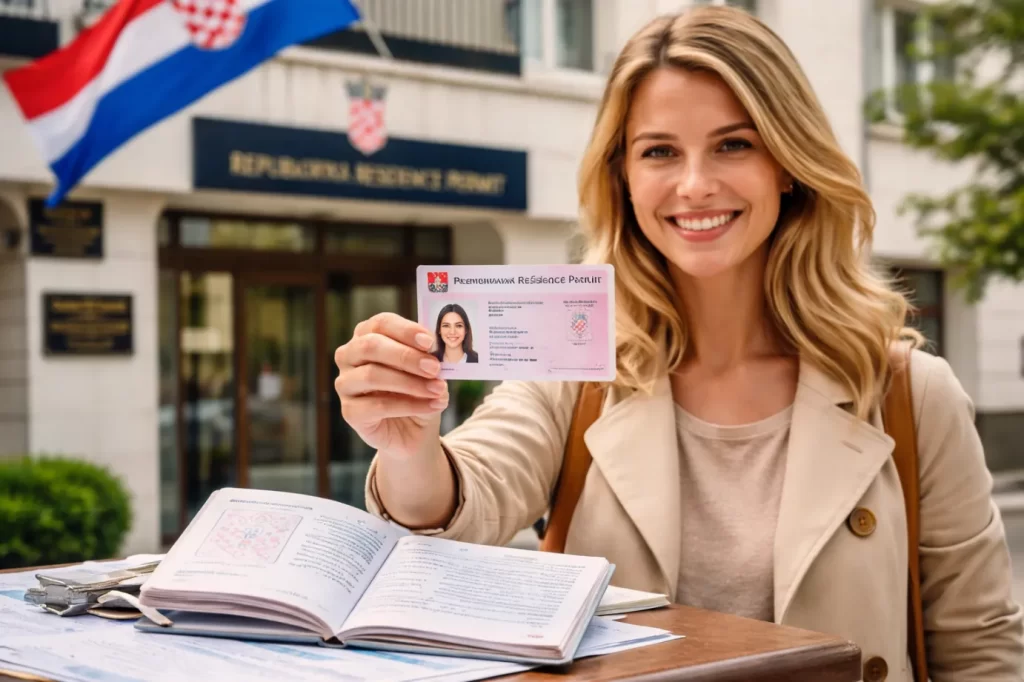
Before you move, you must verify your foreign documents. If your home country is part of the Hague Convention, you need an Apostille. This stamp proves your document is authentic. Without it, the Croatian authorities will reject your application. If your country is not part of the convention, you must undergo full consular legalization. At Mandracchio Capital, we often see clients lose weeks of time because they skipped this step before leaving home.
The court-certified translation process
All foreign documents must be translated into Croatian. You cannot use a standard translation service. You must hire a court interpreter (sudski tumač). These professionals are officially appointed by the Croatian Ministry of Justice. Their stamp is the only one recognized by the police (MUP).
Checklist of required documents
Preparing your file correctly is the most important step in your immigration journey.
Proof of financial means
You must prove you can support yourself. For a digital nomad permit, you need a minimum monthly income of approximately €3,295. For other permits, you must provide bank statements showing consistent funds for the duration of your stay.
Mandatory health insurance
You need proof of health insurance to apply. Initially, most expats purchase private international travel insurance that covers at least €30,000. Once you receive your residence permit, you are generally required to register with the state health fund, HZZO.
Steps to submit your application at MUP or the Embassy
If you are a third-country national, you usually apply at the nearest Croatian embassy or consulate before arrival. If you are visa-exempt, you may apply directly at the local police administration (MUP) in your city of residence. The processing time varies, but expect to wait about 30 to 60 days for a decision.
For a full explanation of the residence permit process, documents, and timelines, see our detailed guide on Temporary Residence Permit in Croatia and Croatia Residence Permit Application Process & Fee
Moving to Croatia as a self-employed expat
Many US and UK business owners move to Croatia and keep their business at home. They keep the company and the clients, and they work from Split or Zagreb. This can work well. However, Croatian tax rules apply from the day you become resident, and they often classify your income differently from your home country.
The result depends on three things: your residence route, the way you pay yourself, and the place where your company is managed. We cover each of these below, using questions that American and British self-employed expats regularly bring to Mandracchio Capital.
Croatian tax for US business owners with an S corporation or LLC
Croatia generally looks at your company’s legal form, not its US tax election. Under state law, an S corporation or a single-member limited liability company (LLC) is a separate legal entity, so Croatia generally treats it as a company. A salary it pays you counts as employment income in Croatia. A distribution is generally taxed as a profit distribution at 12%.
The US treats the same money differently. S corporation profit flows through to you and is taxed in the year the company earns it, whether or not you take the cash. Croatia taxes the distribution when it reaches you. This timing gap can push foreign tax credits on each side out of step, so the structure should be planned before you move.
US citizens also remain US taxpayers wherever they live. The US and Croatia signed their first income tax treaty on 7 December 2022, and an amending protocol followed on 28 April 2026 (US Treasury). The President sent the treaty and protocols to the Senate on 14 September, and Croatia’s Parliament reportedly approved them on 25 September. Until the Senate ratifies the treaty, Croatia remains the only EU member state without a ratified tax treaty with the United States (Congressional Record).
Social security is a second gap. Croatia is not on the US Social Security Administration’s list of countries with a totalization agreement (SSA), even though Croatia’s government authorised negotiations on one in August 2018. Someone working in Croatia for a foreign employer with no Croatian business unit must register for Croatian mandatory insurance. As a result, a US citizen paid a salary by a US company can owe US Social Security and Medicare taxes and Croatian contributions on the same pay.
One of our clients is a dual US–Croatian citizen who runs a profitable creative business through an S corporation. He pays himself through a mix of salary and distributions. He already spends long periods in Croatia and plans to cross the 183-day line in 2028 or 2029, timed around progress on a social security agreement. He wanted to know how Croatia would classify his salary and distributions, whether his salary would qualify for the returnee exemption, whether a binding opinion was worth requesting, and how to keep his S corporation from being treated as managed in Croatia. The digital nomad permit is only for non-EU nationals, so his planning centres on the returnee exemption instead.
The returnee exemption for Croatian citizens and descendants
Qualifying returnees get a 100% reduction of annual income tax on their salary for five years. The relief is available to Croatian emigrants and their descendants who hold Croatian citizenship and have domicile and residence in Croatia, and to certain descendants from overseas countries who hold a residence permit for diaspora return. Applicants must have lived abroad continuously for at least two years and must not have been posted abroad by an employer. People who returned before 1 January 2025 cannot claim it, and the Tax Administration applies it automatically in the annual assessment (Porezna uprava — relief for returnees).
The relief covers salary only. Dividends, distributions and social security contributions remain fully payable. The rule does not require a Croatian employer. Even so, the Tax Administration’s published guidance does not address whether a salary paid by your own foreign company qualifies. An owner-director should get that answer in writing before relying on it.
UK business owners: the digital nomad permit and closing your company
Since Brexit, UK citizens count as non-EU nationals and can apply for Croatia’s digital nomad permit. For 2026 the income threshold is €3,622.50 a month, or savings of €43,470 for a 12-month stay (MUP — digital nomads). The permit lasts up to 18 months, and a new application can be filed six months after the previous stay expires.
Holders of digital nomad status are exempt from Croatian income tax on employment or self-employment income from an employer not registered in Croatia, under Article 9 of the Income Tax Act. The exemption covers only earned income from foreign remote work. If you pay yourself dividends from your own foreign company instead of a salary, Croatian tax can still apply to those dividends.
A UK consultant we advised planned to close his limited company and keep working from Croatia for his one US client. His preferred option was a personal contract with the client under English law. That route fits the exemption well, because the fees are for his own work and are paid by a company outside Croatia. His fallback was a US LLC that would hold the client contract and pay him “distributions.” Croatia would likely treat those payments as profit distributions taxed at 12%, unless a written services contract between him and the LLC turned them into fees for his work. Running the LLC from his laptop in Croatia would also raise the question of where the LLC is managed.
Timing matters when you close a UK company. A final dividend paid after you become Croatian resident is taxed in Croatia at 12%, and a liquidation distribution needs its own analysis. The UK–Croatia double taxation agreement entered into force on 19 November 2015 and has applied since 2016 (GOV.UK). If you return to the UK within five years, HM Revenue & Customs’ temporary non-residence rules can also reach dividends you received while abroad.
Keep your foreign company managed from abroad
Under Croatian law, a company is resident for corporate profit tax if its registered seat is in Croatia, or if its place of effective management and supervision is in Croatia (Corporate Profit Tax Act, Article 3). A resident company is taxed on profit earned both in Croatia and abroad. A fixed place of business in Croatia can also create a permanent establishment, which is taxed on the profit linked to it.
For a one-person company, the place where you make decisions usually determines where the company is managed. If every decision comes from your home office in Split, that office is a strong candidate. Business owners usually manage this risk in a few ways. They hold board decisions outside Croatia, appoint a director who lives abroad, keep contracts and banking anchored in the home country, and record where key decisions are made. The right combination depends on the company and the treaty that applies.
Getting a binding opinion from the Croatian Tax Administration
Where the law leaves a question open, you can ask the Tax Administration for a binding opinion (obvezujuće mišljenje). It is issued within 90 days of a complete request and binds the Tax Administration. The fee starts at €600 for applicants whose income on their last tax return was up to €400,000 and rises to €3,900 for the largest taxpayers. The opinion lapses if circumstances change materially or if it rests on untrue or incomplete facts (Porezna uprava — binding opinions).
Binding opinions suit questions such as how Croatia classifies S corporation distributions, or whether an owner’s salary qualifies for the returnee exemption. They work best when the facts are drafted carefully, since the opinion protects only the facts it describes.
Mandracchio Capital reviews these questions before you move, while a contract or payout structure is still easy to change. Our pre-relocation tax evaluation, described in Expat tax liability in Croatia, combines your residence date, income streams, company management and social security position into one plan.
Relocate to Croatia from the United States
Relocating to Croatia from the United States involves entering visa-free for up to 90 days or securing a temporary residence permit through the U.S. Embassy in Croatia or the Ministry of Interior (MUP) for longer stays.
For the full pathway, documents and tax considerations specific to US citizens, see our guide to moving to Croatia from the US.
Relocate to Croatia from the United Kingdom
Since Brexit, British citizens who relocate to Croatia arrive as third-country nationals. A UK passport still allows visa-free stays of up to 90 days in any 180-day period, counted across the whole Schengen area. A longer stay needs a temporary residence permit on a recognised basis.
The usual routes are a Croatian job offer (a work permit or EU Blue Card), remote work for a foreign employer or your own foreign business through the digital nomad permit, setting up a Croatian company, or joining family. Britons who were legally resident in Croatia by 31 December 2020 keep their rights under the Withdrawal Agreement.
On the tax side, Croatia taxes its residents on their worldwide income. The UK–Croatia double taxation agreement, in force since 2016, then decides which country taxes each type of income. Take Sarah, a retired civil servant from Bristol. Her civil service pension stays taxable only in the UK, while her private workplace pension becomes taxable in Croatia.
Our guide to moving to Croatia from the UK walks through each permit route, the documents you need and the tax points in detail.
Relocate to Croatia from France
If you relocate to Croatia from France, you move inside the European Union, so no visa or residence permit is needed.
The immigration steps are light. French citizens can stay in Croatia for up to 3 months with a valid identity card. After that, they register their stay with the police administration and need a Croatian address. They also get a personal tax number (OIB).
Permanent residence follows automatically after five years of continuous legal stay, and the card is valid for ten years (Ministry of the Interior). A spouse or child without EU citizenship applies for a residence card as a family member of an EU citizen.
The tax steps need more care, because France can tax you on the way out. Under Article 167 bis of the French tax code, leaving after six of the last ten years as a French tax resident can trigger the exit tax. It applies if you hold shares worth more than €800,000, or at least 50% of a company.
Once he is resident in Croatia, the France–Croatia tax treaty (in force since 1 September 2005, BOFiP) decides which country taxes which income. Croatia taxes residents on worldwide income. Capital gains on financial assets held for more than two years are exempt for private investors.
At Mandracchio Capital, we coordinate the French departure steps, the Croatian registration and the tax structure as one plan.
Relocate to Croatia vs Other European Countries
Many foreigners considering relocation to Europe compare Croatia with popular destinations such as Portugal, Spain, Germany, or France. While each country offers unique opportunities, Croatia has become an increasingly attractive immigration destination due to its lower costs, simpler residency options, and high quality of life.
Below is a quick comparison of Croatia with several well-known European immigration destinations.
| Factor | Croatia | Western Europe (Germany, France) | Southern Europe (Spain, Portugal) |
|---|---|---|---|
| Immigration difficulty | Moderate | Often complex | Moderate |
| Cost of living | Lower | High | Medium to high |
| Residency options | Digital nomad, work, business, family | Work-focused | Retirement and investment visas |
| Lifestyle | Mediterranean, slower pace | Urban, fast-paced | Mediterranean |
| Access to EU | Yes | Yes | Yes |
Challenges when relocate to Croatia and how to overcome them
Dealing with bureaucracy
Croatian administration can be slow and rigid. Expect to visit the police station multiple times. Keep a physical folder with 2 copies of every document. Patience is your best tool here. If the process feels overwhelming, a Croatia immigration lawyer consultation can help you navigate these administrative hurdles efficiently.
Language barriers and cultural integration
While many Croatians speak English, the bureaucracy operates entirely in Croatian. You will likely need a translator for your first few visits to the police station. Learning basic Croatian phrases will also help you build relationships with locals and speed up your integration into the community.
Seasonality in coastal cities
If you move to a coastal town like Split or Dubrovnik, be aware of the seasonal shift. These cities are vibrant from June to August but become very quiet in the winter. If you prefer a consistent social life, consider living in a larger city like Zagreb, which remains active year-round.
Key tax implications of relocating to Croatia
If you live in Croatia for more than 183 days per year, you become a tax resident. You must report your worldwide income. Currently, Croatia and the United States do not have a finalized double-taxation treaty. This means you may face tax liabilities in both countries. We strongly recommend consulting with a tax expert to understand your specific situation and avoid unexpected costs.
If Croatia becomes your permanent home or you spend more than 183 days a year here, you generally become a Croatian tax resident and must report your worldwide income. For a breakdown of how residency, income type and applicable rates determine what you actually owe, see our guide to [expat tax liability in Croatia]. We strongly recommend consulting with a tax expert before relying on treaty relief.
Relocate to Croatia: What newcomers need to know
Best Places to Live in Croatia
Choosing the right city is one of the most important decisions when relocating. Croatia offers a wide range of living environments from vibrant capital cities to relaxed coastal towns and historic island communities. The best location for you will depend on your lifestyle, career plans, and long-term residency goals.
For a deeper comparison of cities, property markets, and expat communities, see our full guide:
Best Places to Live in Croatia.
Finding accommodation: Renting and buying property
Finding a home is your first priority. In cities like Zagreb or Split, rental demand is high. Most landlords require a security deposit equal to 1 or 2 months of rent. If you plan to buy, ensure the property is zoned as “residential.” Foreigners from certain countries can buy property in Croatia through reciprocity agreements. At Mandracchio Capital, we often connect clients with local agents to ensure the title deeds are clear before any money changes hands.
Healthcare system for foreigners
Croatia offers a mix of public and private healthcare. Once you obtain your residence permit, you must register with the HZZO (Croatian Health Insurance Fund). This gives you access to the public system. However, many expats choose to purchase supplemental private insurance to skip long wait times for specialists. If you have specific medical needs, bring your records translated into Croatian to help local doctors understand your history.
Exchanging your driver’s license
If you hold a valid license from your home country, you may be able to exchange it for a Croatian one. You must apply for this exchange within your first year of residence. If your country does not have an exchange agreement with Croatia, you will need to enroll in a local driving school, known as autoškola. This involves both a theory exam and a practical driving test.
Frequently asked questions
Do I need to learn Croatian to apply for residency?
For a temporary residence permit, you do not need to speak Croatian. However, all your official applications and supporting documents must be submitted in the Croatian language. For permanent residence or citizenship, you will be required to pass a formal language and culture test. We recommend starting basic lessons as soon as you arrive to make daily life easier.
What is the average cost to start the immigration process?
The cost varies based on your specific pathway. You should budget for translation fees, administrative stamps, health insurance premiums, and potential legal fees. On average, expect to spend between €1,500 and €3,000 in initial setup costs, excluding housing deposits. If you want to avoid costly mistakes, a Croatia immigration lawyer consultation can provide a precise budget based on your unique situation.
Does Croatia allow dual citizenship?
Generally, Croatia does not allow dual citizenship for those applying through naturalization; you are usually expected to renounce your current citizenship. However, there are specific exceptions for those applying by descent or through certain international treaties. If you are considering this path, it is crucial to consult with an expert at Mandracchio Capital to understand how these rules apply to your specific passport.
How Much Does It Cost to relocate to Croatia?
The total cost depends on your pathway, nationality, document origin, and whether you use professional assistance. In most cases, costs may include government fees, court-certified translations, Apostille or legalization, health insurance, background checks, accommodation setup, and possible legal support. Because these costs vary significantly from case to case, the most accurate approach is to consult your immigration lawyer and request a tailored estimate based on your residence basis and personal documents.
How long does it take to relocate to Croatia?
The timeline depends on the immigration pathway and the completeness of your documents. Most residence permit applications are processed within 30 to 60 days, although complex cases may take longer. In the long term, foreigners typically become eligible for permanent residence after five years of continuous legal residence, and citizenship after eight years under the standard naturalization process.
Can foreigners buy property in Croatia?
Yes. Foreigners from many countries can buy real estate in Croatia, although the process depends on reciprocity agreements between Croatia and the buyer’s home country. EU citizens can generally purchase property under the same conditions as Croatian nationals, while non-EU buyers may need approval from the Ministry of Justice. Property ownership alone does not automatically grant residence rights but can support certain residence applications.
Is Croatia a safe country to relocate to?
Croatia is generally considered a safe country with relatively low levels of violent crime, making it one of the safer destinations for people considering relocation. According to the 2024 Global Peace Index, Croatia ranks 15th out of 163 countries, placing it ahead of several popular European destinations such as Germany, Italy, the United Kingdom, and France. Croatia has also ranked among the safest countries in Europe for walking alone at night in recent international safety surveys.
That said, like most tourist destinations, petty crimes such as pickpocketing or small theft can occur, particularly in major cities and crowded tourist areas during the summer season.
Mandracchio Capital: Legal Advisory for Relocation to Croatia
Founded by Prof. Dr. Šime Jozipović, Professor of Finance and Business Law at the University of Split and an advisor to international clients relocating to Croatia, Mandracchio Capital is a Croatia-based legal advisory firm supporting international individuals, entrepreneurs, and investors navigating immigration, residency, and regulatory matters in Croatia.
Based in Split, Croatia, Mandracchio Capital assists foreign nationals who plan to relocate to Croatia, relocate their business activities, or establish long-term residence within the EU. Our clients include digital nomads, remote professionals, retirees, entrepreneurs, and international founders relocating from countries such as the United States, United Kingdom, Canada, Australia, New Zealand, and the United Arab Emirates.
If you are planning to relocate to Croatia, relocate your business, or apply for a residence permit, you can explore our expat relocation advisory services to understand how the process works.
We support clients through the whole of it, from the first assessment to life after approval.
Initial assessment and preparation. We start by understanding your situation — nationality, family, income sources, business interests and what you want from the move — and identify which residence pathways are realistically open to you before you commit to one.
Strategic application structuring. The right permit depends on your goals, not just your eligibility. A founder building toward permanent residence, a remote worker planning a one-year stay, and a retiree settling long-term each need a differently structured application. We plan the pathway around both your immediate approval and where you want to be in five years.
Legal advice on residency and tax. Where you live and where you are taxed are connected decisions. Alongside the immigration side, we advise on how the move affects your tax residency, foreign income and business structure — so the permit you obtain fits your overall legal position rather than complicating it.
Document preparation and filing. We prepare the complete application file — legalization and Apostille, court-certified translations, proof of means in the form the authorities expect — and handle the submission with the competent embassy or police administration (MUP).
Post-filing support. Our work does not end at submission. We follow up with the authorities, respond to requests for additional documentation, and support you through address registration, renewals and the steps toward permanent residence.
Our aim is simple: to be your legal harbour in Croatia — one team that knows your situation and stands behind your legal position from the day you decide to move.