Planning a trip to Croatia? Navigating international travel regulations can often feel complex, especially with recent changes like Croatia joining the Schengen Area. This article aims to cut through the confusion, providing clear, up-to-date information on whether you need a visa to enter Croatia, what documents are required, and how to prepare for your journey. Our goal is to equip you with all the necessary details to ensure a smooth entry into this beautiful Adriatic nation.
Most travelers do not need a visa to enter Croatia for short stays. Citizens of the US, UK, Canada, Australia, and many other countries can stay in Croatia (and the Schengen Area) for up to 90 days within any 180-day period without a visa.
This article has been reviewed from a legal advisory perspective by Prof. Dr. Šime Jozipović, founder of Mandracchio Capital, a renowned Croatia-based legal advisory firm assisting international investors, retirees, and expatriates navigating Croatian law and residency frameworks.
With more than 10 years of experience advising foreign clients relocating to Croatia, Prof. Jozipović provides legal guidance on residence permits, tax residency, property transactions, and cross-border financial considerations for individuals moving from jurisdictions such as the United States, the United Kingdom, Canada, and Australia.
Do I Need a Visa to Enter Croatia?
Whether you need a visa to enter Croatia primarily depends on your nationality, the purpose of your visit, and the intended duration of your stay. Croatia’s visa policy aligns with the common regulations of the Schengen Area since its full integration. Understanding these core principles is the first step in determining your entry requirements.
Croatia’s Schengen Status and Its Impact on Visa Policy
Croatia officially became the 27th member of the Schengen Area on January 1, 2023. This significant development means that Croatia now applies the common Schengen visa policy for short-stay visas. Travelers from countries that are part of the Schengen Area or those holding a valid Schengen visa can generally enter Croatia under the same conditions as other Schengen member states. This simplifies travel within the zone for many international visitors.
The integration into the Schengen Area has standardized Croatia entry requirements, making it easier for many to understand their visa status. The visa policy Croatia now follows ensures a consistent approach to border control and travel documents for Croatia. This change has streamlined procedures for both visa-exempt and visa-required nationalities, impacting everything from short-stay tourist visa Croatia applications to longer-term temporary stay Croatia considerations.
Visa-Exempt Nationalities for Short Stays
Many nationalities enjoy visa-free travel to Croatia for short stays, typically up to 90 days within any 180-day period. This includes citizens of the European Union (EU), European Economic Area (EEA) countries, and Switzerland, who can enter with a valid identity card or passport. Additionally, citizens from major Western nations such as the United States, Canada, Australia, and the United Kingdom are also visa-exempt countries Croatia for tourism, business, or visiting family for periods not exceeding 90 days.
For these visa-free travel Croatia nationalities, the process is straightforward. They simply need a valid passport meeting specific requirements, which will be detailed later. This visa waiver program allows for considerable flexibility for short-term visits, facilitating tourism and business engagements across the Schengen area Croatia. The 90/180-day rule is crucial here, meaning that the total duration of stays in all Schengen countries, including Croatia, must not exceed 90 days within any 180-day period.
Nationalities Requiring a Visa for Croatia
Citizens of numerous non-Schengen and non-EU countries are required to obtain a visa to enter Croatia, even for short visits. This generally includes nationals from regions such as the Maghreb, Africa, Asia, the Middle East, and Russia.
For example, individuals holding passports from India, South Africa, and Vietnam will need to apply for a Croatia visa for Indian citizens, a Croatia visa for South Africans, or a Croatia visa for Vietnamese citizens, respectively, before their trip.
Examples of countries that usually require a visa:
- India
- China
- Pakistan
- Nigeria
- South Africa
- Many countries in Africa, Asia, and the Middle East
The Croatian Ministry of Foreign Affairs provides a comprehensive list of countries whose citizens require a visa. These requirements are in place to manage border control Croatia and ensure compliance with EU visa rules Croatia. The application process for these nationalities involves submitting various documents and adhering to specific procedures, which will be outlined in detail to help applicants navigate the Croatia visa application requirements effectively.
Understanding Short-Stay (Schengen C) vs. Long-Stay (Type D) Visas
Croatia issues two primary types of visas: the Short-Stay Visa, also known as a Schengen C visa, and the Long-Stay Visa, or Type D visa. A Short-Stay Visa permits stays of up to 90 days within any 180-day period and is suitable for tourism, business trips, or visiting family. This is the most common type of tourist visa Croatia.
Conversely, a Long-Stay Visa (Type D) is required for individuals planning to stay in Croatia for more than 90 days. This visa is typically issued in conjunction with a Croatia temporary residence permit and is necessary for purposes such as employment, study, family reunification, or retirement. Understanding these visa categories Croatia is crucial for planning your visit, as the application processes and required travel documents for Croatia differ significantly between the two.
Visa Requirements to Enter Croatia: Essential Documents
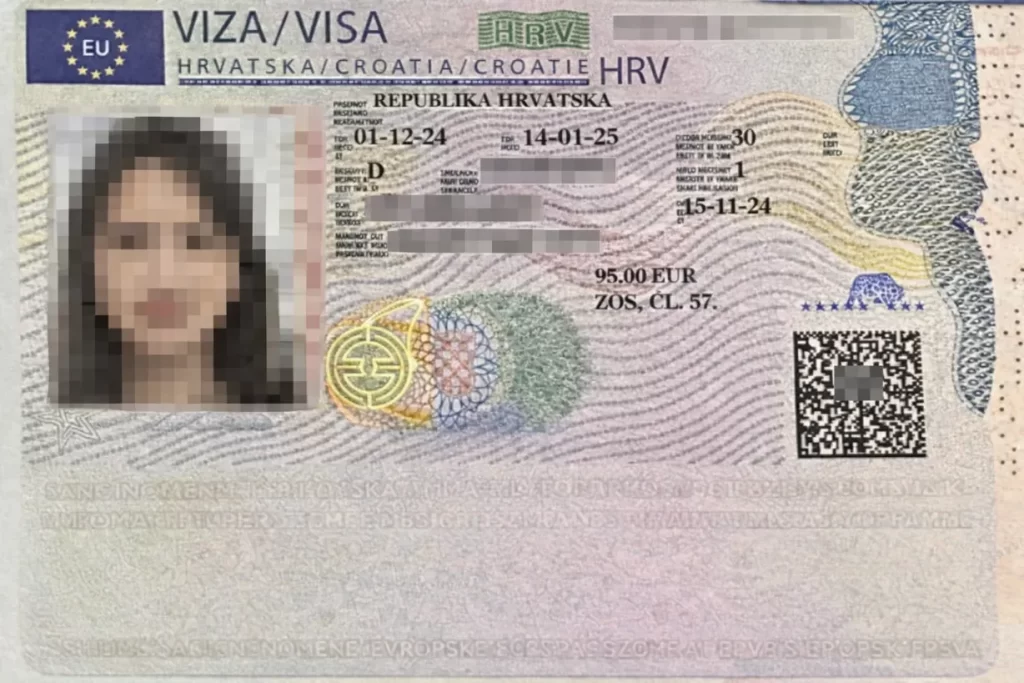
For those who need a visa, the Croatia visa application requirements are comprehensive, designed to ensure that applicants meet the necessary criteria for entry into the Schengen Area. Preparing all essential documents thoroughly is key to a successful application. This section details the specific documents and processes involved in obtaining a short-stay Schengen C visa for Croatia.
Essential Documents for a Short-Stay (Schengen C) Visa Application:
Applying for a short-stay visa to Croatia requires a precise collection of documents. Each item serves to verify your identity, purpose of visit, and intent to return to your home country. Gathering these documents carefully is a critical step in how to apply for Croatia visa.
1. Completed and Signed Visa Application Form
A fully completed and signed visa application form is the foundational document for your Croatia visa appointment. This form, usually available online through the Croatian Ministry of Foreign Affairs or a designated visa center, requires accurate personal details, travel plans, and declarations. Ensure all sections are filled truthfully and completely, as any discrepancies can lead to delays or rejection.
2. Valid Passport Requirements
Your passport is a primary requirement for a Croatia visa. It must be valid for at least three months beyond your planned departure from the Schengen Area. The passport should also have been issued within the last 10 years and contain at least two blank pages for visa stamps. These passport validity Croatia rules are strictly enforced to comply with Schengen Borders Code regulations.
3. Recent Passport-Sized Photographs
You will need recent passport-sized photographs that adhere to specific Croatian requirements. These typically include a light background, a clear view of your face, and a standard size (often 35x45mm). It is advisable to have professional photos taken to ensure they meet all specifications for your Croatia visa application.
4. Proof of Accommodation (e.g., hotel bookings, invitation letter)
Proof of accommodation is essential to demonstrate where you will stay during your visit. This can include confirmed hotel bookings, a confirmed hostel or Airbnb reservation, or an invitation letter from a host in Croatia. The invitation letter should specify the address, duration of stay, and relationship to the host, especially for those visiting family or friends.
5. Proof of Sufficient Funds (e.g., bank statements, payslips)
Applicants must provide proof of sufficient funds to cover their stay in Croatia and for their return journey. This can be demonstrated through recent bank statements, payslips, business registration documents, or pension statements. The Croatian authorities need assurance that you can financially support yourself without becoming a burden on the state, a key aspect of proof of funds Croatia visa.
6. Confirmed Return or Onward Travel Tickets
Confirmed return or onward travel tickets are necessary to show your intent to leave the Schengen Area before your visa expires. This could be a flight reservation, train ticket, or other verifiable travel arrangements. This document reinforces your commitment to adhering to the visa’s duration.
7. Travel Medical Insurance (minimum coverage, validity for Schengen area Croatia)
Travel medical insurance is mandatory for a Schengen C visa. The policy must cover all Schengen countries, including Croatia, with a minimum coverage of €30,000 for medical emergencies, hospitalization, and repatriation. The insurance must be valid for the entire duration of your planned stay. This ensures you are protected against unforeseen health-related expenses while abroad.
8. Cover Letter Outlining Purpose of Visit and Intent to Return
A cover letter is an important part of your Croatia visa application. It should clearly outline your personal information, the precise purpose of your visit (e.g., tourism, business, visiting family), your detailed itinerary, financial means, and a firm declaration of your intent to return to your home country. This letter provides context and strengthens your application.
9. Proof of Occupation (e.g., employer letter, student card)
Proof of occupation helps establish your ties to your home country, indicating a strong reason for your return. For employed individuals, an employer letter stating your position, salary, and approved leave is suitable. Students can provide a student card or a letter from their educational institution. Self-employed individuals might submit business registration documents.
Croatia Checklist for Tourist Visa
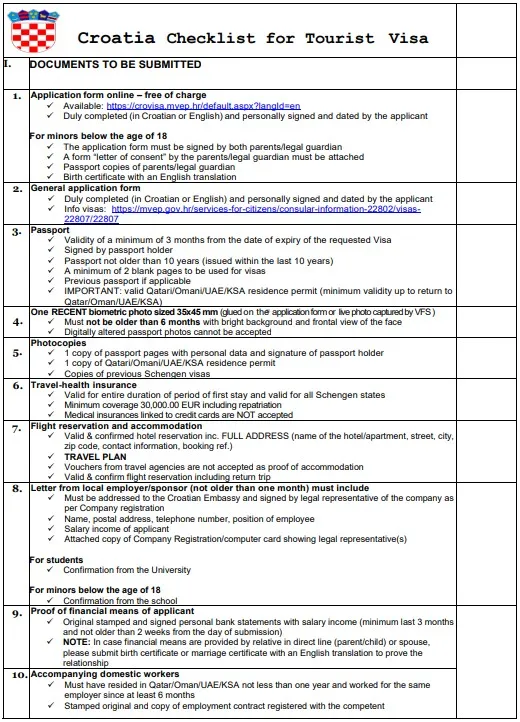
If you need a visa to enter Croatia, preparing your documents correctly is the most important step. Croatia follows the Schengen visa system, so the checklist is standardized and strictly reviewed by consular authorities.
Basic Croatia Tourist Visa Checklist:
Before your appointment, make sure you have:
- Completed and signed visa application form
- Valid passport (issued within last 10 years, valid 3+ months after departure)
- Passport-sized photos (meeting Schengen requirements)
- Proof of accommodation (hotel booking or invitation letter)
- Travel itinerary (flight reservation or travel plan)
- Proof of sufficient funds (bank statements, payslips)
- Travel medical insurance (minimum €30,000 coverage)
- Cover letter explaining your trip
- Proof of employment or ties to your home country
These documents are required to demonstrate your identity, travel purpose, and intent to leave the Schengen Area after your visit.
Official Checklist (VFS Global)
For the most accurate and updated version, always follow the official checklist provided by the visa center: Download Croatia Tourist Visa Checklist (VFS Global)
VFS Global is the authorized visa application partner for Croatia in many countries, and their checklist reflects the exact requirements used during your application process.
The Croatia Visa Application Process
The Croatia visa application process is a structured procedure designed to efficiently handle applications while ensuring all requirements are met. Understanding each step can help streamline your application for a short-stay visa.
Step 1: Filling Out the Online Form
The first step in applying for a Croatia visa is typically to fill out the online application form. This form collects all necessary personal and travel information. It is crucial to ensure accuracy and consistency with your supporting documents. Once completed, the form is usually printed and signed, ready for submission.
Step 2: Compiling Supporting Documents
After completing the online form, the next phase involves compiling all the required supporting documents. This includes your passport, photographs, proof of accommodation, financial statements, travel insurance, and other specific documents mentioned earlier. Organizing these documents meticulously according to the checklist provided by the Croatian Embassy or Consulate will save time and prevent issues during submission.
Step 3: Making a Croatia Visa Appointment at Consular Office or Visa Center
Once your documents are ready, you must make a Croatia visa appointment at the nearest Croatian consular office, embassy, or a designated visa application center (such as VFS Global) in your country of residence. Appointments are often required and can be booked online. It is advisable to book well in advance, especially during peak travel seasons, as appointment slots can be limited.
Step 4: Attending In-Person Submission and Biometrics
The final step in the application process is attending your in-person submission and biometrics appointment. During this appointment, you will submit your completed application form and all supporting documents. Your fingerprints and a digital photograph will also be taken as part of the biometrics requirement for Schengen visas. This step is mandatory for most applicants.
Croatia Visa Cost and Processing Time
Understanding the Croatia visa cost and processing time is essential for budget and travel planning. These factors can vary, so it is wise to be informed about the typical expectations.
Average Processing Times for Short-Stay Visas
The average processing times for short-stay visas to Croatia generally range from 15 business days. However, this is an estimate, and it is always recommended to apply well in advance of your intended travel date. Applying no more than six months before your trip allows ample time for processing and any potential delays.
Factors Affecting Visa Processing Time
Several factors can affect Croatia visa processing time. These include the volume of applications received by the consular office, the completeness and accuracy of your submitted documents, and the need for additional checks or interviews. Peak travel seasons often lead to longer processing times, so planning ahead is crucial for an urgent Croatia visa.
Croatia Visa Fees
Croatia visa fees are standardized for Schengen C visas, though they can be subject to change. There are typically reduced fees or exemptions for certain categories of applicants, such as children or students. It is important to check the current fee schedule on the official website of the Croatian Ministry of Foreign Affairs or the relevant visa application center before applying. These fees are usually non-refundable, regardless of the outcome of your application. For Standard Visa Fees:
- Adults (short-stay Schengen visa – Type C): €90
- Children (6–12 years): €45
- Children under 6 years: Free
Source: Migration and Home Affairs
For long-term visas:
- National visa (Type D): around €93.
If you apply through a visa center (e.g., VFS Global), extra fees may apply:
- Service fee and logistics fee (varies by country)
- Optional costs (courier, photos, insurance)
Some applicants may qualify for reduced or waived fees, including:
- Children under 12
- Students, pupils, and teachers on educational trips
- Family members of Croatian or EU/EEA citizens
- Holders of diplomatic or service passports
(Source: Ministry of Foreign and European Affairs)
Specific Visa Requirements for Your Nationality
While general requirements apply to all visa applicants, specific visa requirements for your nationality may exist. For instance, a Croatia visa for Indian citizens or a Croatia visa for South Africans might involve additional documentation or slightly different procedures compared to other nationalities. It is imperative to consult the official website of the Croatian Embassy or Consulate in your country of residence for the most accurate and up-to-date information. This ensures you meet all specific criteria relevant to your passport.
Urgent Croatia Visa Considerations
For travelers needing an urgent Croatia visa, it is important to understand that expedited processing is not always guaranteed and is usually granted only in exceptional, unforeseen circumstances. These may include humanitarian reasons, urgent medical treatment, or official delegations. In such cases, applicants must provide compelling evidence to support their request for expedited processing. Standard processing times should always be anticipated, and applying well in advance remains the best strategy to avoid last-minute complications.
Applying for a Long-Stay Visa (Type D) and Residence Permit
If your travel plans involve staying in Croatia for longer than 90 days, you will need to apply for a Long-Stay Visa (Type D) and a Croatia residence permit. This applies regardless of your nationality, even if you are from a visa-exempt country for short stays. The process for obtaining a temporary residence permit is more extensive and involves specific criteria based on your purpose of stay, such as employment, study, family reunification, or retirement. Detailed information and application procedures can be found by referring to the official guidelines on temporary stay Croatia.
Do Americans Need a Visa to Enter Croatia?
No, citizens of the United States do not need a visa to enter Croatia for short-term tourist and business trips. This visa-free entry applies for stays lasting up to 90 days within any 180-day period. This policy aligns with Croatia’s status as a Schengen Area member, extending the visa waiver program benefits to US citizens.
Visa-Free Entry for US Citizens (Up to 90 Days)
US citizens can enjoy visa-free entry to Croatia for stays of up to 90 days within any 180-day period. This allows for considerable flexibility for short visits without the need for a formal visa application. This 90-day limit is cumulative across all Schengen countries, meaning any time spent in other Schengen states also counts towards this allowance.
Permitted Activities Under Visa-Free Entry (Tourism, Business, Visiting Family)
Under visa-free entry, US citizens are permitted to engage in various activities in Croatia. These include tourism, visiting family or friends, attending business meetings or conferences, participating in cultural or sports events, and undertaking short-term studies or training. However, visa-free entry does not permit employment or establishing long-term residency. For work or extended stays, different visa categories Croatia and permits are required.
Passport Validity and Other Entry Conditions for US Citizens
While US citizens do not need a visa for short stays, certain passport validity Croatia and other entry conditions must be met. Your US passport must be valid for at least three months beyond your anticipated date of departure from the Schengen Area. Additionally, it must have been issued less than 10 years prior to your arrival date. Travelers should also be prepared to show proof of accommodation, travel insurance, a return or onward ticket, and sufficient funds for their stay if requested by border control Croatia officials.
What if US Citizens Plan to Stay Longer than 90 Days?
If US citizens plan to stay in Croatia longer than the permitted 90 days within the 180-day period, they must apply for a Croatia temporary residence permit. This process should be initiated well in advance of the expiration of their visa-free period, ideally at least 30 days prior. Applying for a temporary residence permit involves meeting specific criteria based on the purpose of the extended stay. For detailed information on extending your stay in Croatia and the application process for residence permits, please visit our blog post: [croatia temporary residence permit](https://www.example.com/croatia-temporary-residence-permit-blog).
Can I Use a Schengen Visa to Enter Croatia?
Yes, you can use a valid Schengen visa to enter Croatia. Since Croatia’s official entry into the Schengen Area, the visa policies have harmonized, allowing for seamless travel for those holding the appropriate Schengen visa. This is a significant benefit for travelers already possessing such a visa.
Croatia’s Official Entry into the Schengen Area (January 1, 2023)
Croatia officially joined the Schengen Area on January 1, 2023. This milestone means that the country now fully implements the Schengen acquis, including its common visa policy. Consequently, the visa policy Croatia has adopted now recognizes uniform Schengen visas for entry, making travel to Croatia more integrated with the rest of the Schengen zone.
Conditions for Using a Multiple-Entry Schengen Visa to Enter Croatia
If you hold a valid multiple-entry Schengen visa, it generally allows you to travel freely within the entire Schengen Area, including Croatia. The key condition is that your Schengen visa must be valid for two or multiple entries and for all Schengen Area Member States. Your entry into Croatia will count towards the total duration permitted by your Schengen visa, typically up to 90 days within any 180-day period.
How Your Stay in Croatia Counts Towards Your Schengen Allowance
Any time you spend in Croatia while holding a Schengen visa or traveling visa-free (if applicable) will count towards your total 90-day Schengen allowance within any 180-day period. This means that if you have already spent time in other Schengen countries, that duration will reduce the amount of time you can spend in Croatia without exceeding the limit. It is crucial to meticulously track your entries and exits to avoid overstaying your permitted duration within the Schengen area Croatia.
Understanding the Validity of Pre-2023 Croatian National Visas
For individuals who possessed a national short-stay visa issued by Croatia before January 1, 2023, it is important to understand its validity. These pre-2023 Croatian national visas remain valid according to their original terms and conditions for entry into Croatia itself. However, they do not automatically entitle you to freely enter other Schengen Area member countries. For travel to other Schengen states, a separate valid Schengen visa would be required.
Other Important Croatia Entry Requirements and Considerations
Beyond visas, several other important Croatia entry requirements and considerations are crucial for a smooth journey. These details help ensure compliance with Croatian immigration laws and border control procedures, regardless of your visa status.
Visa Exemption Countries Croatia (Beyond Major Western Nations)
While major Western nations like the US, Canada, Australia, and the UK are visa-exempt, many other countries also enjoy this privilege for short stays. The full list of visa exemption countries Croatia is extensive and includes a diverse range of nations from around the globe. Travelers from these countries can enter Croatia without a visa for up to 90 days within a 180-day period, provided they meet standard passport and entry conditions. Always consult the official Croatian Ministry of Foreign Affairs website for the most current and complete list of visa-free travel Croatia countries.
What Documents Do I Need to Travel to Croatia Visa-Free?
Even if you are from a visa-exempt country, you will still need specific travel documents for Croatia. The most crucial document is a valid passport that meets the passport validity Croatia requirements: issued less than 10 years ago and valid for at least three months beyond your planned departure from the Schengen Area. Additionally, border control officials may ask for proof of accommodation (e.g., hotel bookings), a confirmed return or onward ticket, and evidence of sufficient funds to cover your stay. While not always requested, having these documents readily available can prevent delays upon arrival.
Border Control Croatia: What to Expect Upon Arrival
Upon arrival at any Croatian port of entry, you will go through border control Croatia. This process is similar to other Schengen countries. You will need to present your passport and any required visa or travel authorization. Border officials may ask about the purpose of your visit, your duration of stay, and your accommodation arrangements. It is important to be polite, truthful, and have all your travel documents organized and accessible. Customs declarations may also be required for certain goods.
ETIAS Croatia: The Upcoming Electronic Travel Authorization System
ETIAS (European Travel Information and Authorization System) is an upcoming electronic travel authorization that will soon be a mandatory requirement for visa-exempt travelers entering Croatia and other participating European countries. Expected to become operational in the last quarter of 2026, ETIAS is not a visa but rather an electronic pre-screening system for citizens of approximately 60 visa-exempt countries (including the US, Canada, Australia, and Japan). Once operational, eligible travelers will need to apply online for an ETIAS authorization before their trip. This authorization will be valid for three years or until your passport expires, whichever comes first, allowing for multiple short stays.
What if I want to live or work in Croatia?
For those seeking to live or work in Croatia, different legal pathways and requirements apply. This typically involves obtaining a long-stay visa (Type D) and a temporary residence permit, which may then lead to options for Croatian permanent residency or even Croatian citizenship under certain conditions. For comprehensive information on these topics, please consult our related blogs on Croatia immigration law and guide to Immigrate to Croatia.
If you are planning more than a short visit, Croatia offers a Digital Nomad Residence Permit designed for remote workers employed by non-Croatian companies. This option allows you to legally stay in Croatia beyond the standard 90-day visa-free limit, typically for up to 12–18 months.
Unlike tourist stays, this permit requires proof of stable foreign income, health insurance, and accommodation. It is particularly popular among professionals from the US, UK, Canada, and Australia who want to live in Croatia while working remotely.
If you are considering this route, see our full guide on Croatia Digital Nomad Visa.
For those navigating Croatia’s residency process, working with experienced local advisors can significantly reduce complexity and risk. Mandracchio Capital provides comprehensive support for expats in Croatia, covering all aspects of residency from initial eligibility assessment and visa strategy to document preparation and coordination with Croatian authorities.
Frequently Asked Questions (FAQs) about Croatia Visas
How long can I stay in Croatia without a visa?
For many visa-exempt nationalities, including citizens of the U.S., Canada, Australia, and the UK, you can stay in Croatia for up to 90 days within any 180-day period without a visa. This 90-day limit applies to your total stay across all Schengen countries.
What documents do I need to travel to Croatia visa-free?
Even if you do not need a visa, you will generally need a valid passport that was issued less than 10 years ago and is valid for at least three months beyond your planned departure from the Schengen Area. You may also be asked to show proof of accommodation, a return or onward ticket, and sufficient funds for your stay.
Is Croatia part of the Schengen area for visa purposes?
Yes, Croatia officially joined the Schengen Area on January 1, 2023. This means that Croatia applies the common Schengen visa policy for short-stay visas.
Do I need a transit visa for Croatia?
If you are a national of a country that requires a Schengen visa and you are transiting through a Croatian airport to a non-Schengen country without entering Croatian territory, you might need an Airport Transit Visa (Type A). However, if your transit involves entering Croatian territory (e.g., staying at a hotel, or connecting to another Schengen country), you would typically need a short-stay (Type C) visa. Some nationalities are exempt from transit visas. Always check the specific requirements for your nationality with the Croatian consular authorities.
What is ETIAS and how does it affect travel to Croatia?
ETIAS (European Travel Information and Authorization System) is an upcoming electronic travel authorization that will be a mandatory requirement for visa-exempt travelers entering Croatia and other participating European countries. It is expected to start operations in the last quarter of 2026. ETIAS is not a visa; it is an electronic pre-screening system for citizens of around 60 visa-exempt countries (like the U.S., Canada, Australia, and Japan) visiting the 30 European countries that include Schengen members. Once operational, you will need to apply online before your trip, and it will be valid for three years or until your passport expires, whichever comes first.
Where can I apply for a Croatian visa?
If you require a visa, you should apply for a Schengen visa for Croatia at the Croatian consular authorities, embassies, or a designated visa application center (like VFS Global) in your country of residence. For Vietnamese citizens, there might not be a direct Croatian embassy in Vietnam, so you might need to apply through an embassy or consulate in a neighboring country, such as Bangkok or Hong Kong.
What are the passport validity requirements for Croatia?
Your passport must be valid for at least three months beyond your intended date of departure from the Schengen Area and must have been issued within the last 10 years. It should also have at least two blank pages for entry and exit stamps.
Do I need travel insurance for Croatia?
Travel insurance is mandatory for individuals who are required to obtain a Schengen visa to travel to Croatia. The insurance must cover medical emergencies, emergency medical evacuation, and repatriation of remains, with a minimum medical coverage of €30,000, and be valid for the entire duration of your stay across all Schengen countries. While not mandatory for visa-exempt travelers, it is highly recommended to protect against unforeseen medical expenses.
Can I extend my stay in Croatia?
To stay in Croatia for longer than the permitted visa-free period (e.g., 90 days for many nationalities) or the validity of your short-stay visa, you will need to apply for a long-stay visa (Type D) and a temporary residence permit. This process involves meeting specific requirements and applying through the appropriate channels, usually the Ministry of Interior.