Are you thinking about making Croatia your new home, whether for work, study, family, or simply to enjoy its lifestyle along the Adriatic?
If so, you’ve probably already realized that understanding Croatia residence permits isn’t always straightforward. A Croatia residence permit allows non-EU citizens to legally stay in Croatia for longer than 90 days, typically for work, study, business, or family reasons.
The rules, requirements, and options can feel overwhelming at first, and that’s completely normal.
That’s exactly why I put this guide together.
My goal here is simple: to help you clearly understand your options, avoid common mistakes, and feel confident about the path ahead. Whether you’re just exploring the idea or already planning your move, I want to give you the clarity you need to take the next step.
In this guide, I’ll walk you through:
- why residence permits in Croatia matter
- the different types available
- who qualifies
- and how the application process actually works in practice
This guide is written by the Digital Nomad & Residency Advisory Team, reviewed by Prof. Dr. Šime Jozipović, Founder and legal advisor with 10+ years of experience in Croatian residency and business law.
With over a decade of experience advising foreign clients relocating to Croatia, our team provide practical, case-based guidance on residence permits, tax residency, property transactions, and cross-border financial planning, particularly for individuals moving from jurisdictions such as the United States, the United Kingdom, Canada, and Australia.
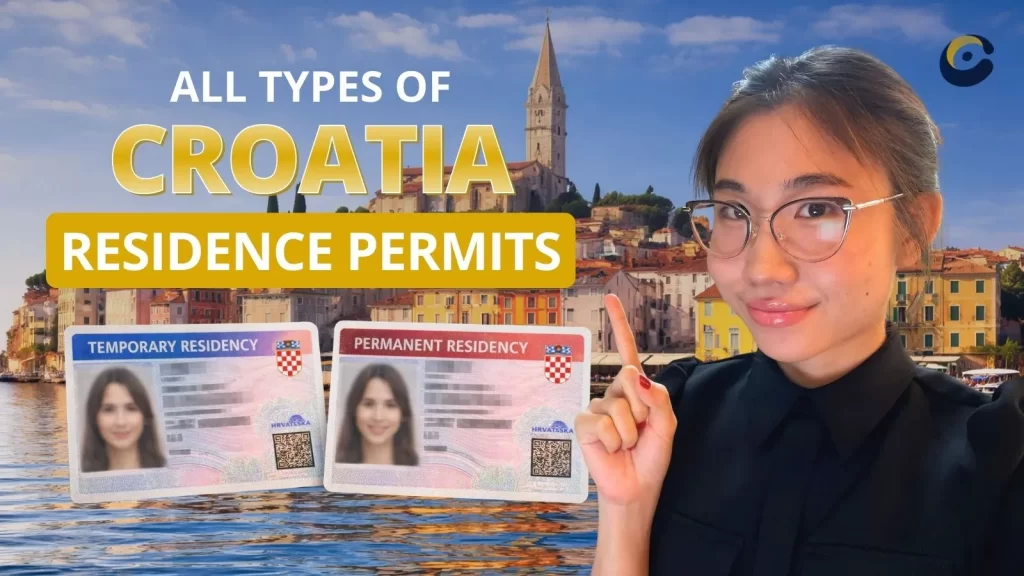
Understanding Croatia Residence Permits: A Comprehensive Overview
What is a Croatia Residence Permit and Why Do You Need One?
A Croatia residence permit is a legal document essential for non-EU/EEA nationals who wish to live in Croatia for longer than the short-term Schengen limit of 90 days within a 180-day period. This permit allows individuals to legally reside in the country, and depending on the specific type of permit, it may also grant the right to work, study, or conduct business.
The primary purpose of a residence permit is to formalize your legal status within Croatia, distinguishing it from a Croatia short-term visa which typically permits only temporary entry for tourism or brief visits within the Schengen area.
While a visa facilitates entry, a residence permit establishes your right to a prolonged presence. Primarily, non-EU/EEA citizens, including those from countries like Vietnam, seeking to establish a long-term presence in Croatia will require a Croatia residence permit. This ensures compliance with Croatian immigration laws and provides access to various public services and rights during your stay.
Key Categories of Residence Permits
Croatia’s residency system is broadly divided into two main categories: temporary and permanent stay. These categories dictate the duration and nature of your legal presence in the country.
Temporary Stay, known as “Privremeni boravak” in Croatian, is typically issued for one year and is renewable annually. This type of permit is always tied to a specific legal purpose, such as employment, study, or family reunification. It is the initial step for most non-EU citizens seeking to establish a life in Croatia.
Permanent Stay, or “Stalni boravak,” grants indefinite residence in Croatia. This status is generally attainable after a period of continuous lawful temporary residence, usually five years. Achieving permanent residency is a significant milestone, offering greater stability and rights within the country.
Administering Authority: Ministry of the Interior (MUP)
The primary governmental body responsible for processing and issuing all Croatia residence permits is the Ministry of the Interior, widely known by its Croatian acronym, MUP (Ministarstvo unutarnjih poslova). This institution oversees all aspects of immigration, from initial applications to renewals and changes in residency status. All official applications and inquiries regarding “luật nhập cư Croatia” are directed to this ministry or its local police administrations.
Types of Temporary Residence Permits (Privremeni Boravak) and Their Requirements
Temporary residence permits in Croatia are purpose-driven, meaning each permit type is granted based on a specific reason for your stay. The “Temporary Residence Permits” vary significantly depending on the category.
Employment/Work Permit
An employment/work permit is for non-EU citizens who have secured a job with a Croatian employer. The primary requirement is a valid work contract. Generally, the employer needs to demonstrate that no suitable local candidates are available for the position, unless the occupation is on a specific shortage list designated by the Croatian Employment Service. This ensures that the local labor market is prioritized.
For highly qualified non-EU citizens, the EU Blue Card offers a specialized pathway. This card requires a university degree or equivalent qualification and a binding job offer in Croatia lasting at least one year. The salary for an EU Blue Card holder must meet the national threshold, which is at least 1.5 times the average gross salary in Croatia. An EU Blue Card can be issued for up to four years and is renewable, providing a clear pathway to long-term EU residence after five years of legal stay in the EU, with at least two of those years spent in Croatia. This option is a significant consideration for professionals seeking “giấy phép lao động Croatia”.
Business/Self-Employment (Residency by Investment)
Residency by investment through business activities involves registering a Croatian company and demonstrating active business operations. A minimum share capital is required, often cited as €20,000 or more. Applicants must show consistent business activity and adherence to tax compliance.
For those pursuing “Croatia Permanent Residence by Investment” via company formation, a minimum share capital of €27,000 is often cited. Additionally, the applicant typically needs to employ at least three Croatian citizens full-time and pay themselves a salary that is 1.5 times the national average. This category aims to attract foreign investment and create local employment opportunities.
Study Permit
A study permit is available for non-EU citizens enrolled at a recognized Croatian university, college, or school. Key requirements include an official enrollment letter from the educational institution. Students must also provide proof of sufficient financial means to support themselves throughout their studies and demonstrate valid health coverage in Croatia.
The study permit is usually granted for one academic year and is renewable, allowing students to complete their educational programs. This permit is crucial for international students planning to live in Croatia while pursuing their academic goals.
Family Reunification
Family reunification permits allow eligible family members to join a resident in Croatia. Eligibility typically extends to spouses, minor children, and in some cases, dependent parents. Applicants must provide proof of their relationship, sufficient accommodation in Croatia, and adequate financial means to support the family.
For non-EU spouses of EU citizens, the processing time for family reunification applications typically ranges from 30 to 60 days. This category supports the fundamental right to family life and helps integrate new residents into Croatian society.
Digital Nomad Visa (Temporary Stay for Digital Nomads)
Croatia has embraced the growing trend of remote work by offering a specific Croatia digital nomad visa. This temporary stay permit is for non-EU/EEA/Swiss citizens who work remotely for a foreign employer or their own company not registered in Croatia, and who do not provide services to employers within Croatia.
A key requirement is a minimum monthly income of at least €3,295 (as of December 2025) or demonstrable savings of €39,540 for 12 months (€59,310 for 18 months). For each additional family member included in the application, the minimum income requirement increases by 10%, which is approximately €330 per month. The permit is granted for up to one year and is generally not extendable consecutively. However, a new application can be submitted after a 6-month break outside Croatia. A significant benefit for digital nomads is the exemption from income tax on foreign-sourced income, making Croatia an attractive destination for remote workers.
Retirement (Financial Independence)
Croatia does not offer a standalone “Croatia retirement visa” in the traditional sense. Retirees seeking to live in Croatia typically apply for a temporary residence permit based on financial independence, falling under the “other purposes” category.
The main requirement for this category is demonstrating sufficient funds to support oneself without needing to work for a Croatian employer. This ensures that the applicant will not become a burden on the state. The permit is issued for one year and is renewable annually, providing a viable option for those seeking residency option for retirement.
Property Ownership (Does Not Automatically Grant Residency)
It is important to clarify that owning property in Croatia does not automatically grant residency. While property ownership signifies a connection to the country and a stable place to live, it is not a direct path to a residence permit.
However, property ownership can significantly support an application for a temporary residence permit under the “other purposes” category. It serves as strong proof of accommodation in Croatia, which is a common requirement for many permit types.
This permit typically allows stays for a portion of the year, such as up to six or nine months, and does not by itself provide a direct path to permanent residency or a work permit.
Other Purposes
The “other purposes” category serves as a flexible option for various specific situations that do not neatly fit into the main, more defined categories of temporary residence permits. This can include unique personal circumstances or specific legal grounds for stay that are not explicitly covered elsewhere. Applicants under this category must clearly articulate their reason for seeking residency and provide supporting documentation.
The Application Process for Temporary Residence Permits: A Step-by-Step Guide
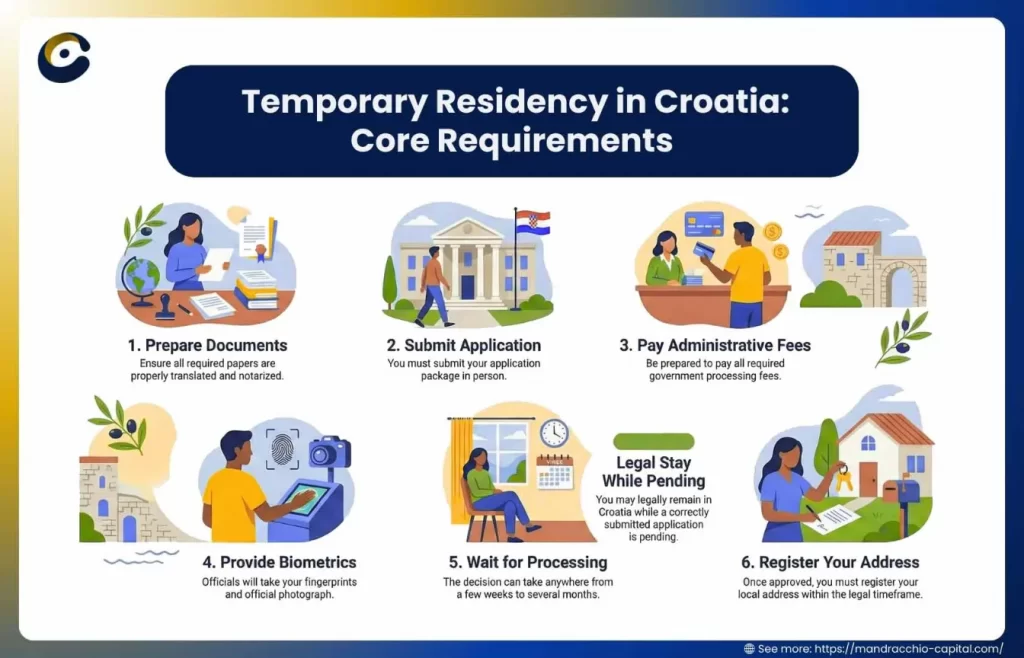
Navigating the “Application Process for Temporary Residence Permits” requires careful attention to detail and adherence to specific administrative steps. Understanding where and how to apply, along with the necessary documentation, is key to a successful application.
Where to Apply
The location for submitting your application depends on your current situation. If you are abroad, you must apply at a Croatian embassy or consulate in your home country or the country where you hold legal residence. This is the standard procedure for initiating your journey to immigrate to Croatia.
Alternatively, if a visa is not required for your entry into Croatia (e.g., for citizens of certain countries who can enter visa-free for short stays), applications can be submitted directly within Croatia. In such cases, you would apply at the local police administration or police station (MUP) corresponding to your intended place of residence. It is crucial to confirm the specific requirements based on your nationality and entry status.
Essential Documents Checklist (Common to Most Permits)
Preparing the correct documentation is a critical step. While specific requirements vary by permit type, several documents are commonly requested for most temporary residence permits. These include:
- Completed application form (Obrazac 1a for non-EU citizens).
- Valid passport or travel document, valid for at least three months beyond your intended stay.
- Color passport-sized photos (typically 30×35 mm or 35×45 mm).
- Proof of purpose of stay, such as a work contract, enrollment letter from a school, or a marriage certificate.
- Proof of sufficient financial means to support yourself during your stay in Croatia.
- Proof of health insurance valid in Croatia.
- A clean criminal record certificate from your home country, which must be apostilled or legalized and officially translated into Croatian.
- Proof of accommodation in Croatia, such as a rental contract, property ownership documents, or a host confirmation.
- Proof of payment of all applicable administrative fees.
Click here to explore the step-by-step process, all required documents, application locations, and even the fee breakdown for obtaining your temporary residency in Croatia: How to Get Temporary Residency in Croatia: Application Process & Fee
Key Administrative Steps and Concepts
Beyond document submission, several administrative steps and concepts are vital for new residents in Croatia. One of the most important is obtaining an OIB (Osobni identifikacijski broj), which is a Croatian personal tax identification number. This unique number is required for almost all official dealings in Croatia, including opening bank accounts, signing contracts, and paying taxes. It is usually assigned upon the approval of your temporary stay.
Another crucial step is the registration of your address. Upon approval of your temporary stay or entry into Croatia, you must register your address with the local police administration within three days. This is a mandatory requirement for all residents and ensures that authorities have up-to-date contact information.
Permanent Residence (Stalni Boravak) in Croatia: Your Path to Long-Term Stay
For non-EU nationals seeking a long-term future in Croatia, permanent residence in Croatia, or “Stalni boravak”, represents a significant step towards full integration. This status grants indefinite residence and a broader range of rights.
Eligibility Criteria
Generally, non-EU nationals can apply for permanent residence after five years of continuous lawful residence on temporary permits. The definition of continuous residence is strict: absences from Croatia within that five-year period must not have exceeded 10 months in total, and no single absence should have exceeded 6 months.
Required Documents and Conditions
To apply for permanent residence, applicants must hold a valid temporary residence permit at the time of application. Other key requirements include demonstrating stable means of support and suitable accommodation in Croatia. Applicants must also possess valid health insurance and provide a clean criminal record certificate from both their home country and Croatia. A crucial condition for permanent residence is demonstrating a basic knowledge of the Croatian language and culture, which often requires passing an official exam.
Application Process and Processing Time
Applications for permanent residence are submitted at the local police administration or police station (MUP) where the applicant resides. The final decision on granting permanent residence is made by the Ministry of the Interior. The processing time for permanent residence applications is typically longer than for temporary permits, usually taking between 6 and 18 months. This extended timeframe reflects the comprehensive review process involved in granting indefinite residency.
Benefits of Permanent Residence
Obtaining permanent residence in Croatia offers numerous advantages. It grants an unlimited stay in the country and the freedom of movement within Croatia without needing further renewals. Permanent residents also gain the right to work without requiring additional permits, significantly simplifying employment opportunities. Furthermore, it provides access to Croatia’s health insurance and social programs, offering a safety net for long-term residents. Crucially, permanent residence is a critical step toward eventual Croatian citizenship, opening the door to full civic participation.
From Permanent Residence to Croatian Citizenship
For those who envision a complete integration into Croatian society, the path from permanent residence to Croatian citizenship is the ultimate goal. This process involves further commitment and adherence to specific naturalization requirements.
Eligibility and Process
Croatian citizenship is generally possible after obtaining permanent residence, typically requiring a total of eight years of continuous residence in Croatia. The naturalization process is managed by the Ministry of Interior and involves demonstrating significant integration into Croatian society, including a good command of the Croatian language and an understanding of its culture and social order.
Dual Citizenship Considerations
It is important for applicants to be aware of Croatia’s stance on dual citizenship. Croatia generally does not accept dual citizenship for naturalized citizens. This means that individuals applying for Croatian citizenship through naturalization are typically required to give up their existing citizenship. There are specific exceptions, often related to birthright or certain international agreements, but for most naturalized citizens, renouncing their previous nationality is a prerequisite.
Important Considerations and Expert Advice for Your Croatian Residency Journey
Navigating the complexities of Croatia immigration law and securing a residence permit requires careful planning and an understanding of various factors. Considering these important points can significantly smooth your journey.
Reciprocity Agreements (for Property Owners)
For non-EU citizens considering buying property in Croatia, reciprocity agreements between Croatia and their home country are often a mandatory requirement.
Tax Implications of Residing in Croatia
Understanding the tax implications is crucial when establishing residency in Croatia. If you spend more than 183 days per year in Croatia, or if you own or lease a home for your exclusive use, you may be considered a tax resident. This designation carries specific tax obligations on your worldwide income. However, a notable exception applies to digital nomads: those holding a digital nomad permit are exempt from income tax on their foreign-sourced income, a significant benefit for remote workers.
Reasons for Permit Revocation
Temporary residence permits are not permanent and can be revoked under certain circumstances. Permits can be revoked if the conditions under which they were granted are no longer met. For instance, if an employment permit holder loses their job and does not find new employment within a specified period, their permit may be revoked. Furthermore, failure to register your address with the local police administration within 30 days of approval, or spending too much time outside Croatia (exceeding permitted absences), can also lead to revocation.
The Value of Professional Legal Assistance
The application procedure for Croatia residence permits can be intricate and demanding, involving numerous documents, specific legal requirements, and communication with various authorities. Working with an immigration lawyer or legal advisory firm can significantly increase the chances of approval. Professionals can assist with eligibility evaluation, ensuring you apply for the correct permit type, meticulous document preparation, and effective communication with the Ministry of the Interior (MUP) and other relevant bodies. Mandracchio Capital, founded by Prof. Dr. Šime Jozipović, offers legal advisory services to help individuals navigate these complex processes, providing expert guidance for expats in Croatia seeking to establish residency.
Frequently Asked Questions about Croatia Residence Permits
Can I work with a temporary residence permit in Croatia?
Yes, whether you can work with a temporary residence permit in Croatia depends entirely on the type of permit you hold. Permits issued for employment or business purposes explicitly grant the right to work. However, permits issued for other purposes, such as study, family reunification, or property ownership, generally do not automatically allow you to work. Digital nomads, for example, are permitted to work remotely for foreign employers but not for Croatian companies.
What is OIB and why is it important for residents in Croatia?
OIB stands for “Osobni identifikacijski broj,” which is a unique Croatian personal tax identification number. It is crucial for residents in Croatia because it is required for almost all official and financial dealings. You will need an OIB to open a bank account, sign rental agreements, purchase property, register a company, pay taxes, and access public services. It is typically assigned upon the approval of your temporary stay.
How long does it typically take to get a permanent residence permit in Croatia?
The processing time for a permanent residence permit (Stalni boravak) in Croatia typically takes between 6 and 18 months. This timeframe can vary based on the completeness of your application, the complexity of your case, and the current workload of the Ministry of the Interior (MUP). It is a more extensive process than applying for a temporary permit due to the indefinite nature of the residency granted.
Does owning property in Croatia automatically grant me residency?
No, owning property in Croatia does not automatically grant you residency. While property ownership can be a supporting factor for a temporary residence permit application under the “other purposes” category, it is not a direct path to residency. This type of permit often has limitations on the duration of stay per year and does not typically lead directly to permanent residency or a work permit. Non-EU citizens also need to consider reciprocity agreements.
What happens if my residence permit application is rejected, and what are my options?
If your Croatia residence permit application is rejected, you will typically receive a written decision stating the reasons for the rejection. Your options usually include appealing the decision within a specified timeframe, often 8 to 15 days, to the Ministry of the Interior. It is highly advisable to seek professional legal assistance from an immigration lawyer to understand the grounds for rejection and to prepare a strong appeal or explore alternative application strategies.
Conclusion: Residency Planning in Croatia
Relocating to Croatia is absolutely achievable, but as you’ve seen, there is no one-size-fits-all solution.
Your success depends on choosing the right residence pathway, preparing the correct documentation, and understanding how Croatian administrative procedures actually work in practice.
This is where many applicants face delays, rejections, or unnecessary stress, not because they are ineligible, but because small details are handled incorrectly.
If you are serious about moving to Croatia, the most important next step is not just gathering information, but applying it correctly to your specific situation.
At Mandracchio Capital, we work directly with non-EU clients relocating to Croatia for work, business, digital nomad residency, family reunification, and long-term settlement.
If you want clarity on your case and avoid costly mistakes, feel free to contact us or explore our Expat Residency in Croatia service