Croatia is increasingly chosen by many expats including Americans retiring abroad who want a Mediterranean lifestyle without Western European costs.
My name is Šime Jozipović, founder and CEO of Mandracchio Capital. I am a Croatian lawyer based in Split, holding an LL.M. in Tax Law from Harvard Law School, with professional experience specializing in international tax planning for expats relocating abroad. Having lived and worked in the United States, I bring a practical understanding of the legal, financial, and relocation challenges Americans face when moving overseas.
For more than 10 years, I have advised foreign individuals on residence permits, tax residency, property transactions, and cross-border financial structuring when moving to Croatia and the European Union.
If you’re seriously planning to retire in Croatia, this guide focuses on:
- cost of living in Croatia for retirees
- the best places to retire in Croatia
- healthcare access and insurance requirements
- lifestyle realities and daily life considerations
- long-term planning and residency strategy
For legal requirements and application steps, see: Croatia Retirement Visa: Legal Requirements & Income Rules
In short: Croatia is ideal for retirees who want EU stability, moderate costs, and coastal lifestyle, but it requires structured residency planning and realistic expectations about bureaucracy and taxation.
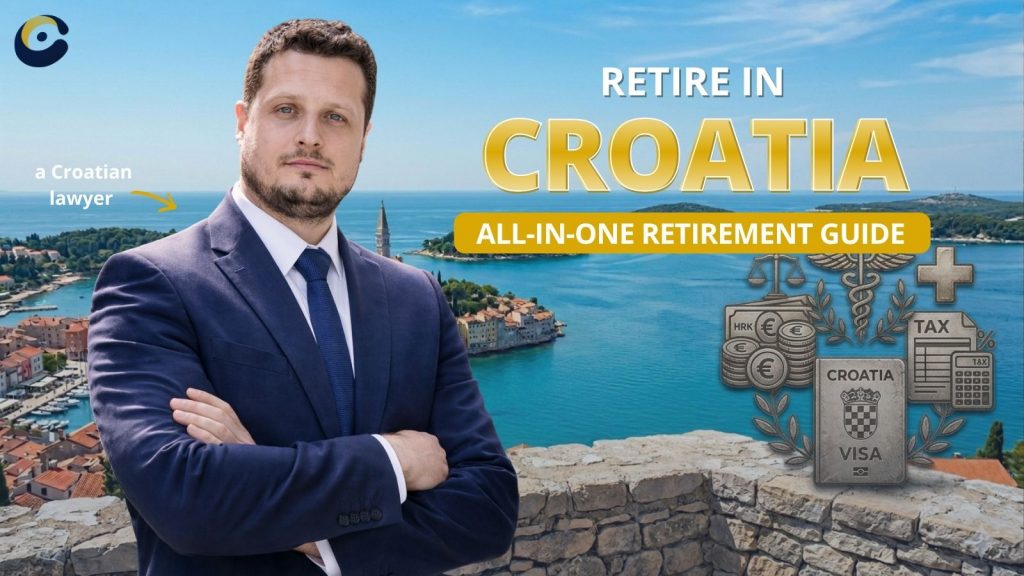
Retiring in Croatia (one of 10 Top Places to Retire in the World in 2026) offers a high quality of life, EU safety, and a lower cost of living than the US and Western Europe.
Can foreigners retire in Croatia? Key Facts 2026
Croatia does not offer a dedicated retirement visa. Non-EU retirees typically apply for a temporary residence permit based on financial independence, renewable annually.
Key requirements include:
– Proof of income
– Health insurance
– Long-term accommodation
After 5 years, permanent residence becomes possible.
| Factor | Croatia |
|---|---|
| Monthly cost (single) | €1,500–€2,900 |
| Residency type | Temporary residence (renewable annually) |
| Retirement visa | ❌ No standalone visa |
| Healthcare | Public + private hybrid |
| Tax residency trigger | 183 days |
| Path to PR | After 5 years |
Is there a Croatia Retirement Visa?

Croatia does not operate a standalone “Croatia retirement visa.” Most non-EU retirees stay long-term through a renewable temporary residence permit based on financial independence.
Can you retire in Croatia as a non-EU citizen?
Yes. Croatia does not offer a dedicated retirement visa, but non-EU citizens can retire through a temporary residence permit based on financial independence. This requires proof of sufficient income, health insurance, and accommodation, and can lead to permanent residence after five years of continuous stay. Here are some options
- Temporary Stay Permit: Valid for up to 1 year, renewable. Requirements include proof of sufficient funds (approximately €1,000/month), health insurance, and accommodation
- Digital Nomad Visa: For those with remote income, allows 12-month stay
- Property Ownership Route: Purchasing property facilitates residency applications
In practical terms, this means:
- You must demonstrate sufficient funds to support yourself
- You cannot work for a Croatian employer under this basis
- Residence is typically issued for one year and renewed annually
- After five continuous years, permanent residence becomes possible
Buying property alone does not automatically grant residency, but it may help satisfy accommodation requirements.
The legal framework is structured and predictable, but it is procedural rather than automatic. Your retirement status itself does not grant residence eligibility depends on meeting immigration requirements.
Key Requirements for Temporary Residence
To obtain temporary residence in Croatia as a non-EU retiree, applicants must meet several core requirements:
- Proof of Financial Means
Applicants must demonstrate sufficient funds to support themselves without working in Croatia. This is typically shown through pensions, savings, or passive income. Croatian law does not define a fixed minimum amount, as financial thresholds are linked to the national average salary and may vary in practice. However, in real-world applications, the required level can be relatively low, though stronger financial documentation is generally recommended to improve approval likelihood. - Accommodation in Croatia
A registered long-term address is required, usually through a 12-month lease agreement or proof of property ownership. - Health Insurance Coverage
Applicants must provide valid health insurance that covers their stay in Croatia. Most begin with private insurance and later transition into the public system. - Criminal Background Check
A clean criminal record is required from the applicant’s home country, as well as any country where they have lived for more than 12 months in the past five years. Documents must be properly legalized (apostilled) and translated into Croatian. - Valid Passport
The passport must remain valid for at least three months beyond the intended period of stay. - Administrative Procedure
All documents must be officially translated into Croatian and submitted through the local police administration (MUP). Processing standards may vary slightly depending on the municipality.
Long-Term Residency Strategy in Croatia
Beyond the initial application, retiring in Croatia requires a clear long-term residency and tax strategy:
Annual Renewals
Temporary residence is typically granted for 12 months and must be renewed each year. Maintaining valid documentation and continuous compliance is essential to preserve your legal status in Croatia.
Permanent Residence (After 5 Years)
After five years of continuous legal residence, you may apply for permanent residence. This stage generally requires proof of stable living conditions and basic Croatian language knowledge.
Croatian Citizenship (After 8 Years)
Permanent residents may become eligible to apply for Croatian citizenship after a total of eight years of legal residence, subject to integration and language requirements.
Tax Residency Considerations

Tax treatment for retirees in Croatia depends on tax residency status and type of income, not on retirement alone. Once tax resident (generally 183+ days), retirees may report worldwide income, subject to treaty relief.
Retirees commonly receive income from:
- Pensions or Social Security
- Investment income (dividends, interest, capital gains)
- Rental or business income
Early planning helps avoid surprises and ensures compliance from the start.
How to Retire to Croatia from the US
Many Americans planning retirement abroad also rely on U.S. retirement accounts such as a 401(k) to support their lifestyle. Americans can retire in Croatia with a 401(k) because the residency process typically requires proof of sufficient income rather than transferring assets into Croatia.
In practice, retirees often withdraw a 401(k) while living abroad and use that income to cover living expenses. While using a 401(k) to retire abroad is common, it is important to understand 401(k) taxes when living abroad, as withdrawals generally remain taxable in the United States. The account itself usually stays in the U.S., but retirees can still support their lifestyle by transferring retirement funds to Croatia periodically from U.S. bank accounts.
Our detailed guide: Retire to Croatia from the US: Guide for US Retirees
Here’s how Croatia compares to the United States for retirees:
| Category | Croatia | United States |
|---|---|---|
| Monthly cost (couple) | €1,800 – €3,000 | $3,000–$5,000 |
| Healthcare system | Public + private hybrid | Mostly private |
| Crime rate | Low | Varies by location |
| Access to EU travel | Yes (EU & Schengen) | No |
Using a 401(k) or Roth IRA to Retire in Croatia
Many Americans considering retirement in Croatia rely not only on a 401(k), but also on a Roth IRA as part of their long-term financial plan. Both accounts can support retirement abroad, since Croatia’s residence options typically focus on proof of sufficient income, rather than requiring asset transfers into the country.
In practice, retirees often withdraw from a 401(k) or combine it with Roth IRA distributions to cover living expenses in Croatia. While 401(k) withdrawals are generally taxable in the United States, qualified Roth IRA withdrawals can be tax-free, making them an efficient income source for international retirees.
This also connects to a common question: Can you retire in Europe with $1 million?
In Croatia, the answer is often yes. With a relatively moderate cost of living (around €1,500–2,000 per month), a well-structured portfolio combining 401(k), Roth IRA, and other savings can comfortably support a long-term lifestyle, especially compared to the higher costs in the United States.
Retiring in Croatia from the UK
For British retirees, Croatia has become an increasingly attractive destination thanks to its Mediterranean lifestyle, lower living costs compared with the UK, and straightforward long-term residence options for financially independent individuals.
However, since Brexit, UK citizens are now treated as third-country nationals under Croatian immigration law. This means British retirees must apply for a residence permit and demonstrate sufficient passive income, accommodation, and health insurance to live in Croatia long term.
Because retirement relocation involves different legal and financial considerations than standard relocation or work permits, it is important to understand the specific rules that apply to British pensioners. For a detailed explanation of eligibility, income requirements, and the residence process, see our full guide on Retire in Croatia from the UK.
How much money do you need to retire in Croatia?
One of the first questions retirees ask is how much money I need to retire in Croatia. The short answer: it depends far more on how and where you live than on national averages.
A realistic monthly budget example (Split, two people)
Lower-budget lifestyle (local habits, modest apartment):
- Rent: ~$360
- Utilities: ~$60
- Groceries: ~$350
- Restaurants: ~$260
- Internet & mobile: ~$40
- Transport: ~$44
Essentials: ~$1,119/month
With lifestyle extras (entertainment, alcohol): ~$1,450-$1,500/month
Mid-range lifestyle (more comfort, central location):
- Rent: ~$720
- Utilities: ~$140
- Groceries: ~$450
- Restaurants: ~$380
- Internet & mobile: ~$53
- Transport: ~$120
Essentials: ~$1,840/month
With extras: ~$2,400-$2,500/month
Typical Retirement Budget in Croatia
Couples living locally in inland Croatia or smaller coastal towns may spend around €1,500–€1,800 per month.. Coastal tourist centers and new apartments raise that to €2,000 – €2,500.
The cost of retiring in Croatia is highly flexible. Retirees who rent long-term and live more locally often spend significantly less than those choosing central, tourist-oriented locations.
For a detailed explanation of the financial proof required for residence, see our guide on financial requirements for retiring in Croatia.
For a deeper breakdown of retirement budgets, including city comparisons, rent scenarios, and healthcare costs, see our full guide on the cost to retire in Croatia.
Best cities to retire in Croatia
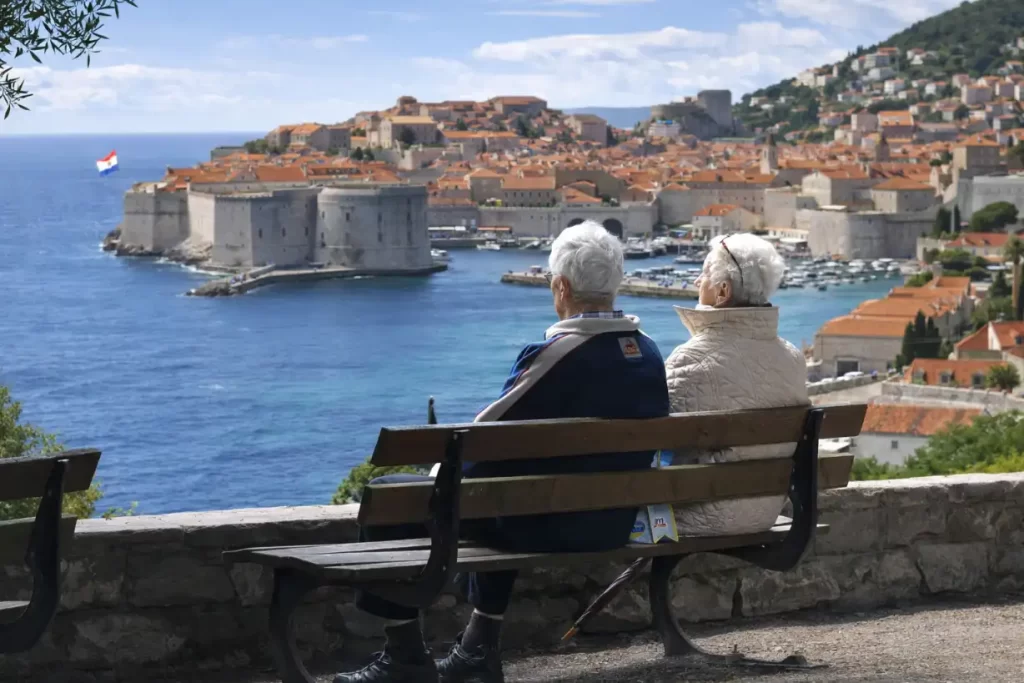
Choosing the right location is one of the most important decisions when planning to retire in Croatia.
- Istria – refined, food-focused, close to Italy
- Split & Zadar (Dalmatia) – vibrant coastal life with year-round infrastructure
- Opatija & Rijeka (Kvarner) – elegant, healthcare-strong, less seasonal
- Zagreb – top hospitals, cultural life, no summer tourist surge
- Lika & inland regions – nature-focused, very low housing costs
Smaller towns and inland areas can reduce living costs by 20 – 40% compared to major coastal cities.
Check out this Best places to retire in Croatia list by Cost of living. And if you want to understand what day-to-day life feels like beyond budgets, including lifestyle, bureaucracy, healthcare access, and social rhythm, see our full guide to living in Croatia.
I live in California, are there beaches to surf in Croatia? – Michelle
Croatia has many beaches, but it is not a major surf destination like California. Some areas can have surfable conditions depending on wind and season, but most people in Croatia focus more on swimming, sailing, paddleboarding, and water sports rather than consistent surfing.
Healthcare in Croatia for Retirees
Healthcare is a major factor for retirees, especially those planning to retire to Croatia from the US, Canada, Australia, the UK,…
- Residents can access the public healthcare system after registration
- Private clinics are widely used by expats for speed and English-speaking care
- Private healthcare costs are often significantly lower than in the US
Read next: Healthcare in Croatia for retirees
How Healthcare Access Typically Works for Retirees
Most non-EU retirees begin with private international health insurance to support their temporary residence application. Once residence is approved, retirees may register for Croatia’s public healthcare system (HZZO ), which provides comprehensive coverage at relatively low cost.
Many expats adopt a hybrid approach:
- Public healthcare for long-term security and major treatments
- Private clinics for faster access, English-speaking specialists, and convenience
You can read about Croatia pension system here: Croatia Pension System (2026): Complete Guide for Foreign Retirees
Lifestyle, Language & Bureaucracy Require Adjustment

While retirement in Croatia offers peace and beauty, it’s not entirely friction-free.
Things to realistically expect:
- Croatian is challenging, especially outside major cities
- Bureaucracy is document-heavy and slower than in the US
- Tourist areas become crowded during summer months
However, many retirees find that patience and local support quickly smooth out these challenges.
Is Croatia a Good Place to Retire?
Yes, Croatia is generally considered a good place to retire, particularly for international retirees seeking a Mediterranean lifestyle within the European Union. The country offers a relatively affordable cost of living compared with Western Europe, a high level of personal safety, and a relaxed coastal culture that many retirees find attractive.
In practice, Croatia appeals most to retirees who value a slower pace of life, access to the Adriatic coastline, and EU political stability. However, like any relocation decision, retiring in Croatia also involves practical considerations such as residency permits, healthcare contributions, and local administrative procedures.
Why People Choose to Retire in Croatia?
Affordable cost of living
Compared with many Western European countries, everyday expenses in Croatia remain relatively moderate. A retired couple can often live comfortably on €1,200–€2,000 per month, depending on location and lifestyle.
Safe and stable environment
Croatia consistently ranks among the safer countries in Europe. It is often classified as Level 1 (“Exercise Normal Precautions”) by the U.S. State Department, reflecting relatively low crime levels and strong public safety.
EU infrastructure and healthcare access
Croatia operates a national healthcare system administered through HZZO (Croatian Health Insurance Fund). Residents contribute to the system and gain access to public healthcare services across the country.
Lower Cost of Living
Compared with Western Europe and the US, the cost to retire in Croatia is notably lower. Many couples live comfortably on €1,200 – €2,000/month, depending on region and lifestyle.
Read all the benefits: Why Tens of Thousands of Western Expats Are Choosing to Retire in Croatia: 6 Benefits
FAQ: Retire in Croatia
Is there a retirement visa in Croatia?
No. There is no standalone retirement visa in Croatia, but retirees qualify through temporary residence.
How to Retire in Croatia?
To retire in Croatia, non-EU citizens typically obtain temporary residence based on financial independence. It is renewable annually and may lead to permanent residence after five years. For a full document checklist and application steps, see our detailed step-by-step guide.
Is Croatia a good place to retire to?
Yes. For many expats, retire in Croatia means safety, affordability, and a Mediterranean lifestyle with reliable healthcare and EU stability.
How much money do I need to retire in Croatia?
Most couples budget €1,200 – €2,000/month. Your cost to retire in Croatia depends on location, housing, and healthcare choices.
Can an American retire in Croatia?
Yes. Retiring in Croatia as an American is common. US citizens apply for temporary residence and renew annually, with a path to permanent residence after five years.
Can I retire to Croatia from the US permanently?
Yes. Many US citizens retiring in Croatia start with temporary residence, then apply for permanent residence after five continuous years.
What are the best places to retire in Croatia?
Top choices include Istria, Split or Zadar (Dalmatia), Opatija (Kvarner), Zagreb, and budget-friendly inland regions like Lika.
Do I need to take a Croatian language exam?
Usually, yes. As a “Third Country National” (non-EU/EEA), you must prove proficiency in the Croatian language and the Latin script. You are exempt only if you are over 65 years old, a preschooler, or if you completed high school or university in Croatia.
Is Croatia a good place to retire for expats?
Yes. Croatia is considered one of the best expat retirement countries due to safety, English proficiency, and EU protections.
What type of income do I need monthly or yearly to retire in Croatia?
There isn’t one perfect number, but a comfortable retirement budget depends on where you live (coastal vs inland), whether you rent long-term, and how often you use private healthcare. Many retirees aim for a stable monthly income that covers rent, living costs, insurance, and travel.
What is the price range to rent a house close to the water in Croatia?
Rent near the sea is highly seasonal. Long-term rentals can be reasonable in some coastal towns, but prices rise sharply in tourist hotspots and during summer. The closer you are to the beach (and the newer the apartment), the higher the rent tends to be.
What are the average costs in Croatia for food, rent, medical, and daily life?
Costs vary a lot by location and lifestyle. Inland cities and long-term rentals are usually more affordable, while coastal tourist areas (especially in summer) can be significantly higher. Most retirees budget for housing, groceries, utilities, transport, and a mix of public/private healthcare.
How easy is it to travel from Croatia to other countries in Europe?
Very easy. Croatia is in the EU and Schengen, which makes regional travel simple. Many retirees enjoy quick access to Italy, Slovenia, Austria, Hungary, and other European destinations by flight, car, or ferry.
How hard is it to start a business in Croatia or move a US business there?
It’s doable, but it’s not “plug-and-play.” The difficulty depends on your industry, licensing requirements, tax setup, and whether you need residence through the business. The best outcomes usually come from proper legal structuring from day one and realistic expectations about administration.
English is my first language, how hard is it to communicate in Croatia? Will everyone speak English?
In major cities and coastal areas, English is widely spoken especially in tourism, restaurants, and younger communities. However, not everyone speaks English fluently, and official procedures (government offices, forms, legal steps) often require Croatian. Many retirees manage well day-to-day with English, but learning basic Croatian helps a lot for smoother integration.
Is Croatia a good place to retire for expats?
Yes. Croatia is considered one of the best expat retirement countries due to safety, English proficiency, and EU protections.
About Mandracchio Capital
Many people researching retirement in Croatia eventually reach the same practical questions: Can I afford this? How does financing work without EU income? What happens to my pension?
Mandracchio Capital is a Croatia-based legal advisory and structuring firm that works with foreign nationals considering relocation to Croatia. Our work focuses on the practical issues broader guides often do not fully explain, including residency pathways, property structuring, retirement planning, pension transfers, AML documentation, and real estate risk review in Split and Dalmatia.
For readers who want to move beyond general research, we provide structured consultations to help assess financial feasibility, legal options, and next-step planning.