Are you considering immigrating to Croatia to enjoy a slower Mediterranean lifestyle or to explore new business and investment opportunities within the European Union? While Croatia offers a high quality of life, strong safety standards, and access to the EU market, the immigration process can involve navigating residence permits, legal requirements, and administrative procedures that are not always clearly explained.
For foreign nationals, the process to immigrate to Croatia usually involves obtaining a temporary residence permit, which may be based on employment, business activities, digital nomad status, investment structures, or family reunification. Understanding the correct legal pathway from the beginning can make the difference between a smooth relocation and months of administrative complications.
This guide is based on more than a decade of practical advisory experience supporting international clients, helping thousands of foreign individuals, entrepreneurs, and investors understand the legal framework for relocating to Croatia and preparing the necessary steps for a successful move.
The legal perspective in this article was reviewed by Šime Jozipović, founder and CEO of Mandracchio Capital and Professor of Finance and Business Law at the University of Split, who has worked with international individuals and investors navigating residence, investment, and regulatory compliance in Croatia and the European Union.
Note: Navigating these pathways often requires professional support. For personalized guidance, consider a Croatia immigration lawyer consultation to ensure your application is accurate. If you need help with the documents required for Croatian residency or need a legalizing foreign documents for Croatia (Apostille guide), our team at Mandracchio Capital is here to help you secure the best immigration services for Croatia.
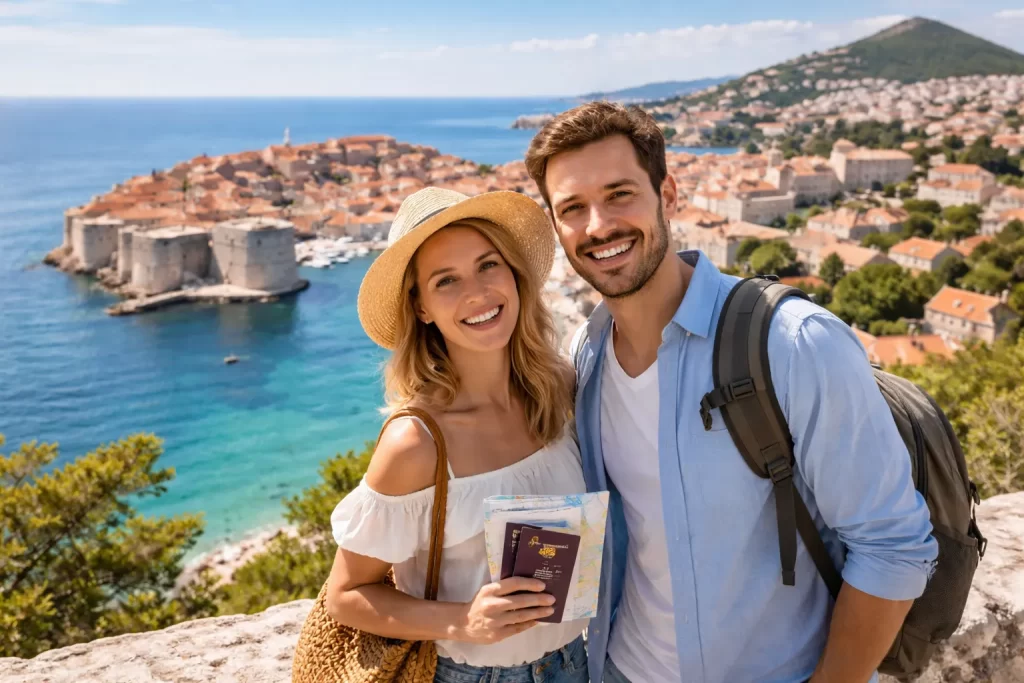
Why is Croatia an ideal destination for foreigners?
Quality of life and work-life balance
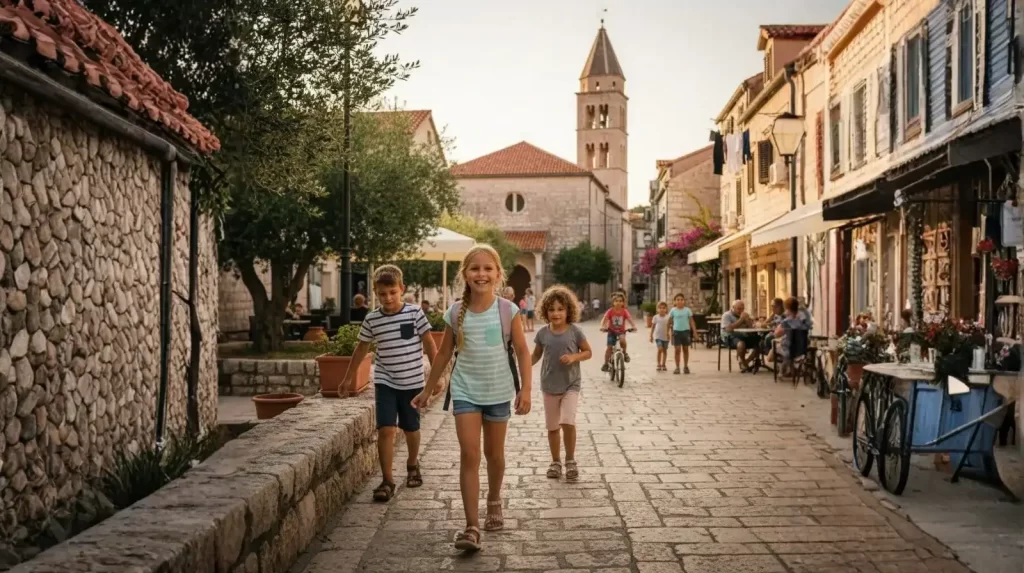
Croatia offers a Mediterranean lifestyle that prioritizes well-being and personal fulfillment. Unlike the fast-paced, high-pressure environment of cities such as Dubai, London, or New York, life in Croatia moves at a slower, more intentional rhythm. This cultural difference is reflected in daily routines, social interactions, and professional expectations.
Expats who relocate to Croatia often discover that the pros and cons of living in Croatia for expats lean heavily toward the benefits. The country provides more time for family, outdoor activities, and a healthier daily routine. The Adriatic coastline, national parks, and islands offer countless opportunities for recreation, including sailing, hiking, cycling, and wine tourism.
Work-life balance is deeply embedded in Croatian culture. The standard workweek is typically 40 hours, and overtime regulations help protect personal time. Compared to many Western economies, the concept of “living to work” is far less dominant.
Additionally, the cost of living, particularly outside Zagreb and major tourist hubs remains relatively affordable. Housing, groceries, and utilities cost less than in most Western European capitals, allowing expats to maintain a comfortable lifestyle without the financial pressure common in larger EU cities.
Economic advantages and investment environment in the EU
As a member of the European Union since 2013 and the Schengen Area since 2023, Croatia provides a stable and regulated economic environment. These memberships create strategic advantages for investors, entrepreneurs, and international professionals.
Application fees, legal costs, and everyday living expenses are generally lower, making Croatia an accessible entry point into the EU market.
Croatia’s economy is growing steadily, supported by sectors such as tourism, technology, maritime industries, and renewable energy. The government has also introduced incentives for digital nomads, startups, and foreign investors.
Corporate tax rates remain competitive, and special economic zones provide additional benefits for companies operating in specific industries.
For remote professionals and digital entrepreneurs, Croatia offers modern infrastructure including high-speed internet, coworking spaces, and an expanding international professional community. Cities such as Split, Dubrovnik, and Rijeka have become emerging hubs for remote workers seeking a balance between productivity and lifestyle.
At Mandracchio Capital, we frequently help founders leverage these EU advantages. By establishing a legal entity in Croatia, international entrepreneurs can access the EU single market, EU funding programs, and cross-border business opportunities while operating from a lower-cost base.
Social safety and stability
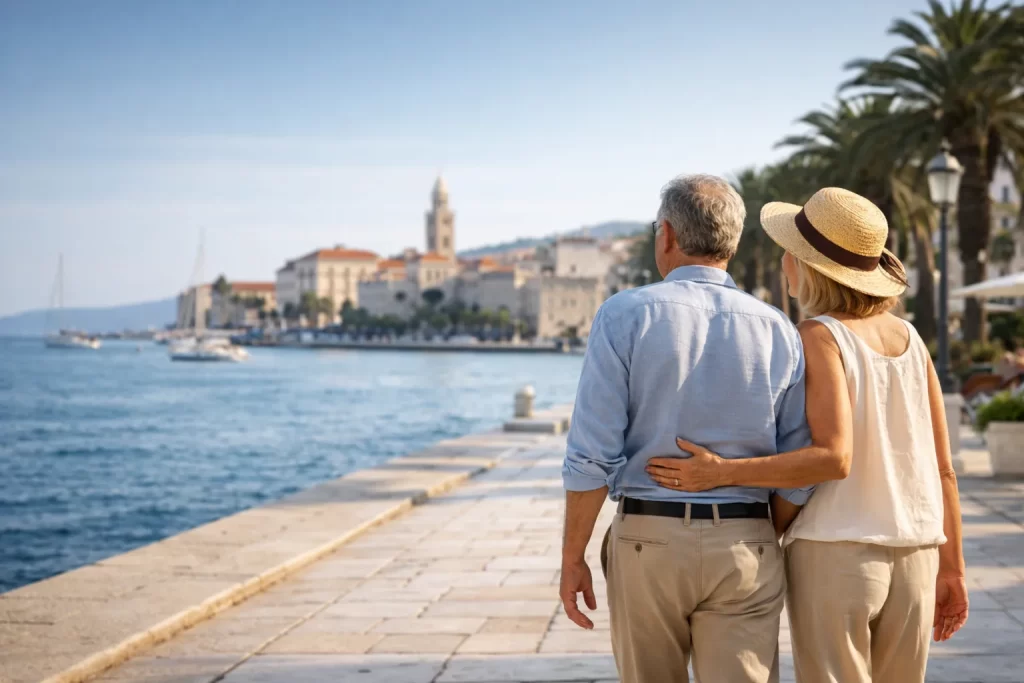
Croatia consistently ranks among the safest countries in Europe. According to international crime statistics and the Global Peace Index, violent crime is rare and petty crime remains low compared to many Western European destinations.
For families, this stability is a major attraction. Children can often walk to school, play outdoors, and explore neighborhoods with a high level of safety.
Cities such as Split, Zagreb, and Zadar maintain a strong sense of community and public security. It is common for residents to walk through urban areas late at night without concern, something increasingly uncommon in larger global cities.
Croatia also benefits from a stable political system, reliable public institutions, and strong integration into European governance structures. The adoption of the euro (EUR) in 2023 further reinforced economic and financial stability.
For many expats, this combination of safety, social cohesion, and institutional reliability forms the foundation of Croatia’s long-term appeal as a place to live and raise a family.
Immigration to Croatia: Key Statistics
Croatia remains an attractive destination for expats seeking access to the EU market, a safer lifestyle, and a lower-cost base than many Western European countries. According to the Croatian Bureau of Statistics, Croatia’s mid-2024 population estimate was 3,866,233, showing a slight year-on-year increase.
Official migration data also shows that in 2024, 81.1% of immigrants to Croatia were foreign nationals, confirming the growing role of international migration in Croatia’s demographic and labor-market trends. Croatia has been a member of the European Union since 1 July 2013, and joined both the euro area and Schengen Area on 1 January 2023, which has further increased its appeal for mobile professionals, entrepreneurs, and investors.
Can Foreigners Immigrate to Croatia?
Yes, foreigners can immigrate to Croatia through several legal pathways depending on their nationality and purpose of stay.
For non-EU citizens, the most common route is obtaining a temporary residence permit, which allows foreigners to live in Croatia for more than 90 days. These permits are issued for specific purposes such as employment, business ownership, digital nomad status, family reunification, or study.
Do You Need a Visa to Move to Croatia?
Before considering long-term residence permits, it is essential to understand Croatia’s visa requirements. The visa you need depends on your nationality, the purpose of your visit, and the length of your intended stay.
Croatia is a member of the European Union and part of the Schengen Area as of January 1, 2023. This means that visa policies are aligned with broader EU regulations, but there are important nuances to understand.
Visa-free entry for short stays
Citizens of many countries can enter Croatia without a visa for short stays of up to 90 days within any 180-day period. This applies to nationals of the United States, United Kingdom, Canada, Australia, New Zealand, Japan, South Korea, and many other countries.
During this visa-free period, you may travel, explore, conduct business meetings, or attend conferences. However, you are not permitted to work or engage in any income-generating activity in Croatia during this time.
Short-stay visa (Schengen Type C visa)
Citizens of countries that do not have visa-free agreements with the Schengen Area must apply for a short-stay visa, also known as a Schengen Type C visa. This visa allows stays of up to 90 days within a 180-day period for tourism, business, or family visits.
Long-stay visa (Type D visa)
A long-stay visa, or Type D visa, is required for anyone planning to stay in Croatia for more than 90 days. This visa serves as a preliminary authorization before you apply for a temporary residence permit.
The Type D visa is granted based on the same grounds as temporary residence permits: employment, business, family reunification, study, or other approved purposes. You must apply for this visa at a Croatian embassy or consulate in your country of residence before traveling to Croatia.
How to immigrate to Croatia?
Temporary residence, permanent residence, and citizenship
Understanding Croatia’s immigration framework is essential before planning a long-term move. Each legal status carries different rights, obligations, and long-term opportunities.
A temporary residence permit is typically granted for one year and must be renewed annually. This permit is issued for a specific purpose such as employment, business activity, study, family reunification, or digital nomad status. Holders may live and work in Croatia as long as the conditions of the permit remain valid.
How long does it take to get permanent residency in Croatia?
In most cases, applicants must maintain continuous legal residence for five years under temporary residence permits. During this period, they must not spend more than ten consecutive months outside Croatia. Applicants must also demonstrate basic knowledge of the Croatian language, Latin script, and elements of Croatian society.
Permanent residence allows individuals to live and work in Croatia indefinitely without annual renewals. Permanent residents gain access to public healthcare, education, and social services on equal terms with Croatian citizens. However, they cannot vote in national elections or hold certain public offices.
Croatia citizenship by naturalization requirements are stricter. Applicants typically must reside legally in Croatia for at least eight years. They must pass a Croatian language examination, demonstrate knowledge of Croatian culture and constitutional order, and meet additional legal requirements. Citizenship grants full rights, including a Croatian passport and unrestricted access to live and work anywhere within the European Union.
Immigration Timeline: From Temporary Residence to Croatian Citizenship
| Stage | Typical Duration | Key Requirement |
|---|---|---|
| Temporary residence permit | 1 year (renewable) | Work, business, study, family |
| Long-term residence | 5 years | Continuous legal stay |
| Croatian citizenship | 8 years | Language test + integration |
Common residence pathways for non-EU citizens
Is it hard to immigrate to Croatia as a non-EU citizen? It can be complex, but with the right guidance, it is manageable. Here are the primary routes:
Digital nomad visa for remote workers
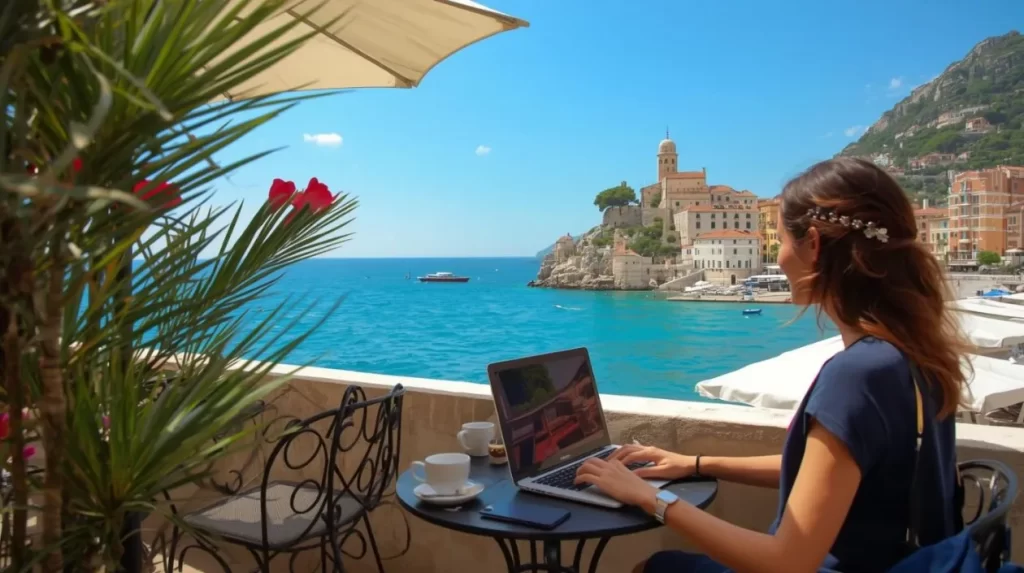
Croatia introduced its digital nomad visa in 2021, becoming one of the first EU countries to provide a dedicated residence option for remote workers.
Applicants must prove they work for a company outside Croatia or operate a remote business. They must also demonstrate sufficient income currently about €3,295 per month.
The permit is valid for up to 12 months and may be extended for another year. However, time spent under the Croatia digital nomad permit does not count toward permanent residence or citizenship.
Work permit and EU Blue Card
If you are finding a job in Croatia for English speakers, you may qualify for a work permit. Highly qualified professionals can apply for an EU Blue Card. This process requires a binding job offer from a local employer. How to get a work visa for Croatia involves coordination with your employer and the local police.
Relocation through investment and business formation
Entrepreneurs can start a business in Croatia (usually a d.o.o., equivalent to an LLC) and obtain a residence permit based on business activity.
This pathway requires registering the company, demonstrating business viability, and complying with Croatian corporate and tax regulations. In many cases, the company must employ local staff and generate active revenue.
Residence permits based on business ownership are typically issued for one year and can be renewed. After five years of continuous residence, applicants may apply for permanent residence.
Family reunification and marriage
Can I bring my family when moving to Croatia? Yes. Spouses and minor children of legal residents or Croatian citizens are eligible for family reunification. This process allows your family to live with you at the same address, provided you meet the financial and accommodation requirements.
Immigration based on Croatian descent
Individuals with Croatian heritage may qualify for residency and citizenship through descent. This pathway often waives specific financial and language requirements. It is a unique opportunity for the diaspora to reconnect with their roots.
Education and scientific research
Students enrolled in recognized Croatian universities or language programs can obtain a residence permit. This is an excellent way to immerse yourself in the culture. You may find yourself asking: Do I need to learn Croatian to live in Croatia? While English is common in business, learning the language is essential for long-term integration and official interactions.
Rights of EU/EEA/Swiss citizens moving to Croatia
Citizens of EU, EEA, and Swiss countries benefit from freedom of movement and can live and work in Croatia without a visa.
However, they must register their residence with the local police administration within 90 days of arrival. Required documentation includes proof of accommodation, health insurance, and sufficient financial means.
After five years of continuous residence, EU citizens obtain permanent residence rights automatically. After eight years, they may apply for Croatian citizenship by naturalization.
Minimum Financial Requirements to Immigrate to Croatia
Financial requirements depend on the legal basis of your stay, but Croatian authorities generally expect applicants to prove that they can support themselves without becoming dependent on the state.
For example, official guidance for Croatia’s digital nomad route states that applicants seeking a 12-month stay must prove access to at least EUR 39,540 in available funds, while an 18-month stay requires EUR 59,310. Read more: Croatia Digital Nomad Visa Requirement: Documents & Income rules
For other residence pathways, such as business-based residence or family reunification, the exact financial threshold depends on the legal basis of the application, but proof of stable income, accommodation, and the ability to cover living expenses is still essential. In practice, this means applicants should be prepared to show bank statements, employment income, business activity, or other reliable financial support.
How to prepare your application: A step-by-step legal guide
The importance of Apostille and consular legalization
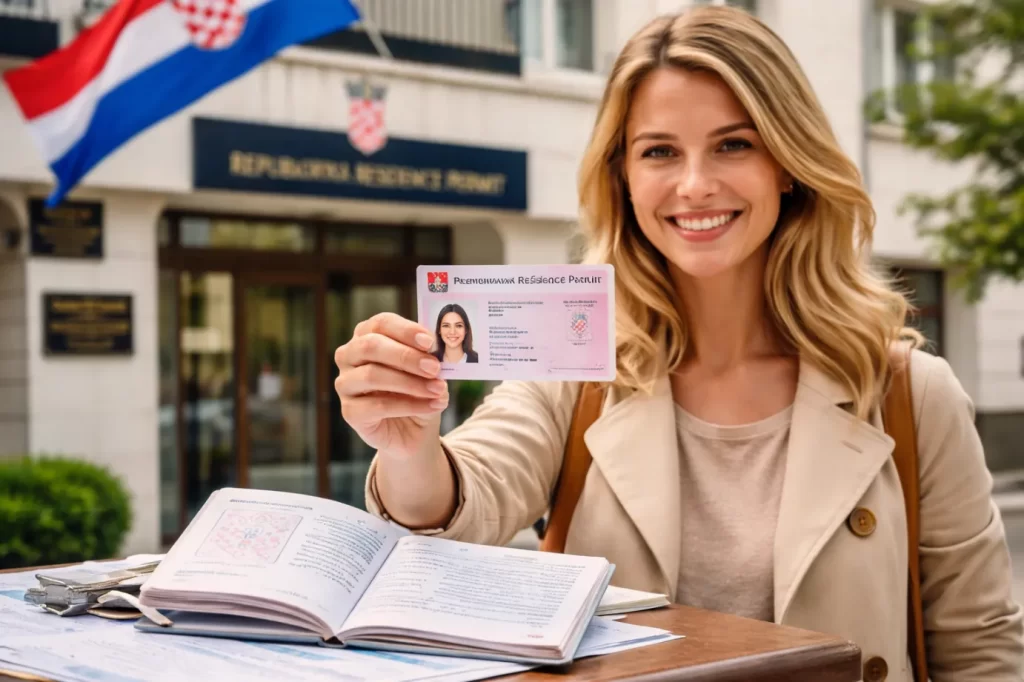
Before you move, you must verify your foreign documents. If your home country is part of the Hague Convention, you need an Apostille. This stamp proves your document is authentic. Without it, the Croatian authorities will reject your application. If your country is not part of the convention, you must undergo full consular legalization. At Mandracchio Capital, we often see clients lose weeks of time because they skipped this step before leaving home.
The court-certified translation process
All foreign documents must be translated into Croatian. You cannot use a standard translation service. You must hire a court interpreter (sudski tumač). These professionals are officially appointed by the Croatian Ministry of Justice. Their stamp is the only one recognized by the police (MUP).
Checklist of required documents
Preparing your file correctly is the most important step in your immigration journey.
Proof of financial means
You must prove you can support yourself. For a digital nomad permit, you need a minimum monthly income of approximately €3,295. For other permits, you must provide bank statements showing consistent funds for the duration of your stay.
Mandatory health insurance
You need proof of health insurance to apply. Initially, most expats purchase private international travel insurance that covers at least €30,000. Once you receive your residence permit, you are generally required to register with the state health fund, HZZO.
Criminal background check and personal documents
You need a clean criminal record certificate from your home country, issued within the last 6 months. You also need a valid passport with at least 3 months of validity beyond your intended stay.
Steps to submit your application at MUP or the Embassy
If you are a third-country national, you usually apply at the nearest Croatian embassy or consulate before arrival. If you are visa-exempt, you may apply directly at the local police administration (MUP) in your city of residence. The processing time varies, but expect to wait about 30 to 60 days for a decision.
For a full explanation of the residence permit process, documents, and timelines, see our detailed guide on Temporary Residence Permit in Croatia and Croatia Residence Permit Application Process & Fee
Immigrate to Croatia vs Other European Countries
Many foreigners considering relocation to Europe compare Croatia with popular destinations such as Portugal, Spain, Germany, or France. While each country offers unique opportunities, Croatia has become an increasingly attractive immigration destination due to its lower costs, simpler residency options, and high quality of life.
Below is a quick comparison of Croatia with several well-known European immigration destinations.
| Factor | Croatia | Western Europe (Germany, France) | Southern Europe (Spain, Portugal) |
|---|---|---|---|
| Immigration difficulty | Moderate | Often complex | Moderate |
| Cost of living | Lower | High | Medium to high |
| Residency options | Digital nomad, work, business, family | Work-focused | Retirement and investment visas |
| Lifestyle | Mediterranean, slower pace | Urban, fast-paced | Mediterranean |
| Access to EU | Yes | Yes | Yes |
Lower cost of immigration and living
One of the biggest advantages when you immigrate to Croatia is affordability. Administrative fees, legal costs, and general living expenses are significantly lower than in Western European countries such as Germany or France. Housing and daily expenses are also more manageable, especially outside major tourist areas.
Flexible residency pathways
Croatia provides several practical immigration pathways including:
- digital nomad residence permits
- work permits and EU Blue Card
- residence through business ownership
- family reunification
- citizenship through Croatian descent
Compared with many Western European countries, Croatia’s immigration procedures are often more accessible for entrepreneurs and remote workers.
Mediterranean lifestyle with EU access
Unlike many major European capitals, Croatia offers a relaxed lifestyle centered around coastal living, outdoor activities, and strong community ties. Cities such as Split, Zadar, and Dubrovnik combine modern infrastructure with seaside environments rarely found in larger European economies.
At the same time, Croatia is a member of the European Union, the Schengen Area, and the Eurozone, meaning residents benefit from EU mobility and economic stability.
Challenges when immigrate to Croatia and how to overcome them
Dealing with bureaucracy
Croatian administration can be slow and rigid. Expect to visit the police station multiple times. Keep a physical folder with 2 copies of every document. Patience is your best tool here. If the process feels overwhelming, a Croatia immigration lawyer consultation can help you navigate these administrative hurdles efficiently.
Language barriers and cultural integration
While many Croatians speak English, the bureaucracy operates entirely in Croatian. You will likely need a translator for your first few visits to the police station. Learning basic Croatian phrases will also help you build relationships with locals and speed up your integration into the community.
Seasonality in coastal cities
If you move to a coastal town like Split or Dubrovnik, be aware of the seasonal shift. These cities are vibrant from June to August but become very quiet in the winter. If you prefer a consistent social life, consider living in a larger city like Zagreb, which remains active year-round.
Tax considerations and double taxation
If you live in Croatia for more than 183 days per year, you become a tax resident. You must report your worldwide income. Currently, Croatia and the United States do not have a finalized double-taxation treaty. This means you may face tax liabilities in both countries. We strongly recommend consulting with a tax expert to understand your specific situation and avoid unexpected costs.
Read next: Double Taxation Agreement Croatia: What Expats Must Know
Life in Croatia: What newcomers need to know
Best Places to Live in Croatia
Choosing the right city is one of the most important decisions when relocating. Croatia offers a wide range of living environments from vibrant capital cities to relaxed coastal towns and historic island communities. The best location for you will depend on your lifestyle, career plans, and long-term residency goals.
Zagreb: The economic and administrative center
Zagreb, Croatia’s capital, is the country’s primary business and administrative hub. It offers the largest job market, international schools, universities, and modern infrastructure. Many foreign professionals choose Zagreb because government institutions, embassies, and major companies are located here.
The city also maintains a strong cultural scene with museums, theatres, festivals, and a growing startup ecosystem. Unlike coastal destinations, Zagreb remains active throughout the year, making it ideal for those who prefer a stable urban environment.
Split: Mediterranean lifestyle with a modern expat community
Split is one of the most popular destinations for expats, digital nomads, and remote workers. Located on the Dalmatian coast, the city combines historic architecture, beaches, and modern amenities.
Split has a strong international community, coworking spaces, and a vibrant café culture. Many newcomers choose Split for its balance between professional opportunities and relaxed coastal living.
For a deeper comparison of cities, property markets, and expat communities, see our full guide:
Best Places to Live in Croatia.
Finding accommodation: Renting and buying property
Finding a home is your first priority. In cities like Zagreb or Split, rental demand is high. Most landlords require a security deposit equal to 1 or 2 months of rent. If you plan to buy, ensure the property is zoned as “residential.” Foreigners from certain countries can buy property through reciprocity agreements. At Mandracchio Capital, we often connect clients with local agents to ensure the title deeds are clear before any money changes hands.
Healthcare system for foreigners
Croatia offers a mix of public and private healthcare. Once you obtain your residence permit, you must register with the HZZO (Croatian Health Insurance Fund). This gives you access to the public system. However, many expats choose to purchase supplemental private insurance to skip long wait times for specialists. If you have specific medical needs, bring your records translated into Croatian to help local doctors understand your history.
Read more: Healthcare in Croatia Overview: Costs, Access for Expats
Exchanging your driver’s license
If you hold a valid license from your home country, you may be able to exchange it for a Croatian one. You must apply for this exchange within your first year of residence. If your country does not have an exchange agreement with Croatia, you will need to enroll in a local driving school, known as autoškola. This involves both a theory exam and a practical driving test.
Opening a bank account and essential services
You will need an OIB (Personal Identification Number) to open a bank account in Croatia. This is your primary tax and administrative ID in Croatia. Once you have your OIB, you can open an account at major banks like PBZ, Erste, or Zagrebačka banka. For utilities, most contracts for electricity, water, and internet require your OIB and a copy of your rental agreement.
Frequently asked questions
Do I need to learn Croatian to apply for residency?
For a temporary residence permit, you do not need to speak Croatian. However, all your official applications and supporting documents must be submitted in the Croatian language. For permanent residence or citizenship, you will be required to pass a formal language and culture test. We recommend starting basic lessons as soon as you arrive to make daily life easier.
What is the average cost to start the immigration process?
The cost varies based on your specific pathway. You should budget for translation fees, administrative stamps, health insurance premiums, and potential legal fees. On average, expect to spend between €1,500 and €3,000 in initial setup costs, excluding housing deposits. If you want to avoid costly mistakes, a Croatia immigration lawyer consultation can provide a precise budget based on your unique situation.
Does Croatia allow dual citizenship?
Generally, Croatia does not allow dual citizenship for those applying through naturalization; you are usually expected to renounce your current citizenship. However, there are specific exceptions for those applying by descent or through certain international treaties. If you are considering this path, it is crucial to consult with an expert at Mandracchio Capital to understand how these rules apply to your specific passport.
How Much Does It Cost to Immigrate to Croatia?
The total cost of immigrating to Croatia depends on your pathway, nationality, document origin, and whether you use professional assistance. In most cases, costs may include government fees, court-certified translations, Apostille or legalization, health insurance, background checks, accommodation setup, and possible legal support. Because these costs vary significantly from case to case, the most accurate approach is to consult your immigration lawyer and request a tailored estimate based on your residence basis and personal documents.
Can Americans immigrate to Croatia?
Yes. U.S. citizens can immigrate to Croatia through several legal pathways, including employment, business formation, family reunification, or Croatia’s digital nomad residence permit. Americans can enter Croatia visa-free for up to 90 days, but must apply for a temporary residence permit if they intend to stay longer. The application can be submitted at a Croatian embassy abroad or directly at the local police administration (MUP) in Croatia if eligibility requirements are met.
How long does it take to immigrate to Croatia?
The timeline depends on the immigration pathway and the completeness of your documents. Most residence permit applications are processed within 30 to 60 days, although complex cases may take longer. In the long term, foreigners typically become eligible for permanent residence after five years of continuous legal residence, and citizenship after eight years under the standard naturalization process.
Is Croatia a good country for expats?
Croatia is widely considered one of the safest and most attractive countries for expats in Southern Europe. It offers a Mediterranean lifestyle, access to the European Union market, relatively affordable living costs compared to Western Europe, and a strong focus on work-life balance. Cities such as Zagreb, Split, and Dubrovnik have growing international communities, making integration easier for newcomers.
Can foreigners buy property in Croatia?
Yes. Foreigners from many countries can buy real estate in Croatia, although the process depends on reciprocity agreements between Croatia and the buyer’s home country. EU citizens can generally purchase property under the same conditions as Croatian nationals, while non-EU buyers may need approval from the Ministry of Justice. Property ownership alone does not automatically grant residence rights but can support certain residence applications.
Can expats from Dubai immigrate to Croatia?
Yes. Expats currently living in Dubai or elsewhere in the UAE can immigrate to Croatia through the same legal pathways available to other third-country nationals. The most common options include obtaining a temporary residence permit based on employment, business ownership, the Croatia digital nomad residence permit, family reunification, or study.
Many Dubai-based professionals choose Croatia because it offers access to the European Union market, Schengen travel, and a slower Mediterranean lifestyle compared to the fast-paced environment of Gulf cities. However, applicants must still meet the standard requirements, including proof of financial means, valid health insurance, accommodation in Croatia, and a clean criminal background check.
Mandracchio Capital: Legal Advisory for Immigration to Croatia
Founded by Prof. Dr. Šime Jozipović, Professor of Finance and Business Law at the University of Split and an advisor to international clients relocating to Croatia, Mandracchio Capital is a Croatia-based legal advisory firm supporting international individuals, entrepreneurs, and investors navigating immigration, residency, and regulatory matters in Croatia.
Based in Split, Croatia, Mandracchio Capital assists foreign nationals who plan to immigrate to Croatia, relocate their business activities, or establish long-term residence within the EU. Our clients include digital nomads, remote professionals, retirees, entrepreneurs, and international founders relocating from countries such as the United States, United Kingdom, Canada, Australia, New Zealand, and the United Arab Emirates.
In addition to immigration advisory, we assist clients with related legal and administrative matters such as document legalization, court-certified translations, and company formation in Croatia for foreign founders, while coordinating with licensed Croatian lawyers when required.
If you are planning to immigrate to Croatia, relocate your business, or apply for a residence permit, you can explore our Croatia immigration and relocation advisory services to understand how the process works.
Sources and Legal References
This guide is based on a combination of Croatian legal frameworks, official government publications, and practical advisory experience assisting international clients relocating to Croatia. The following sources were referenced when preparing this article:
- Croatian Ministry of the Interior (MUP) – official guidance on residence permits, immigration procedures, and registration requirements
- Croatian Bureau of Statistics (DZS) – demographic and migration statistics related to population and foreign residents in Croatia
- European Commission – information regarding EU freedom of movement, Schengen regulations, and EU immigration frameworks
- Official Croatian Government publications related to residence permits, employment rules for foreigners, and digital nomad residency programs
Readers should note that immigration rules, financial thresholds, and administrative procedures may change over time. Therefore, it is always advisable to verify the most recent legal requirements directly with the Croatian Ministry of the Interior or consult a qualified legal professional.
This article is intended for informational purposes only and does not constitute formal legal advice.