Many expats misunderstand how temporary residence permits (Privremeni boravak) actually work in practice. Most problems arise not from eligibility, but from procedural mistakes, timing errors, or incorrect assumptions.
Most applicants fail or face delays not because they are ineligible, but because they misunderstand procedure, timing, or long-term consequences.
These Croatia temporary residence permit common mistakes usually come from assumptions, informal advice, or copying rules from other EU countries.
Hi, I’m Prof. Dr. Šime Jozipović, founder of Mandracchio Capital and a Croatian lawyer specialising in immigration, residency, and cross-border legal matters. I serve as the lead legal advisor on our immigration and residency cases, helping international clients assess not only whether they qualify for a particular residence permit, but also how their choice of residence basis may affect their longer-term plans.
Below are the most common pitfalls we see.
Applying under the wrong residence basis
One of the most fundamental mistakes is choosing a residence basis based only on how long you want to stay in Croatia, without considering the purpose of your stay and your longer-term plans.
Croatia distinguishes between short stays and temporary residence, and the two should not be treated as interchangeable.
Short stay:
- Up to 90 days in any 180-day period for applicable visa-free travellers or holders of a Schengen short-stay visa
- Intended for tourism, visits, business trips, and other permitted short-term purposes
- Does not provide a Croatian temporary residence status
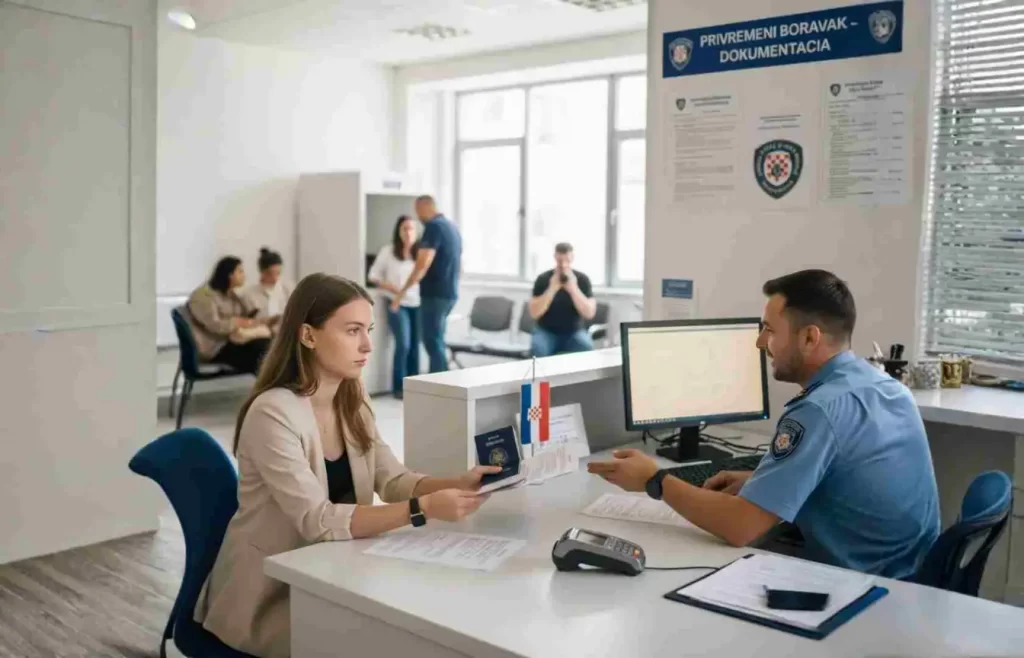
Temporary residence (Privremeni boravak):
- A formal Croatian residence status
- Granted by the competent Croatian authorities, including the Ministry of the Interior (MUP)
- Granted on a specific legal basis, such as work, family reunification, study, or other qualifying purposes
- Comes with conditions that depend on the residence basis
The distinction becomes particularly important if you have long-term plans in Croatia. Choosing a residence route should not be based solely on whether you can obtain it today. You should also consider how the residence basis fits your expected travel, work arrangements, family situation, tax position, and potential future application for permanent residence.
Short-stay time and qualifying temporary residence are not automatically interchangeable.
If your objective is to establish long-term residence in Croatia, it is therefore important to determine the appropriate residence basis before relying on your time in Croatia to build your immigration history.
This is one of the most important Croatia temporary residence permit common mistakes because selecting the wrong pathway at the beginning can affect not only the current application, but also your longer-term residence strategy.
Missing Address Registration Deadlines
Address registration is mandatory, but responsibility depends on accommodation type.
Typical rules:
- Hotels / registered rentals: register guests within 24 hours
- Private accommodation: registration usually required within 2–3 days
- Failure may cause fines or delay permit issuance
Never assume registration was done for you. Always confirm and keep proof.
Applying Too Late for Extensions
Temporary residence does not renew automatically.
Important facts:
- Extensions must be submitted before expiry
- Processing time depends on local police workload
- Gaps can cause loss of legal status
In serious cases, overstays may lead to:
- Administrative penalties
- Entry bans
- Schengen-wide consequences
Best practice: start preparing 30 – 60 days before expiry.
Late renewal is one of the most damaging Croatia temporary residence permit common mistakes.
Assuming all residence periods count toward PR
Not all temporary permits count equally.
Periods that often do not count (or count only partially) include:
- Seasonal work
- Service provision
- Volunteer or trainee permits
- Certain “other purpose” stays
- Some student residence (often only 50%)
- Digital nomad permit
Choosing the wrong permit at the start can cost you years later.
Q: Does temporary residence guarantee permanent residence?
A: No. Permanent residence requires a separate application and qualifying residence periods.
Preparing incomplete or incorrectly legalized documents
Each renewal typically requires fresh documents, such as:
- Employer or company confirmation
- Proof of income and accommodation
- Health insurance
- Updated criminal record (when requested)
Submitting incomplete or outdated documents is a common reason for delays.
Obtaining a Croatian temporary residence permit does not necessarily mean you can spend unlimited periods outside Croatia without affecting your residence status or long-term plans.
Ignoring Absence and Outside-Croatia Rules
The rules on permitted absences can depend on the type and duration of your residence permit, as well as whether you are working toward a longer-term status such as permanent residence. Applicants sometimes focus only on obtaining the permit and overlook how their travel pattern may affect the continuity of their residence.
This can become particularly important for people who:
- regularly travel between Croatia and another country;
- work remotely and spend several months outside Croatia;
- have business interests or family commitments abroad;
- plan to qualify for permanent residence in Croatia;
- hold a temporary residence basis with specific residence or renewal conditions.
Another common mistake is assuming that time holding a residence permit automatically equals time physically residing in Croatia for every immigration purpose. The treatment of periods spent abroad can differ depending on the residence basis and the status you are ultimately seeking.
Before choosing a residence pathway, consider not only whether you qualify for the permit today, but also whether its conditions fit your expected travel pattern and long-term plans.
If you expect to spend significant time outside Croatia, it is worth assessing your planned absences before applying rather than discovering later that your travel pattern affects your residence strategy or eligibility for a future status.
Overlooking tax implications
A Croatian temporary residence permit and Croatian tax residence are not the same thing. Obtaining a residence permit does not, by itself, determine whether you become a Croatian tax resident. Your physical presence, personal and economic ties, source of income, and overall circumstances may all be relevant.
This is particularly important for internationally mobile individuals who:
- work remotely for a foreign employer or company;
- operate a business outside Croatia;
- receive foreign-source salary, consulting income, dividends, pensions, or investment income;
- spend significant periods in more than one country; or
- plan to remain in Croatia long term.
A common mistake is to treat immigration status and tax residence as the same question. They are not. Being legally resident in Croatia for immigration purposes does not automatically determine where you are tax resident.
The tax consequences can also depend on the nature and source of your income. Someone receiving foreign employment income, running a foreign company, receiving a pension, or earning investment income may face very different considerations from someone employed by a Croatian company.
For this reason, tax should be considered before choosing a residence pathway, particularly if you expect to spend most of the year in Croatia or continue earning income from abroad.
Final Takeaway
Most problems with Croatian residence applications are avoidable. The system does not reward improvisation or assumptions, it rewards accuracy, timing, and strategic planning.
Understanding these Croatia temporary residence permit common mistakes early gives you a real advantage and protects your long-term options.
Frequently Asked Questions: Croatia Temporary Residence Permit
Can I build Croatian residence by staying 90 days at a time?
No. Short stays (visa-free or Schengen C) allow up to 90 days in any 180-day period and do not count toward temporary or permanent residence. Only time spent under an approved temporary residence permit is counted.
Does the first temporary residence permit in Croatia have to be 30 or 90 days?
No. There is no legal requirement for the first permit to be short. In practice, first-time permits are commonly issued for up to one year, unless the case is conditional or transitional.
When should I apply to extend my temporary residence permit?
You should begin preparing your extension 30-60 days before expiry. Applying late can result in:
- Loss of legal status
- Overstay penalties
- Delays that reset your residence timeline
Do all temporary residence permits count toward permanent residence?
No. Some permits do not count or count only partially, including:
- Seasonal work
- Service provision
- Volunteer or trainee permits
- Certain “other purpose” permits
- Student residence (often counted at 50%)
Choosing the wrong permit can delay permanent residence by years. If long-term residence or permanent status matters to you, this is a point worth reviewing with an immigration lawyer. Mandracchio Capital lawyers regularly assess permit strategies before applications are filed, helping clients avoid time-loss mistakes.
What documents are usually required for renewal?
Each renewal is reassessed independently. Common requirements include:
- Proof of employment or company activity
- Evidence of sufficient income
- Registered accommodation
- Health insurance
- Criminal record (when requested)
Submitting outdated or incomplete documents is a common reason for delays.
Is address registration mandatory after approval?
Yes.
Address registration is mandatory for all temporary residents.
Typical deadlines:
- Hotels / registered rentals: within 24 hours
- Private accommodation: usually within 2–3 days
Failure to register can lead to fines or processing issues.
Can overstaying affect my ability to enter other EU countries?
Yes. Serious overstays or status violations in Croatia can trigger:
- Entry bans
- Schengen-wide travel restrictions
Compliance in Croatia affects your standing across the entire Schengen Area.
What is the biggest mistake applicants make?
Confusing short stay with temporary residence and assuming time in Croatia automatically counts toward long-term status. This single misunderstanding causes more problems than any other issue.