Making the decision to relocate to another country is never easy, it’s one of the most significant choices you’ll face in life.
If you’re considering Europe as your destination, you’re likely weighing countless factors: safety, quality of life, economic stability, healthcare, education, and the practicalities of immigration law.
This guide delves into the best European countries for migration now. Whether you are seeking a better quality of life, career opportunities for your children, or a stable future for your family.
This guide is informed by the extensive experience of Prof. Dr. Šime Jozipović, founder of Mandracchio Capital, a Croatia-based legal advisory firm assisting international investors, retirees, and expatriates navigating Croatian law and residency frameworks.
With over a decade of advising foreign clients relocating to Croatia, he brings a deep understanding of residence permits, tax residency, property transactions, and cross-border financial considerations, helping ensure that your move is not just a dream, but a well-planned reality.
How to choose the right European country to immigrate to?
Choosing the right destination involves evaluating several personal and practical factors. Key considerations include visa accessibility, job market opportunities, cost of living, language barriers, education systems for children, and long-term residency prospects.
Safety and political stability should also play an important role in the decision. Many migrants prioritize countries with low crime rates, stable democratic institutions, and predictable legal systems, as these factors provide long-term security for individuals, families, and investments.
Understanding these criteria helps identify the top European countries for expats that align with individual goals, whether the priority is career growth, family stability, safety, or overall lifestyle improvements.
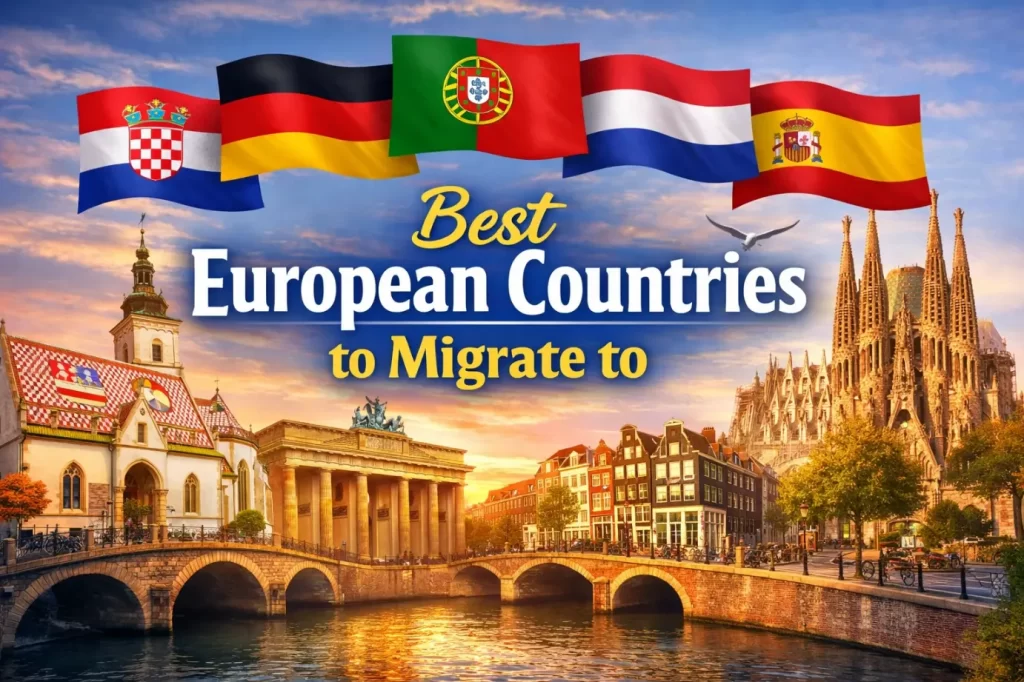
Here are 9 Best European Countries to Migrate to for Business Leaders and Families Seeking Safety
1. Croatia: A Rising Star for Expats and Digital Nomads
For many expatriates today, relocation decisions are no longer driven only by job opportunities. Increasingly, remote professionals and freelancers who already earn income internationally are searching for safe, politically stable countries where they can live long-term without complex immigration barriers.
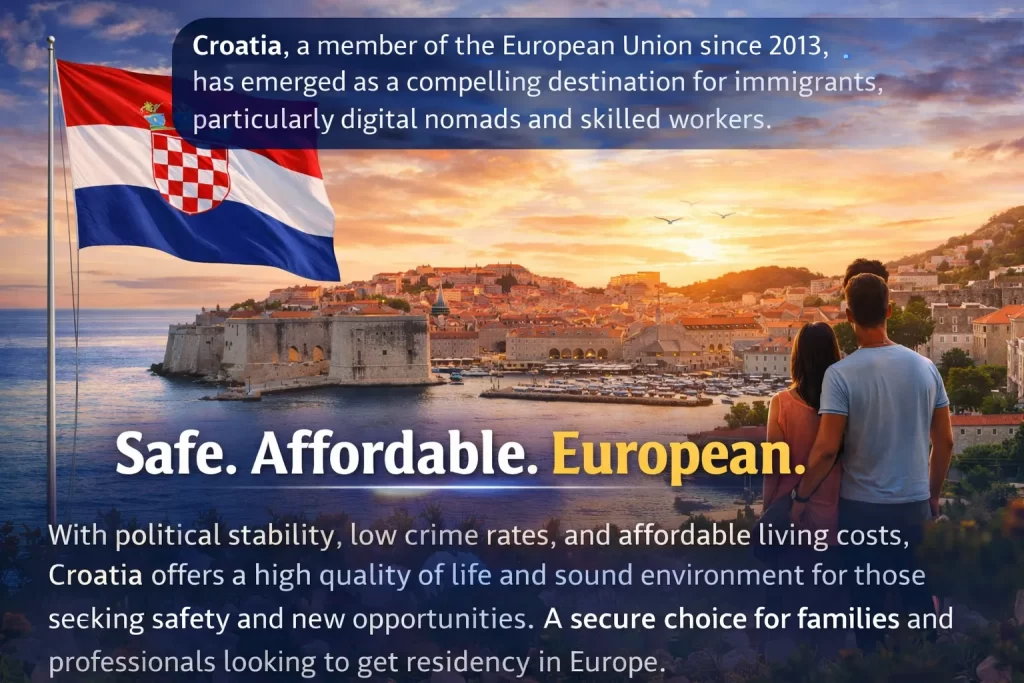
Croatia, a member of the European Union since 2013, has emerged as a compelling destination for immigrants, particularly digital nomads and skilled workers. Its stunning coastline, rich history, and more affordable cost of living compared to many Western European countries make it an attractive option for those seeking residency in Europe (European Commission country overview).
Safety and stability are among Croatia’s strongest advantages. According to the Global Peace Index 2024, Croatia ranks among the 20 most peaceful countries in the world, reflecting low levels of violent crime and strong social stability (Institute for Economics & Peace). Crime statistics published by the Croatian Ministry of Interior also confirm relatively low levels of violent crime compared with many European jurisdictions (Croatian Ministry of Interior statistics).
Quality of life indicators further reinforce Croatia’s appeal for international residents. Eurostat data shows Croatia maintains universal healthcare access and strong public safety institutions within the EU framework. Economic indicators from the World Bank also show stable institutional and economic conditions supporting long-term residence and investment.
At the same time, Croatia is actively addressing labor shortages across several sectors. Government labor market reports confirm demand for workers in tourism, construction, hospitality, agriculture, and IT, leading to increasing employment opportunities for foreign nationals.
From a business and investment perspective, Croatia also offers a relatively competitive tax framework within the European Union.
- Corporate tax as low as 10% for smaller companies
- 10% dividend tax
- Access to the EU single market
- Strong banking compliance and AML standards
In certain investment scenarios, long-term capital gains may be tax exempt, making Croatia an attractive jurisdiction for investors and founders managing international assets.
For non-EU citizens, Croatia offers structured legal pathways for residence. The Croatia Digital Nomad Residence Permit allows remote workers to live in Croatia while working for foreign companies. Highly qualified professionals employed by Croatian companies may also apply for the EU Blue Card, which provides a residence pathway within the EU legal framework.
For many professionals and families seeking a safer and more stable environment, Croatia offers a rare balance between Mediterranean lifestyle, European legal stability, and accessible residency pathways.
If you want a deeper overview of the country’s advantages for international residents, see our guide explaining why Croatia is an ideal destination for foreigners
Practical Information:
Immigration Pathways & Requirements:
- Croatia Digital Nomad Visa: This visa allows non-EU/EEA/Swiss citizens to live in Croatia for up to 18 months while working remotely. Key requirements include non-EU citizenship, remote work for a non-Croatian entity, a valid passport, a clean criminal record, health insurance, and proof of accommodation. This pathway offers a straightforward entry for remote professionals.
- EU Blue Card: For highly qualified non-EU nationals with a job offer from a Croatian employer, this card is issued for up to 4 years. Eligibility for the EU Blue Card in Croatia includes a university degree or relevant professional experience, particularly in IT, and meeting a minimum salary threshold. It represents a strong option for skilled immigration.
- Work Permits: Croatia has simplified work permit processes and increased quotas for in-demand occupations. These include building trades, metal and machinery workers, and ICT professionals. The government’s proactive approach addresses labor shortages, making it easier to secure a Croatia work permit.
If you want a full overview of every legal route available, including residency permits and long-term options, see our detailed guide on how to immigrate to Croatia, include finance rules and requirements.
Cost of Living:
Croatia offers a relatively affordable cost of living compared to many Western European countries. This affordability extends to housing, groceries, and daily expenses, making it an attractive destination for expats. The cost of living in Croatia for expats is a significant advantage.
Best Places to Live in Croatia for Expats and Families
For international professionals relocating to Croatia, choosing the right city can significantly shape the experience of living in the country. Croatia offers a mix of historic coastal cities, growing startup hubs, and relaxed island communities that appeal to digital nomads, remote professionals, and families seeking safety and quality of life. If you’re still exploring where to settle, our guide to the best places to live in Croatia provides a detailed comparison of cities popular with expatriates.
Job Market:
There is persistent demand for IT professionals, financial analysts, and structural engineers, alongside seasonal and skilled trades. The labor shortages in Croatia, especially in tourism and construction, create numerous opportunities for foreign workers. How to get a job in Croatia as a foreigner often involves targeting these in-demand sectors.
Path to Permanent Residency & Citizenship:
Permanent residency in Croatia is possible after five years of continuous legal residence on temporary permits. This requires stable financial means, valid accommodation, health insurance, and basic knowledge of the Croatian language and culture. Citizenship is generally possible after 8 years of total residence, providing a clear European citizenship pathway.
2. Germany: Economic Powerhouse with Skilled Worker Demand
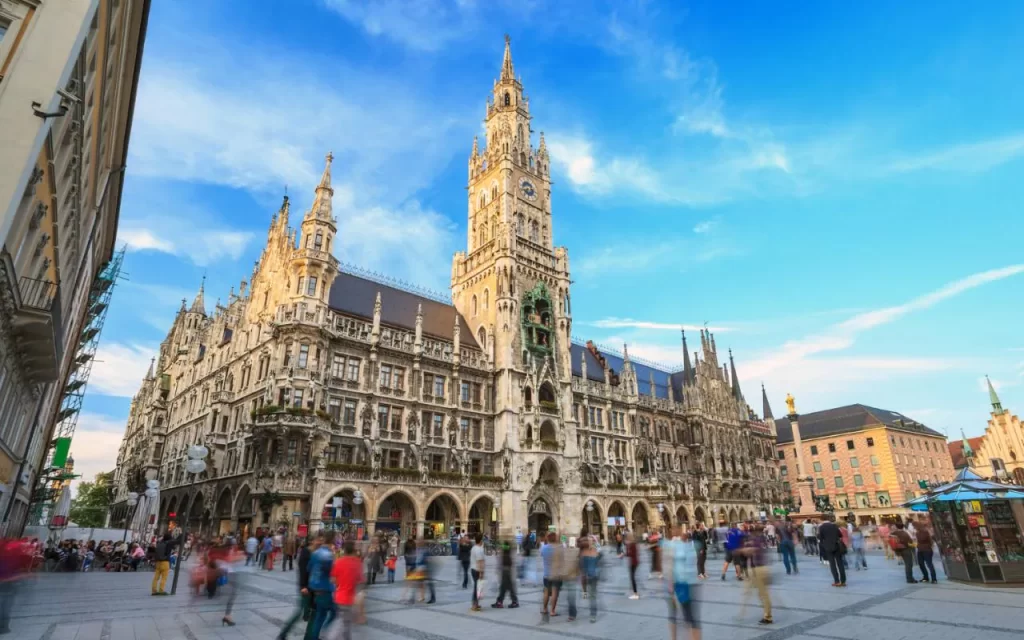
Germany, the EU’s largest economy, consistently ranks as a top destination for skilled immigrants due to its strong job market, world-class healthcare, and excellent education system. It is a prime location among the best European countries for skilled immigration. The country offers robust economic stability in European countries.
Germany boasts a high quality of life, efficient systems, and a strong social safety net. Public healthcare is of high quality and widely accessible, and education is free, including at many public universities. These factors contribute to its appeal for those seeking a high quality of life in Europe for immigrants.
Germany is ideal for skilled professionals, particularly in the tech sector, seeking robust career opportunities and a stable environment. The Skilled Immigration Act significantly facilitates the migration of non-EU tech professionals. This makes Germany a compelling choice for those looking to immigrate to Europe fast through professional channels.
Practical Information:
Immigration Pathways & Requirements:
- Skilled Immigration Act: This act specifically facilitates migration for non-EU tech professionals and other skilled workers. It streamlines the process for those with recognized qualifications.
- EU Blue Card: Germany is a major destination for EU Blue Card holders. This requires a university degree and a job offer meeting a specific, higher salary threshold. It is a key work visa Europe requirement for highly qualified individuals.
Job Market:
There is high demand for software engineers and other tech roles in major cities like Berlin and Munich. Average salaries for software engineers are around €62,000 annually. The European job market for foreigners in Germany is particularly strong in these high-tech sectors.
Quality of Life:
Germany offers a high quality of life with excellent public services and a strong economy. The work-life balance in Europe is often cited as a key benefit of living in Germany.
Path to Permanent Residency & Citizenship:
Permanent residency is possible after a few years of working in Germany. This provides a clear path to long-term settlement for skilled migrants.
3. Portugal: Digital Nomad Haven and Attractive for Retirees
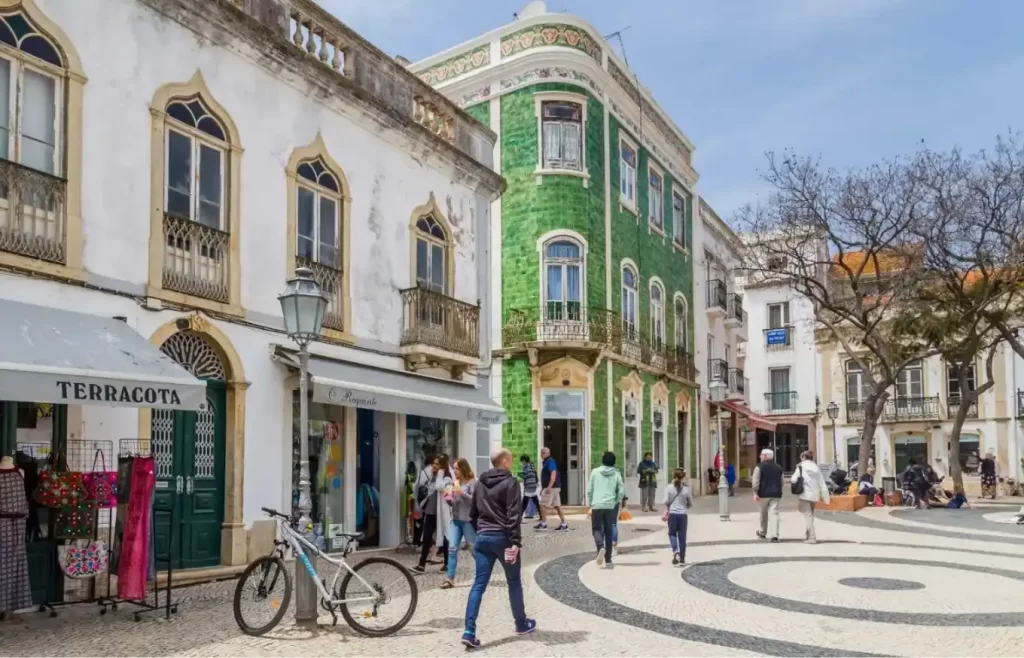
Portugal has gained immense popularity for its welcoming immigration policies, affordable cost of living, and high quality of life. It is particularly appealing to digital nomads and those with passive income, making it a strong contender for those looking to get residency in Europe. The country offers a relaxed European lifestyle for new residents.
Portugal offers sunny weather, delicious food, a friendly community, and a growing tech industry. It is widely known for its welcoming approach to expats. This creates a comfortable environment for social integration in European countries.
Portugal is an excellent choice for remote workers and individuals with passive income seeking a vibrant culture and a pathway to long-term residency. The Portugal Digital Nomad Visa and D7 Visa Portugal are key attractions, offering flexible options for non-EU citizens.
Practical Information:
Immigration Pathways & Requirements:
- Portugal Digital Nomad Visa: This visa requires proof of remote work and a minimum monthly income of around €3,000. It is designed for individuals who can work independently from anywhere.
- D7 Visa (Passive Income Visa): For non-EU citizens with a steady passive income of at least €920 per month. This can include pensions, rental income, or investments.
Financial Requirements:
Digital nomads need about €3,000 in monthly income. D7 Visa applicants need at least €920 per month income and savings of at least €11,040, with these amounts increasing for family members. These requirements ensure financial stability for new residents.
Cost of Living:
While Lisbon can be pricey, cities like Porto, Braga, and Madeira offer more affordable living options. The cost of living is generally lower than in many other Western European nations.
Quality of Life:
Portugal provides a high quality of life with a relaxed pace, good climate, and a growing expat community. This makes it an attractive destination for those prioritizing lifestyle benefits.
Path to Permanent Residency & Citizenship:
The D7 Visa and Digital Nomad Visa lead to long-term residency and a pathway to permanent residency or citizenship after five years. This offers a clear European residency program.
4. Netherlands: A Hub for Highly Skilled Migrants
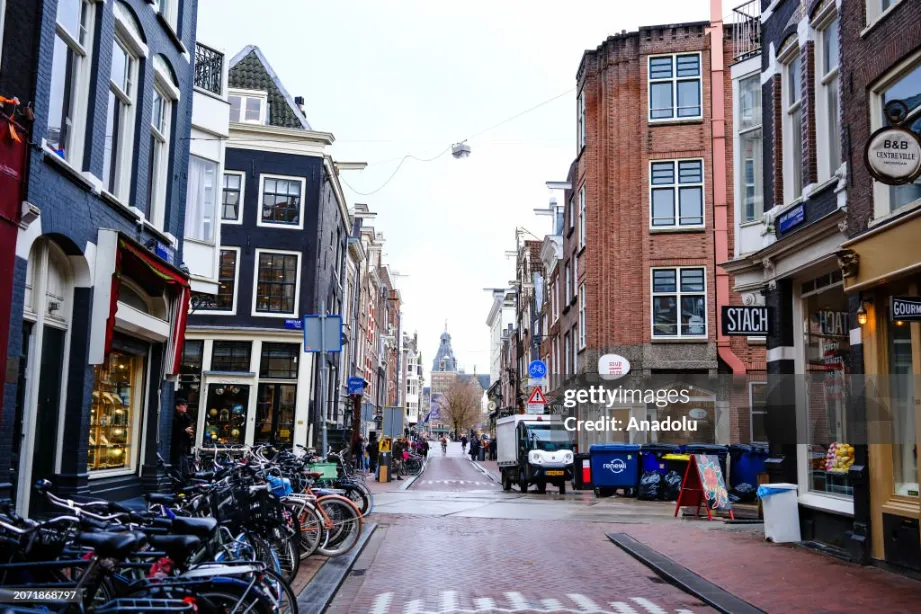
The Netherlands is an immigration-friendly nation with a strong economy, excellent infrastructure, and a high proficiency in English. It actively seeks highly skilled professionals from outside the EU, offering a fast way to immigrate to Europe fast for the right candidates. The country is known for its strong work-life balance in Europe.
The Netherlands ranks highly for child well-being and offers excellent public services. English is widely spoken, significantly easing social integration in European countries for new arrivals. This makes the transition smoother for many expats.
The Netherlands is ideal for highly skilled professionals seeking a robust job market, particularly in sectors like technology and engineering, with a clear path to settlement. Its focus on innovation and quality of life attracts top talent.
Practical Information:
Immigration Pathways & Requirements:
- Highly Skilled Migrant Permit (Kennismigrant): This is a streamlined process for highly skilled employees with a job offer from a recognized Dutch employer. It is a primary work visa Europe requirement for non-EU professionals.
Salary Requirements (2026):
Applicants need a minimum gross monthly salary of €5,008 for those aged 30 and above, and €3,672 for those under 30. These thresholds ensure that highly skilled migrants can support themselves comfortably.
Quality of Life:
The Netherlands offers a high quality of life, efficient public services, and a strong emphasis on work-life balance in Europe. This contributes to its appeal for families and professionals alike.
Path to Permanent Residency & Citizenship:
Citizenship can be acquired after five years of legal residence. This provides a clear and relatively fast European citizenship pathway for eligible individuals.
5. Spain: Mediterranean Lifestyle with Diverse Opportunities
Spain offers a vibrant culture, a lower cost of living compared to Northern Europe, and a family-oriented lifestyle. It has become a thriving hub for digital nomads and also offers options for those with passive income. The country’s rich history and diverse regions appeal to many.
Spain boasts excellent fiber-optic coverage, a strong family culture, and good, accessible public healthcare and free education. These factors contribute to a high quality of life in Europe for immigrants, particularly families.
Spain is an attractive option for those seeking a lively Mediterranean lifestyle, cultural richness, and diverse opportunities for remote work or passive income. Its welcoming atmosphere and varied landscapes make it a popular choice.
Practical Information:
Immigration Pathways & Requirements:
- Spain Digital Nomad Visa: A relatively new visa specifically designed for remote workers. It allows non-EU citizens to live and work from Spain for up to five years.
- Non-Lucrative Visa (NLV): For non-EU/EEA citizens who wish to live in Spain without working in the country. This visa requires proof of sufficient financial means to support oneself.
Financial Requirements (2026):
NLV applicants need a minimum income of €28,800 per year (€2,400 per month) for the main applicant. An additional €7,200 per year is required for each dependent. These requirements ensure financial self-sufficiency.
Cost of Living:
The cost of living in Spain is generally lower than in Northern Europe, though major cities like Madrid and Barcelona can be pricier. This affordability makes it an attractive option for many.
Quality of Life:
Spain offers a high quality of life with a focus on family, good public services, and a vibrant social scene. The Mediterranean climate and cultural richness are significant draws.
Path to Permanent Residency & Citizenship:
Citizenship is possible after ten years of continuous legal residence. This pathway allows for long-term integration into Spanish society.
6. Ireland: A Tech Hub with Strong Economic Growth
Ireland, an English-speaking EU member, is a significant tech hub with a robust economy and a young, dynamic population. It is a popular choice for skilled workers, particularly in the IT and pharmaceutical sectors. The country offers a strong European job market for foreigners.
Ireland is home to many major global tech companies, offering numerous job opportunities for skilled professionals. It has a high quality of life and a welcoming culture, making it an attractive destination for expats. The expat life in Europe often thrives in Ireland’s dynamic environment.
Ireland is ideal for those seeking career advancement in high-growth industries and a vibrant expat community in an English-speaking environment. Its economic growth provides ample opportunities for professional development.
Practical Information:
Immigration Pathways & Requirements:
Immigration primarily occurs through employment permits for critical skills and general employment. These permits are designed to attract skilled workers to fill labor gaps.
Job Market:
There is strong demand in IT, pharmaceuticals, finance, and healthcare sectors. These industries offer competitive salaries and numerous career prospects for skilled migrants.
Cost of Living:
The cost of living can be higher, especially in Dublin, but salaries are competitive, helping to offset expenses. This balance is important for financial planning.
Path to Permanent Residency & Citizenship:
Pathways exist after several years of legal residence and employment, offering long-term stability for immigrants.
7. France: Culture, Cuisine, and Career Opportunities
France offers a rich cultural heritage, world-renowned cuisine, and diverse economic opportunities, particularly in Paris and other major cities. It provides a sophisticated European lifestyle for new residents.
France is known for its high quality of life, excellent healthcare system, and emphasis on arts and culture. The healthcare system for expats in Europe is particularly well-regarded in France.
France is attractive for those seeking a sophisticated lifestyle, cultural immersion, and career prospects in various sectors, including luxury, fashion, and technology. Its diverse economy offers a wide range of opportunities.
Practical Information:
Immigration Pathways & Requirements:
Various work visas and talent passports are available for skilled professionals. These pathways cater to different professional backgrounds and qualifications.
Job Market:
Opportunities exist in diverse sectors, though French language proficiency is often beneficial for integration and career advancement. This is a key consideration for the European job market for foreigners.
Cost of Living:
The cost of living varies significantly, with Paris being expensive, but other regions offering more affordable options. Researching specific cities is advisable.
Path to Permanent Residency & Citizenship:
Permanent residency is available after a period of continuous legal residence, leading to potential citizenship.
8. Italy: History, Lifestyle, and Emerging Opportunities
Italy, with its unparalleled history, art, and Mediterranean lifestyle, is becoming increasingly attractive for expats, including digital nomads, as it introduces new visa options. It offers a unique cultural experience for those looking to get residency in Europe.
Italy offers a rich cultural experience, delicious food, and a relaxed pace of life. Its healthcare system is generally good, and education is accessible, contributing to a good quality of life.
Italy is appealing for those seeking a blend of historical charm, a vibrant social life, and emerging opportunities, particularly with the introduction of new remote work visas. This makes it a growing destination for digital nomads.
Practical Information:
Immigration Pathways & Requirements:
Traditional work visas are available, and a recently introduced digital nomad visa provides a new pathway for remote workers. This expands visa options for Croatia from [your country] if Italy is considered.
Job Market:
Opportunities exist, especially in tourism, fashion, and design, with a growing tech scene. While not as robust as Germany, the European job market for foreigners in Italy is evolving.
Cost of Living:
Generally more affordable than Northern European countries, though major cities can be pricier. This makes it an attractive option for budget-conscious migrants.
Path to Permanent Residency & Citizenship:
Permanent residency is possible after several years of legal residence, offering a clear European residency program.
9. Sweden: Innovation, Welfare, and Work-Life Balance
Sweden is renowned for its innovation, strong welfare system, and high quality of life, offering an excellent work-life balance in Europe. It is a progressive country with a strong focus on sustainability.
Sweden boasts a highly developed social system, excellent public services, and a strong emphasis on equality and environmental protection. English is widely spoken, aiding social integration in European countries.
Sweden is ideal for professionals in tech, engineering, and healthcare seeking a stable economy, innovative work environment, and a high standard of living with a focus on work-life balance. It is a top choice for best European countries for skilled immigration.
Practical Information:
Immigration Pathways & Requirements:
Work permits for skilled workers are the primary route for non-EU citizens. These permits are designed to attract talent to key industries.
Job Market:
There is strong demand in IT, engineering, and healthcare sectors. These industries offer competitive salaries and stable employment.
Cost of Living:
The cost of living can be high, especially in major cities, but salaries are also competitive, helping to maintain a high standard of living.
Path to Permanent Residency & Citizenship:
Permanent residency is available after a period of continuous legal residence, leading to potential citizenship.
Criteria for Choosing the Best European Countries to Migrate To
When considering the best European countries to migrate to, several key factors influence the decision-making process. These criteria help assess the suitability of each nation for potential immigrants. Understanding these aspects is crucial for making an informed choice.
- Safety & Political Stability: For many international professionals and families, safety has become one of the most important relocation criteria. This includes low crime rates, political stability, strong institutions, and predictable legal systems. Many immigrants now evaluate destinations based on international indicators such as the Global Peace Index, which measures crime levels, internal conflict, and overall social stability.
- Tax Environment for Entrepreneurs and International Professionals: For entrepreneurs, investors, and remote professionals, the tax system of a country can significantly influence relocation decisions. This criterion evaluates income tax rates, corporate tax structures, and whether the country offers tax incentives for foreign residents, digital nomads, or international businesses. Some European countries provide relatively favorable tax frameworks for entrepreneurs, including moderate corporate tax rates, access to EU markets, and predictable regulatory environments.
- Immigration Pathways & Requirements: This criterion evaluates the ease and availability of various visa options. These include skilled worker visas, digital nomad visas, investment visas, and family reunification. The clarity of their eligibility criteria and application processes is also assessed. Countries with more accessible and diverse visa options often rank higher, making it easier to get residency in Europe.
- Economic Opportunities & Job Market: This assesses the strength of the job market and the demand for foreign workers in specific sectors. Examples include IT professionals or healthcare. Average salary levels and the recognition of foreign qualifications are also important. A robust economy with low unemployment and in-demand occupations is crucial for economic stability in European countries.
- Cost of Living: This considers the affordability of essential expenses such as housing, food, transportation, utilities, and healthcare. A favorable balance between income potential and living costs is vital for financial stability for expats. This directly impacts the benefits of living in Croatia as an expat or in any other European country.
- Quality of Life: This encompasses various aspects, including the healthcare system for expats in Europe, quality of education opportunities in Europe for immigrant children, safety and security, environmental quality, and work-life balance in Europe. Countries offering a high overall quality of life are generally more attractive.
- Path to Permanent Residency & Citizenship: This criterion examines the duration and requirements for obtaining long-term residency and eventually citizenship. Clear and achievable European citizenship pathways provide greater security and integration prospects for immigrants.
- Social Integration & Culture: This evaluates the ease with which immigrants can integrate into society. Factors include the prevalence of expat communities, local attitudes towards foreigners, language barriers, and the availability of social integration programs. This helps assess the expat life in Europe.
Which European Country is Best for Migration?
Based on the criteria presented, Croatia emerges as a highly compelling choice for many seeking to migrate to Europe. Its relatively new Digital Nomad Visa, combined with a lower cost of living compared to Western Europe and a high quality of life, makes it particularly attractive for remote workers and those seeking a vibrant Mediterranean lifestyle. The ease of the Croatia Digital Nomad Visa application process is a significant draw.
While other countries like Germany offer robust economic opportunities for skilled workers and Portugal provides a haven for digital nomads and retirees, Croatia stands out for its balanced approach to immigration, affordability, and the welcoming nature of its policies. This is especially true for non-EU citizens looking for a pathway to European residency. The country’s growing economy and demand in specific sectors further enhance its appeal, offering a tangible path for those looking to build a new life in Europe. Its unique position as an emerging destination makes it an easiest way to immigrate to Croatia for many.
Migrating from Dubai to Europe: What You Need to Know
For individuals looking to immigrate from Dubai to Croatia or other European countries, the process generally follows the same immigration pathways outlined above, but with some specific considerations.
Dubai is a global hub for expats, and many residents there are non-EU citizens. Therefore, they would typically apply for European visas as third-country nationals. Understanding these nuances is key for those seeking the best countries to migrate from Dubai.
Many European countries, including those listed in this article, are popular choices for Dubai residents seeking new opportunities, better work-life balance, or a pathway to citizenship.
Factors like tax benefits, such as Croatia’s digital nomad visa income tax exemption, quality of education, and healthcare systems are often key drivers for this demographic. The decision to move to Europe from Dubai is often driven by a desire for a different lifestyle and long-term stability.
If you are currently living in the UAE and considering relocation, you may also want to read our guide on which country is easy to migrate from Dubai, which focuses specifically on migration pathways available to Dubai residents.
Legal Support for Immigration and Relocation to Croatia
At Mandracchio Capital, we provide practical legal guidance for international professionals, entrepreneurs, and families planning to relocate to Croatia. Our services focus on helping clients understand the legal framework and navigate the administrative procedures involved in establishing residency in Croatia.
Our support typically includes:
- Immigration pathway planning and residency strategy
- Assistance with Croatian residence permit applications
- Legal guidance for company formation linked to relocation
- Coordination with licensed Croatian lawyers and local authorities
- Document preparation, legalization, and certified translations
We work with:
- International professionals relocating from countries such as the UAE, United States, United Kingdom, Canada, Australia, and New Zealand
- Entrepreneurs establishing companies in Croatia
- Digital nomads seeking long-term European residency options
- Families planning relocation to a stable EU jurisdiction
- Remote workers and consultants looking for legal residence in Croatia
Why Work with Mandracchio Capital?
- Founded by Prof. Dr. Šime Jozipović, Professor of Finance and Business Law at the University of Split
- Extensive experience advising international clients relocating to Croatia
- Strong understanding of Croatian legal and administrative procedures
- Clear communication and transparent guidance throughout the relocation process
- Based in Split, Croatia, with international clients across Europe, the UAE, and North America
Our goal is to help international clients navigate Croatian immigration and residency procedures with clarity and confidence, ensuring that every step of the relocation process is structured correctly from the beginning.
Frequently Asked Questions about European Immigration
What are the easiest ways to immigrate to Europe for non-EU citizens?
The easiest ways to immigrate to Europe for non-EU citizens typically include skilled worker visas, digital nomad visas for remote professionals, investment-based residence permits, or family reunification pathways. Countries such as Croatia, Portugal, and Spain have introduced relatively accessible digital nomad programs, while Germany and the Netherlands offer structured pathways for highly skilled migrants.
These routes are often associated with some of the easiest European countries to immigrate to, depending on an applicant’s profession, income level, and long-term residency plans.
How much money do I need to immigrate to a European country?
The financial requirements vary widely depending on the destination country and the immigration pathway chosen. For example, the Croatia Digital Nomad Visa requires proof of approximately €3,295 monthly income or around €39,540 in savings for a one-year stay. Portugal’s passive income visa (D7) requires proof of at least €920 per month.
In addition to visa requirements, applicants should plan for housing deposits, health insurance, legal assistance, and initial living expenses. For many people comparing the most affordable European countries to move to, understanding both visa thresholds and daily living costs is essential.
Which European countries are best for families to migrate to?
Countries such as Germany, the Netherlands, and Spain are frequently listed among the best European countries for families with children due to their strong education systems, high safety standards, and accessible healthcare services. These countries also offer well-structured family reunification policies and stable long-term residence options.
Croatia is increasingly recognized as a family-friendly destination thanks to its safe environment, Mediterranean lifestyle, and community-oriented culture, making it one of the top European countries for expats relocating with children.
What are the best European countries to move to for English speakers?
Several European countries are particularly attractive for immigrants who primarily speak English. The Netherlands, Ireland, Malta, and Scandinavian countries often rank among the best European countries to move to for English speakers, as English proficiency is widely used in both professional and daily environments.
In many international business hubs and expat communities, English is commonly spoken even where it is not an official language, making relocation easier during the early stages of integration.
Can I get an EU Blue Card in any European country?
The EU Blue Card is a residence and work permit designed for highly qualified non-EU professionals. It is valid across most EU member states, although Denmark and Ireland do not participate in the scheme.
Eligibility requirements typically include recognized professional qualifications and a minimum salary threshold. For many professionals evaluating the best EU countries for work and life, the EU Blue Card provides one of the most structured and predictable immigration pathways within the European Union.
What are the main challenges for expats integrating into European society?
Expats relocating to Europe often face challenges such as language barriers, adapting to new cultural norms, navigating local administrative procedures, and building a social network in a new environment.
However, many European countries provide language courses, integration programs, and strong expat communities that help newcomers adapt more easily. These support structures are often found in European countries with best immigration programs, where governments actively encourage skilled migration and long-term settlement.
What are the best European countries for immigration today?
The best countries in Europe for immigration usually combine accessible visa programs, strong economic opportunities, high quality of life, and clear pathways to permanent residency or citizenship.
Countries commonly recommended include Germany, Portugal, Spain, the Netherlands, and Croatia. Each offers different advantages depending on whether applicants prioritize employment opportunities, affordability, lifestyle, or EU mobility.
What is the step-by-step European immigration process?
Although procedures differ between countries, the step-by-step European immigration process generally follows a similar structure:
- Identify the most suitable visa or residence permit category
- Gather required documentation (passport, proof of income, housing, insurance, background checks)
- Submit the visa or residence permit application
- Attend embassy or immigration authority appointments if required
- Enter the country and register local residency
- Maintain compliance with local immigration and tax regulations
- Apply for permanent residency or citizenship once eligible
Understanding this process early helps applicants plan their relocation strategy and avoid delays when preparing to move to Europe.