Living in Croatia has become an increasingly realistic option for expats, digital nomads, retirees, and remote professionals seeking a European lifestyle that combines Mediterranean culture, relative safety, and a lower cost of living than many Western EU countries.
But relocating to another country involves more than attractive scenery and lifestyle marketing. It requires understanding residence permits, tax residency rules, healthcare access, property regulations, and everyday administrative realities.
This guide is written from practical, Croatia-based experience working with foreign nationals navigating residence permits, company formation, and long-term relocation. Rather than promoting a simplified “expat dream,” it explains what living in Croatia actually looks like in practice, including:
- cost of living and financial expectations
- lifestyle and regional differences across Croatia
- residence permit options for non-EU nationals
- healthcare access and administrative procedures
- practical downsides and common relocation challenges
If you are considering moving to Croatia from the United States, United Kingdom, Canada, Vietnam, Australia, New Zealand, or other non-EU countries, this guide will help you determine whether Croatia realistically fits your lifestyle, finances, and long-term plans.
My name is Šime Jozipović, founder and CEO of Mandracchio Capital. I am a Croatian lawyer based in Split, holding an LL.M. in Tax Law from Harvard Law School, with professional experience specializing in international tax planning for expats relocating abroad. Having lived and worked in the United States, I bring a practical understanding of the legal, financial, and relocation challenges Americans face when moving overseas.
For more than 10 years, I have advised foreign individuals on residence permits, tax residency, property transactions, and cross-border financial structuring when moving to Croatia and the European Union.
Is Croatia a Good Place to Live and most asked Questions
Yes, for the right profile, Croatia can be an excellent place to live. It consistently ranks as one of Europe’s safest countries and offers a relaxed Mediterranean lifestyle, access to the EU and Schengen area, and lower everyday costs than most of Western Europe. Many expats, digital nomads, and retirees choose Croatia for its coastline, walkable cities, strong café culture, and slower pace of life.
However, Croatia is not ideal for everyone. Bureaucracy can be slow, local salaries are relatively low, and administrative processes often require patience. Croatia works best for people with remote income, savings, pensions, or internationally structured businesses who value safety, lifestyle, and long-term stability over rapid career acceleration.
If your priority is quality of life rather than speed, Croatia often makes sense. Read next: Moving to Croatia: Is Croatia a good place to live?
Is Croatia in Eastern Europe?
Not quite. Croatia sits in Southeast Europe, often described as part of Central Europe with a Mediterranean spirit.
It joined the European Union in 2013 and entered the Schengen Area in 2023, meaning smooth border-free travel within most of Europe. With its Adriatic coastline and mild climate, Croatia feels distinctly Mediterranean – not Eastern.
Is Croatia Safe to Live In?
Yes, Croatia consistently ranks among Europe’s safest countries. Crime rates are low, communities are close-knit, and political conditions remain stable.
For families, expats retire in croatia, and solo professionals alike, safety is one of the top reasons expats living in Croatia choose to settle here long term, whether in Zagreb, Split, or smaller coastal towns.
Is Tap Water Safe to Drink?
Absolutely. Croatia’s tap water meets strict EU quality standards and comes from natural springs and rivers.
In many cities – especially in the Dalmatian region – locals take pride in their fresh, mineral-rich drinking water.
Quality of Life & Social Balance
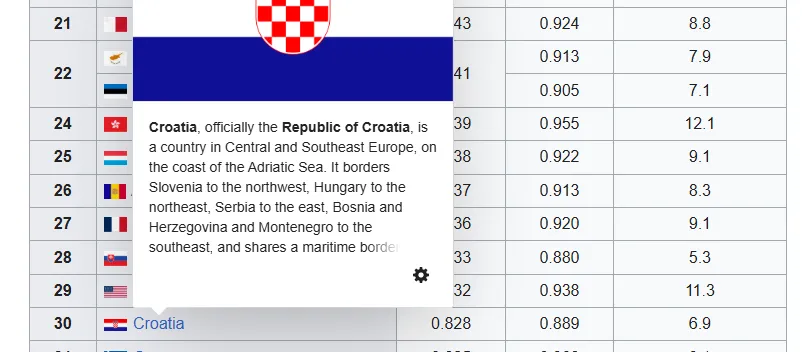
Croatia also ranks among the top 30 countries globally on the inequality-adjusted Human Development Index (IHDI). This means that Croatia’s strong performance in healthcare, education, and living standards remains high even after accounting for income and social inequality. In practical terms, quality of life is not limited to a small segment of society, but broadly accessible across the
What Living in Croatia Is Really Like
The biggest adjustment most foreigners notice when living in Croatia is pace.
Daily life moves slower than in Western Europe, North America, or Australia. Coffee is not something you rush through. Meetings start later. Administrative tasks take time. Family, social life, and personal time are often prioritized over efficiency.
This slower rhythm is one of the main reasons people choose living in Croatia. It supports a healthier work–life balance and reduces everyday stress, especially for those coming from fast-paced professional environments.
At the same time, patience is essential. Systems are more traditional, and progress can feel slow if you expect instant results.
Read next: Living in Croatia as a Digital Nomad: An Asia Perspective
Why people are drawn to living in Croatia
- Strong work–life balance
- High personal safety
- Beautiful nature and coastline
- Lower everyday costs compared to Western Europe
- A social culture that values relationships over speed
Setting realistic expectations
Living in Croatia is rewarding, but it requires patience. Bureaucracy can be slow, salaries are lower, and systems are not always optimized. People who thrive here tend to adapt to Croatia’s rhythm rather than fight it.
This section supports the moving to Croatia intent: understanding lifestyle before logistics.
Housing & Location: What You Really Get for €700
One of the most common questions we hear is:
“Is €700 per month realistic for an apartment in Split?”
The short answer is yes but at the lower end of the market.
In Split, a €700 budget typically gets you a 30–45m² apartment. These are usually:
- Located in older buildings
- Modestly furnished or recently renovated at a basic level
- Still potentially in good, central areas if you search carefully
Compared to Šibenik, prices are somewhat lower, but not dramatically. The real difference is not just cost, but what you get in return.
In Split, you are paying a premium for:
- Walkability — daily life without needing a car
- A strong expat and digital nomad community
- Connectivity — ferries, islands, and an international airport nearby
The real decision is not simply about saving €100–200 per month.
It is about choosing between lifestyle convenience and community vs quieter, lower-cost living.
Transportation & Daily Life: Do You Actually Need a Car?
Another practical concern many people have is:
“Will I need a car, or can I live without one?”
In central Split, most expats find that a car is not necessary.
- The city is highly walkable, especially in central districts
- Public buses are available and relatively inexpensive
- Ride-hailing services like Uber and Bolt are widely used
As a result, many people adopt a hybrid approach:
- No car for everyday life
- Occasional rentals for weekend trips or exploring the coast
This setup works particularly well for remote workers and digital nomads, who are not commuting daily. More broadly, this reflects a shift in mindset. People are not just relocating they are intentionally simplifying their daily life, reducing fixed costs, and increasing flexibility.
Driving License & Long-Term Mobility
A less obvious, but important question is:
“If I settle in Croatia, can I convert my driving license, and will it still be useful if I move elsewhere later?”
The answer depends on your country of origin, but generally:
- Some licenses can be directly exchanged
- Others require passing a Croatian driving test
While the process varies, obtaining a Croatian (EU) driving license can be strategically valuable.
It may:
- Simplify mobility across EU countries
- Reduce administrative friction if you relocate again
- Provide a more standardized form of identification within Europe
Bad Things About Living in Croatia
No guide on living in Croatia is complete without honesty.
Living in Croatia offers a great quality of life, but it comes with trade-offs that are important to understand upfront. Bureaucracy can be slow and paperwork-heavy, especially for residence permits and registrations. Local salaries are relatively low compared to Western Europe, the US, or Australia, which is why many foreigners rely on remote income or savings.
In coastal areas, life changes dramatically outside the summer season, with quieter winters and fewer services available. While English is widely spoken socially, official procedures are usually handled in Croatian, which can be challenging without language support.
For those who adapt to its pace and systems, these issues are manageable.
Common challenges
- Bureaucracy and paperwork delays
- Language dependency in administration
- Limited local job market
- Seasonal tourism pressure
- Winter air quality issues in inland cities
This is where working with an experienced, Croatia-based legal team makes a meaningful difference.
At Mandracchio Capital, we guide you through administrative procedures, documentation, and long-term structuring so that these challenges are managed proactively, not discovered the hard way.
With the right legal support, Croatia becomes predictable, navigable, and stable, exactly what long-term residents, founders, and retirees need.
Best Places to Live in Croatia

Where you live matters more than the country itself. Living in Croatia can feel completely different depending on the city or region you choose.
Some foreigners imagine Croatia as a uniform Mediterranean lifestyle. In reality, Zagreb, Split, Istria, and inland regions operate at very different speeds.
Explore the best places to live in Croatia for expats, nomads, and retirees: Best Places to Live in Croatia for Expats and Digital Nomads
Living in Croatia as a Digital Nomad

Living in Croatia as a Digital Nomad has become increasingly popular in recent years, particularly among remote professionals seeking a Mediterranean lifestyle combined with reliable infrastructure. You can explore our detailed guide on living in Croatia as a digital nomad to understand the lifestyle, visa options, and practical realities of working remotely from Croatia.
Living in Croatia as a digital nomad has become increasingly popular due to:
- A dedicated Digital Nomad residence permit
- Good internet infrastructure
- Safe cities and cafés suitable for work
Under the current digital nomad framework, qualifying foreign-sourced income is not subject to Croatian income tax during the approved residence period. However, tax residency obligations in your home country may still apply, and individual structuring should always be reviewed before relocation.
Applications for residence permits are processed by the Croatian Ministry of Interior (MUP), and approval criteria are interpreted based on administrative practice, not only statutory wording.
Living in Croatia as an Expat
Long-term expats experience Croatia differently than short-term visitors.
What Other Expats Care About Most
- Daily convenience
- Proximity to healthcare, schools, offices
- Long-term housing stability
- Integration, not tourism
- “Can I live normally here?”
The Reality in Cities Like Split
Convenience & Access
Split is compact and walkable.
- Hospitals, clinics, pharmacies within 10–20 minutes
- Beaches accessible after work
- Cafés, bakeries, gyms everywhere
- Public transport covers most areas
Sunday Reality
- Many supermarkets close or operate limited hours on Sunday
- Small local shops and bakeries stay open
- Planning ahead becomes second nature
Most expats adjust quickly, but it surprises newcomers.
Things Most Expats Care About More Than Beaches
- Government offices are in Croatian
- Paperwork requires physical presence
- Processes take longer than expected
Language & Integration
- English works for daily life
- Croatian becomes essential for:
- MUP (police)
- Healthcare admin
- Property matters
- Learning basic Croatian dramatically improves life quality
Food & Lifestyle
- Fresh produce and seafood
- Strong market culture
- Eating out is affordable compared to Western Europe
- Home cooking becomes part of the lifestyle
Daily life
- Slower administrative processes
- Strong neighborhood culture
- Less emphasis on formal hierarchies
Bureaucracy
Expect paperwork, patience, and in-person visits. This is often the most challenging part of living in Croatia.
Retire in Croatia
Although not labeled a Croatia retirement visa, the system functions as one for financially independent individuals.
Many choose to retire in Croatia for quality of life rather than luxury, excitement or trends. What matters more is peace of mind, feeling safe in your neighborhood, being able to walk daily without stress, and knowing healthcare is accessible when you need it.
Many retirees are drawn to Croatia’s slower rhythm of life, where parks, coastal promenades, and nature are part of everyday routines. Community often replaces nightlife as the priority: familiar faces, local cafés, and a sense of belonging. Just as important is cost predictability, knowing your monthly expenses won’t fluctuate wildly, allowing you to enjoy retirement without financial anxiety.
Nature & Outdoor Life
Croatia is ideal for retirees who value nature.
- Daily walks along the sea
- Public parks everywhere
- Clean air and low pollution
- National parks within day-trip distance
Coastal promenades in Split, Zadar, and Istria are heavily used by locals, not tourists.
Slower Rhythm
- Shops open early, close early
- Evenings are calm
- Social life revolves around cafés and walks
Healthcare
Public healthcare is accessible, but many retirees supplement with private care for speed and comfort.
Language & Food for Retirees
- English works socially
- Croatian helps with doctors and paperwork
- Food is fresh, seasonal, and simple
- Mediterranean diet suits long-term health
Coastal vs inland
Coastal living offers beauty but seasonality. Inland areas are quieter and cheaper year-round.
Ready to make Croatia your home? Click here to learn everything you need to know about how to get temporary residency in Croatia from the application process and required documents to where to apply and a detailed breakdown of the fees involved
Moving to Croatia as a Foreigner
Move to Croatia from UK
Post-Brexit, UK citizens must navigate residence permits more carefully. Costs are manageable, but planning is essential.
See what US citizens should know before moving to and living in Croatia: Move to Croatia From the UK – From Temporary to Permanent Residence
Move to Croatia from Vietnam
Vietnamese expats often highlight:
- Cultural adjustment
- Strong family orientation
- Smaller but close-knit communities
Explore the full guide to moving to Croatia from Vietnam and what Vietnamese expats should expect: Move to Croatia From Vietnam: First-time Europe shock for Vietnamese
Move to Croatia from US – Living in Croatia as an American
Living in Croatia as an American requires awareness of:
- US worldwide taxation
- Banking compliance (FATCA)
- Documentation expectations
Those who adapt tend to stay long-term.
Read the complete guide: Move to Croatia from US, including Croatia Cost of Living vs US here
Move to Croatia from Canada
Moving to Croatia from Canada is relatively straightforward in terms of entry, as Canadians can stay visa-free for up to 90 days within the Schengen area. However, staying long-term requires applying for a temporary residence permit.
Key preparation points:
- Canadian police clearance (background check)
- Proof of accommodation in Croatia
- Health insurance coverage
- Sufficient financial means
Canadians often find Croatia appealing due to its lower cost of living, Mediterranean lifestyle, and safety, but should plan for administrative procedures and slower bureaucracy compared to Canada.
Read the full relocation guide here: Moving to Croatia from Canada: Complete 2026 Guide for Canadians
Living in Croatia vs Australia
Australians notice a major lifestyle shift.
- Croatia is slower and less formal
- Social life revolves around cafés and family
- Safety is significantly higher
Financial reality:
Local salaries are much lower. Successful moves usually involve remote work or savings.
Istria note:
Winter life is quiet. Spending a winter before committing is strongly recommended.
Cost of Living in Croatia (Overview)
The cost of living in Croatia is lower than in most of Western Europe, but it is not “cheap” in the way many expect.
Living in Croatia is affordable if:
- You earn foreign income
- You live outside tourist hotspots
- You adapt to local habits
This blog addresses cost of living in Croatia and how expensive is Croatia from a realistic perspective.
Understanding overall living expenses in Croatia helps avoid financial surprises.
Overall, living expenses in Croatia vary widely based on location and lifestyle.
Health in Croatia as an Expat
Healthcare is an important consideration when relocating to Croatia. All legal residents are generally required to enroll in the Croatian Health Insurance Fund (HZZO), the country’s mandatory public healthcare system. Once registered, residents gain access to primary care, hospital treatment, and specialist services across Croatia.
To join the public system, foreign residents typically first obtain an OIB (Personal Identification Number) and register with HZZO after receiving their residence permit. The public healthcare system provides broad coverage, although certain services may involve small co-payments.
Many expatriates also choose to supplement public coverage with private health insurance, which can offer faster access to specialists and additional healthcare options.
For a detailed explanation of healthcare coverage, costs, registration procedures, and insurance options for expats, see our full guide: Healthcare in Croatia for Foreigners
Education and Family Life in Croatia
For foreign families, schooling is an important part of deciding whether living in Croatia is realistic long term. Croatia offers both public and private education options. Public schools generally teach in Croatian, which can work well for younger children who are expected to integrate locally, while international schools are more commonly found in larger cities such as Zagreb and Split.
For many expat families, the practical question is not only academic quality, but also language, commute time, and whether they plan to stay in Croatia short term or settle more permanently. Families who intend to build a long-term life in Croatia often see local schooling as part of integration, while others prefer international curricula during the transition period.
Working and Integrating in Croatia
For foreigners who are not retiring or working remotely, employment prospects depend heavily on sector, qualifications, and language ability. Opportunities are stronger in tourism, IT, services, and certain specialized professions, but Croatian language skills often make a significant difference, especially outside international business environments.
Integration also matters more than many newcomers expect. While English is widely spoken in many urban and coastal areas, everyday administration, healthcare paperwork, and legal procedures are still largely handled in Croatian. In practice, foreigners who learn even basic Croatian and build local routines often adapt far more comfortably than those who rely entirely on an expat bubble.
A growing expat and digital nomad community exists in cities such as Zagreb, Split, and parts of Istria, which makes the transition easier, but long-term success in Croatia usually comes from combining international flexibility with local adaptation.
Career Opportunities for Expats in Croatia
Croatia’s job market is evolving quickly, and expats today have more opportunities than ever especially in roles that value international experience, remote work, and digital skills. The tech sector is growing the fastest. Zagreb, Split, and Rijeka are developing into real tech hubs, supported by EU funding, startup accelerators, and companies actively hiring global talent.
With strong internet infrastructure and a rising number of coworking spaces, Croatia has become a natural base for remote professionals. Tourism and hospitality also continue to offer opportunities, especially in boutique hotels, wellness tourism, eco-tourism, and experience-based travel services. These employers often prefer candidates with strong English and multicultural backgrounds.
Pros and Cons of Living in Croatia
Pros of Living in Croatia
- Safety: Croatia is widely perceived as one of Europe’s safer countries, with low violent crime and a strong everyday sense of security.
- Quality of life: Mediterranean climate, coastline, walkable cities, café culture, and strong “outdoor life” rhythm.
- Cost of living (vs Western Europe): Daily costs can be lower than many Western EU countries, though coastal hotspots (e.g., Split, Dubrovnik) spike in summer.
- EU + Schengen access: Stable EU framework and easier regional travel and cross-border planning once you are legally settled.
- Community: Friendly local culture and a growing expat/digital nomad scene, especially in Split, Zagreb, and Istria.
Cons of Living in Croatia
- Bureaucracy: Administrative procedures can be slow, in-person, and document-heavy (though the system is gradually digitalising).
- Wages & jobs: Local salaries are lower than Western Europe/US/UK, so many foreigners rely on remote income, savings, pensions, or business income.
- Seasonality: Coastal towns can feel very quiet in winter; housing and services are most intense in summer.
- Language: English works socially in many areas, but Croatian becomes important for long-term integration and official procedures.
Is Moving to Croatia Right for You?
Living in Croatia is a great fit if you:
- Value safety and lifestyle over income growth
- Can earn remotely or independently
- Are patient with systems
- Enjoy community-oriented cultures
You may struggle if you:
- Need fast bureaucracy
- Rely on local salaries
- Prefer high-speed professional environments
From practical experience advising foreign residents, the most common administrative friction points include:
- Delays in securing MUP appointments during peak seasons
- Banking compliance reviews for US citizens (FATCA-related documentation)
- Misunderstanding proof-of-funds requirements for Temporary Residence Permits
- Underestimating lease registration requirements
These issues are manageable when anticipated early but can create unnecessary delays when discovered late in the process.
With the right legal guidance and local support, these obstacles become manageable. Once the administrative side is handled properly, most people find that living in Croatia becomes significantly simpler, more predictable, and far more enjoyable.
For those who find that Croatia aligns with their lifestyle goals but feel uncertain about the legal or administrative framework, understanding residence options, business structures, and compliance requirements early can help reduce complexity and avoid unnecessary obstacles.
About Mandracchio Capital
Mandracchio Capital is a Croatia-based advisory firm working with international founders, retirees, and remote professionals navigating Croatian residence law, corporate structuring, and cross-border tax compliance.
Our work focuses on practical implementation under Croatian law, including:
- Temporary and permanent residence structuring
- Digital nomad and retiree pathways
- Company formation and director compliance
- VAT and corporate tax coordination
- Cross-border structuring for US, UK, EU, and Asian clients
We operate locally in Croatia and advise clients globally.
FAQ: Living in Croatia
Is Croatia expensive to live in?
Compared to Western Europe and the US, no, but costs depend heavily on location and lifestyle.
Is Croatia safe for foreigners?
Yes. It is one of the safest countries in Europe.
Can foreigners live in Croatia long term?
Yes, with the appropriate residence status.
Do I need to speak Croatian?
You can live without it, but learning Croatian significantly improves daily life.
How to Retire in Croatia?
To retire in Croatia, non-EU citizens need a Temporary Residence Permit, as there’s no specific retirement visa, focusing on financial independence through pensions/savings, property ownership (used as home), or long-term rent (12-month registered lease). You’ll apply for a visa at a Croatian embassy, then a residency permit in Croatia, proving funds (around €1,200-€1,500/month) and securing housing, with annual renewals possible and a path to permanent residency after five years with some basic Croatian language skills.
Is Croatia a good place to retire to?
Yes. For many expats, retire in Croatia means safety, affordability, and a Mediterranean lifestyle with reliable healthcare and EU stability.
How much money do I need to retire in Croatia?
Most couples budget €1,200 – €2,000/month. Your cost to retire in Croatia depends on location, housing, and healthcare choices.
Do I need to take a Croatian language exam?
Usually, yes. As a “Third Country National” (non-EU/EEA), you must prove proficiency in the Croatian language and the Latin script. You are exempt only if you are over 65 years old, a preschooler, or if you completed high school or university in Croatia.
What are the most common TRP pathways for retirees in Croatia?
1. Long-term lease (sometimes prepaid): A lease is commonly used to prove secured accommodation for TRP applications.
2. Property ownership: Buying a home doesn’t grant residence automatically, but it can support a TRP file as proof of accommodation.
3. Digital Nomad Residence (up to 12 months): Available for remote workers with foreign-sourced income; not a retiree-specific permit.
What is the price range to rent a house close to the water in Croatia?
Rent near the sea is highly seasonal. Long-term rentals can be reasonable in some coastal towns, but prices rise sharply in tourist hotspots and during summer. The closer you are to the beach (and the newer the apartment), the higher the rent tends to be.
What are the average costs in Croatia for food, rent, medical, and daily life?
Costs vary a lot by location and lifestyle. Inland cities and long-term rentals are usually more affordable, while coastal tourist areas (especially in summer) can be significantly higher. Most retirees budget for housing, groceries, utilities, transport, and a mix of public/private healthcare.
How easy is it to travel from Croatia to other countries in Europe?
Very easy. Croatia is in the EU and Schengen, which makes regional travel simple. Many retirees enjoy quick access to Italy, Slovenia, Austria, Hungary, and other European destinations by flight, car, or ferry.
How hard is it to start a business in Croatia or move a US business there?
It’s doable, but it’s not “plug-and-play.” The difficulty depends on your industry, licensing requirements, tax setup, and whether you need residence through the business. The best outcomes usually come from proper legal structuring from day one and realistic expectations about administration.
English is my first language, how hard is it to communicate in Croatia? Will everyone speak English?
In major cities and coastal areas, English is widely spoken especially in tourism, restaurants, and younger communities. However, not everyone speaks English fluently, and official procedures (government offices, forms, legal steps) often require Croatian. Many retirees manage well day-to-day with English, but learning basic Croatian helps a lot for smoother integration.
This guide is provided for general informational purposes only and does not constitute legal, tax, or immigration advice. Individual circumstances require tailored professional assessment under Croatian law.