Croatia remains an attractive destination for British citizens, offering a Mediterranean lifestyle, EU stability, and a relatively lower cost base than the UK. But the rules governing residence, work, and taxation have changed fundamentally since 2021. What worked for UK nationals before Brexit no longer applies.
This guide is written for UK professionals, families, investors, and high-income earners who want to relocate to Croatia properly with legal certainty, tax awareness, and long-term security.
I’ll walk you through the residence options, practical realities, and common pitfalls so you can immigrate to Croatia from UK smartly, not experimentally.
Key Takeaways for UK Citizens Moving to Croatia
- Plan early: Post-Brexit residence permits require advance preparation; last-minute applications often trigger delays.
- Choose the right pathway: Work, business, digital nomad, and family permits each lead to very different long-term outcomes.
- Align tax and residence: Croatian tax residency and the UK Statutory Residence Test must be coordinated from day one.
- Think long-term: Some permits are easy to obtain but make permanent residence harder later.
- Get it right first time: Early legal guidance helps avoid restructuring, penalties, and costly corrective work.
Residence Permits Available When Moving to Croatia
Moving to Croatia After Brexit: What You Need to Understand
The most important starting point is this: UK citizens are now third-country nationals under Croatian law.
Since 1 January 2021, British nationals no longer benefit from EU freedom of movement. You may still enter Croatia visa-free for short stays, but the moment you intend to stay longer than 90 days in any 180-day period, you must have a legal residence basis.
This shift catches many people off guard. Croatia is welcoming, but it is also procedural. Residence rights must be justified, documented, and approved by the authorities. If your plan is vague, your application – or renewal – becomes fragile.
If you are planning to move to Croatia from the UK, the legal structure must be thought through before you relocate, not after you have already settled.
Withdrawal Agreement Rights (If You Lived in Croatia Before 2021)
Some UK citizens are in a different position. If you were legally resident in Croatia before 1 January 2021, you may retain protected rights under the UK–EU Withdrawal Agreement. These rights are not automatic, they must be formally documented.
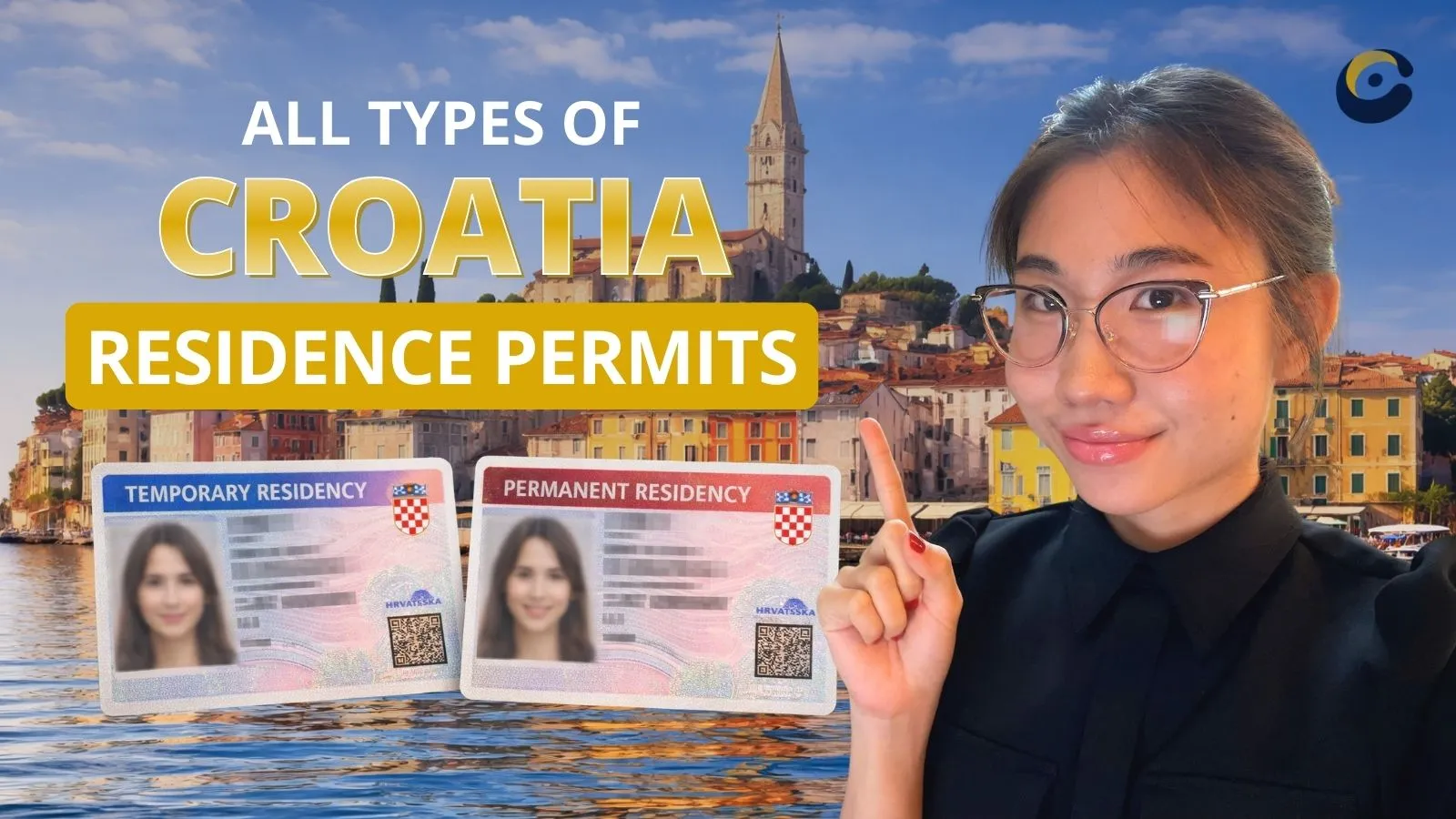
In practice, this means applying for a biometric residence permit (Dozvola boravka) issued by the Croatian police (MUP). This card confirms your protected status, secures your right to live and work in Croatia, and exempts you from future ETIAS or visa requirements. If you moved to Croatia after Brexit, these protections do not apply, and you fall under standard third-country rules.
Temporary Residence Permit (The Most Common Route)

For most UK citizens, Croatia temporary residence permit is the starting point for long-term life in Croatia. It covers employment, business, family reunification, study, and certain long-stay situations. Although it’s issued for one year at a time, this is the normal and expected pathway toward permanent residence. What matters most is that your purpose of stay is clear, genuine, and consistent. When the structure makes sense, renewals are usually straightforward. When it doesn’t, problems start to appear.
For UK citizen: How to Get Temporary Residency in Croatia: Application Process Explained
Digital Nomad Residence Permit
Introduced in 2021, the Digital Nomad permit allows UK citizens to live in Croatia while working remotely for non-Croatian employers or clients. The permit is valid for up to 18 months, based on the most recent amendments to Croatia’s Aliens Act relating to Digital Nomad residence permits, officially in force as of March 2025, does not lead directly to permanent residence, and cannot be renewed indefinitely without a break.
For some, it’s a useful trial year. For those planning to settle long-term, it’s usually a first step, not the final structure. Read more: Croatia Digital Nomad residence – what it does and doesn’t allow
Work and Residence Permit (Croatian Employer)
If you work for a Croatian company, your residence is tied directly to that employer and role.
This route can work well in certain sectors, but it comes with a key limitation: if the job ends, your right to stay usually ends shortly after. That dependency is something many professionals underestimate when planning a move. Read more: Working for a Croatian employer – permits, risks, and renewals
Business & Investment-Based Residence (RBI – Golden visa)
UK citizens can also obtain residence by opening a Croatian company or relocating an existing business.
This is a legitimate pathway, but not a shortcut. A Croatian company brings real obligations: tax, payroll, social contributions, accounting, and ongoing compliance. Authorities expect genuine economic activity, not a company set up only to support residence.
When structured properly, this route can be very effective. When done casually, it becomes costly and fragile. Read more: Business-based residence or Golden visa program in Croatia
Family Reunification Residence
If you are married to, or in a recognized partnership with, a Croatian or EU citizen or relocating with family, family reunification is often the most stable and human-focused option. It typically offers smoother renewals and stronger long-term security, particularly for families with children.
What You Need to Apply for Temporary Residence
At this stage, most people realise that “having the right visa type” is only half the story. Croatian residence applications succeed or fail based on documentation quality, consistency, and timing. See full required document here: Croatia Permanent Residence Requirements Checklist
Temporary residence applications generally require proof of identity, purpose of stay, accommodation, financial means, and health insurance. Some documents, such as birth certificates and criminal background checks, often need to be legalized and officially translated, which can take longer than expected.
What causes the most frustration is not the list itself, but the procedural detail: when documents must be issued, how recent they need to be, and how they must align with your stated residence purpose.
Read the full breakdown here: Temporary Residence Requirements for UK Citizens in Croatia
Permanent Residence in Croatia: When Temporary Becomes Long-Term
If you are planning to stay in Croatia beyond a few years, permanent residence should already be on your radar – even if you are still in your first or second year. After five consecutive years of legal residence, UK citizens may apply for permanent residence. This status removes annual renewals, gives unrestricted access to the labor market, and provides long-term legal certainty, especially important for families.
However, permanent residence is not automatic. Authorities look closely at continuity of stay, absence limits, financial stability, health insurance, and basic Croatian language knowledge. Early mistakes during temporary residence can delay or block eligibility later.
Read the full guide here: How to apply for Permanent Residence in Croatia for UK Nationals
Planning to Retire in Croatia from the UK
Many British citizens exploring relocation to Croatia are not planning to work or start a business, but rather to retire and live on pensions or other passive income.
In these cases, the legal pathway is typically different from employment-based or business-based residence permits. Retirees usually apply under residence categories designed for financially independent individuals, which involve specific income thresholds and documentation requirements.
If your primary goal is retirement rather than employment or investment relocation, you should review our dedicated guide on Retire in Croatia from the UK, which explains the residence options, financial requirements, and practical considerations for British pensioners planning to settle in Croatia.
Cost of Living in Croatia vs UK
One of the most searched topics by people planning to move to Croatia from the UK is the cost comparison = and for good reason. In general, the cost of living in Croatia vs UK is lower, particularly for housing, food, and everyday services. However, the difference depends heavily on where you live and how you live.
International schooling, imported goods, private healthcare, and premium rentals can narrow the gap significantly. Understanding these trade-offs helps set realistic expectations and avoid lifestyle surprises.
| Expense Category | Croatia | United Kingdom |
|---|---|---|
| Housing (rent) | Significantly lower outside tourist hotspots; coastal cities vary by season | High, especially in London & South East |
| Groceries & food | Generally lower; local markets offer strong value | Higher; supermarkets and eating out cost more |
| Utilities & services | Moderate; electricity costs can fluctuate | Higher average monthly bills |
| Transportation | Affordable public transport; lower fuel costs | Higher fuel, rail, and commuting costs |
| Healthcare (private) | Lower private insurance & treatment costs | Higher private healthcare costs |
| Education (international schools) | Limited options; fees can be high | Wide choice; consistently expensive |
| Dining & lifestyle | More affordable everyday dining | Higher cost for casual and premium dining |
Living expenses in croatia
Read the detailed article here: Cost of Living in Croatia – A City-by-City Breakdown (housing, groceries, healthcare, education, and lifestyle costs)
Best Cities to Live in Croatia for UK Expats
Croatia may be geographically small, but where you choose to live has a major impact on work opportunities, schooling, healthcare access, tax exposure, and long-term integration. UK expats tend to cluster in a few key regions, each for different reasons. Some priorities international schools and infrastructure, others value coastal lifestyle or proximity to Western Europe.
Read more: Living in Croatia: Is It Really a Good Place for Expats, Digital Nomads & Retirees?
There is no single “best” answer. The best place for expats to live in Croatia depends on your family structure, income model, and long-term goals.
Explore the cities in detail here: Best Places to Live in Croatia for UK Expats (Where UK Expats Actually Settle in Croatia)
For a more balanced perspective, you may also want to watch this video on the downsides of living in Croatia
Avoiding Tax Mistakes When You Move to Croatia From the UK
Tax is where most relocation problems begin, and where they become expensive.
If you spend 183 days or more per year in Croatia, you are generally considered a Croatian tax resident. That means Croatia may tax your worldwide income. At the same time, many UK citizens aim to cease UK tax residency under HMRC’s Statutory Residence Test (SRT).
When residence status, work structure, and day-counts align correctly, income earned in Croatia is taxed in Croatia, not the UK. When they do not, people often face unexpected assessments, penalties, or double taxation.
UK Property, Rental Income & Ongoing UK Tax Obligations
Even after becoming non-resident, certain UK income remains taxable, most commonly rental income from UK property.
UK landlords living in Croatia must comply with HMRC’s Non-Resident Landlord Scheme (NRLS). At the same time, Croatia may tax that rental income as part of worldwide income, requiring careful application of the UK–Croatia Double Taxation Treaty.
This is one of the most frequent areas where reporting errors occur – not because rules are unclear, but because people assume obligations end when they leave the UK.
Common Challenges When Moving to Croatia from the UK
Relocating from the UK to Croatia offers many lifestyle benefits, but British expats should also prepare for several practical and administrative challenges. Understanding these issues in advance can make the transition significantly smoother and help avoid costly mistakes during the relocation process.
1. Croatian Bureaucracy and Administrative Procedures
One of the most frequently reported challenges for UK citizens moving to Croatia is navigating local bureaucracy.
Unlike the UK, where many services are digitalized, Croatian administrative processes often require multiple in-person government visits.
Typical steps include:
- Registering your residence with local authorities
- Obtaining a Croatian OIB (Personal Identification Number)
- Opening a Croatian bank account
- Applying for a temporary residence permit
Each step may involve separate offices and documentation requirements. In practice, the full process can take several weeks or even months to complete.
Additional complications include:
- Certified translations of foreign documents
- Notarized copies of passports and certificates
- Limited government office hours
- Longer processing times during peak application periods
Planning your documentation well in advance can significantly reduce delays.
2. Language Barriers in Legal and Government Procedures
Another major obstacle for British expats is the language requirement in official procedures.
In Croatia:
- Government correspondence is conducted exclusively in Croatian
- Property contracts, tax documents, and legal filings must be written in Croatian
- Many administrative offices have limited English-language support
Because of this, many expats rely on a certified bilingual legal advisor or translator to handle official paperwork and ensure documents are legally valid.
For property purchases, company formation, or residency applications, professional assistance is strongly recommended.
3. Cultural Adjustment and Lifestyle Differences
Moving to Croatia also involves adapting to a different cultural pace and social structure.
Croatian society tends to be:
- Relationship-driven
- Community-oriented
- Slower-paced outside major cities
For British expats accustomed to faster urban environments, especially those coming from London or major UK cities, this adjustment can take time.
While cities such as Zagreb and Split offer more international environments, smaller coastal towns often operate at a slower rhythm where personal relationships and local networks play a larger role in everyday life.
Many expats ultimately appreciate this lifestyle change, but the initial adjustment period can be longer than expected.
4. Managing UK Financial and Tax Obligations
Even after relocating, many UK citizens must continue managing financial and administrative responsibilities in the UK.
Common ongoing obligations include:
- Filing tax declarations with HMRC
- Managing National Insurance contributions
- Handling UK pension arrangements
- Maintaining or renting out property in the UK
Because of these continuing responsibilities, many expats work with a UK-based accountant or financial advisor who can manage UK compliance remotely while they reside in Croatia.
5. Finding Advisors Who Understand Double taxation treaty UK Croatia
Another underestimated challenge for UK citizens moving to Croatia is finding legal and tax advisors who understand how the UK – Croatia Double Taxation Treaty actually works in practice.
The treaty is designed to prevent the same income from being taxed twice, but applying it correctly requires familiarity with both UK tax rules (HMRC) and Croatian tax residency regulations. Many expats assume the treaty automatically removes tax obligations in one country, which is not always the case.
Without proper guidance, British expats may face:
- Incorrect tax filings in one or both countries
- Residency classification errors between the UK and Croatia
- Delays in applying treaty protections or tax credits
Because cross-border tax situations vary depending on pension type, employment structure, and property ownership, choosing the right advisor is critical.
Before engaging professional services, British expats should verify advisors through:
- Established expat communities
- Reputable professional directories
- Embassy or consulate referrals
- Verified client reviews
Selecting advisors with proven experience in UK–Croatia tax matters early in the relocation process can prevent costly compliance issues later.
From the Cotswolds to Zagreb – How James & Eleanor Structured Work, Tax, and Residency

James and Eleanor, a couple in their mid-30s, came to us while preparing a move from the UK to Croatia. Both had established careers and EU opportunities in front of them, including a senior role in Zagreb with a strong six-figure salary, relocation support, and temporary housing. At the same time, they owned property in the UK and wanted to be sure they weren’t overlooking tax or residency issues that could cause problems later.
Their concern wasn’t whether moving to Croatia was possible. It was whether they were about to make a costly mistake, particularly around work permits, tax residency, and the decision to step away from a UK consultancy that no longer made sense after IR35.
We helped James and Eleanor slow the process down and look at the move as a whole, not just as a job change. Together, we clarified the most appropriate residence and work route in Croatia, explained how their income would be taxed once they left the UK, and mapped out how they could keep their UK property without triggering unnecessary tax or compliance issues.
By the end of the process, they had a clear, realistic picture of what life in Croatia would look like, legally, financially, and practically, allowing them to move forward with confidence rather than guesswork.
Pre-Migration Planning Makes or Breaks Your Move
Many UK citizens move first and try to “sort it out later.” That approach often leads to years of corrective work. Common issues include:
- Unintentional Croatian tax residency
- Failing the UK SRT due to excess days
- Incorrect employment or company structures
- Poor handling of UK-based assets
Aligning immigration, tax, and work structures before relocation is what separates a smooth transition from a stressful one.
Thinking About Moving to Croatia?
Most problems don’t appear immediately. They surface months later, when tax residency has already been triggered, a permit needs renewing, or an income structure no longer fits the rules. A short conversation before you move can prevent years of corrections later.
In a free initial call, we help you:
- Identify the right residence pathway for your situation
- Flag tax and compliance risks early
- Match you with the right lawyer in Croatia, not a generic solution
FAQ
As a UK citizen can I move to Croatia from UK (after Brexit)?
Yes, UK citizens can move to Croatia after Brexit, but you must obtain a valid residence permit for stays longer than 90 days.
Brexit ended free movement, so residence must now be justified by work, business, family, or another legal basis. Planning the correct permit in advance avoids delays and refusals.
What is the best residence permit for UK citizens moving to Croatia?
There is no single “best” permit, the right option depends on how you work, earn income, and plan long-term.
Digital nomad, employment, business ownership, and family reunification all suit different profiles. Choosing based only on speed, not strategy, often creates problems later.
How does tax residency work when moving to Croatia from the UK?
If you spend 183 days or more in Croatia, you are generally considered a Croatian tax resident.
At the same time, many UK citizens aim to cease UK tax residency under the Statutory Residence Test. These two systems must align to avoid double taxation and penalties.
Is the cost of living in Croatia lower than the UK?
In most cases, yes the cost of living in Croatia is lower than in the UK, especially for housing and daily expenses.
However, costs vary by city and lifestyle. Private schooling, imported goods, and healthcare choices can narrow the difference, so budgeting should be location-specific.
Do I need a lawyer to move to Croatia from the UK?
You are not legally required to use a lawyer, but complex cases benefit strongly from professional guidance.
If you have family, property, business interests, or high income, early legal support often prevents costly restructuring later.