Many people don’t move countries because it’s “trendy.” They move because life shifts fast – COVID, marriage, career changes, family decisions – and suddenly, a different country becomes possible. For many Vietnamese professionals, couples, and families, Croatia enters the picture when income is no longer tied to one location, or when a clear legal basis exists: marriage, employment, study, business, or long-term residence planning.
If you’re planning to immigrate to Croatia from Vietnam, this guide is written (by a Vietnamese) to help you transition realistically – not romantically – by sharing the insights most people only learn after they arrive.

Common reasons People Move to Croatia From Vietnam
Croatia offers a combination that quietly works well for Vietnamese expats:
- Safe, stable European environment
- Strong family values that feel culturally familiar
- Slower pace of life compared to major Asian cities
- Reasonable living costs outside tourist centers
- Clear – though procedural – residence rules
But Croatia is also document-driven and administrative. Successful relocation depends less on inspiration, and more on preparation. That’s what this guide focuses on.
Residence Permits Available When You Move to Croatia From Vietnam
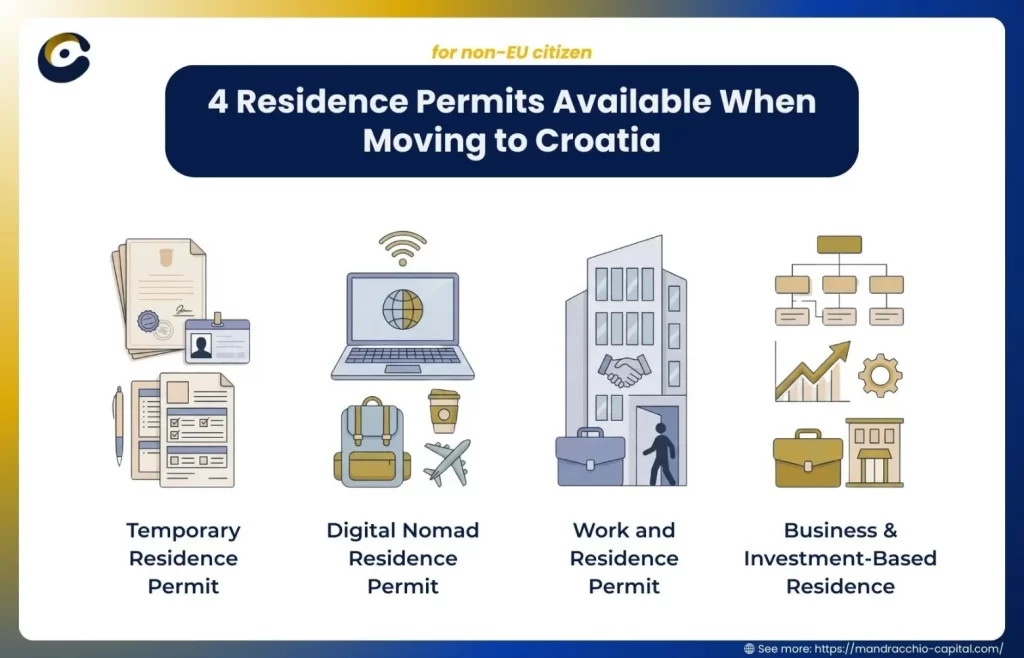
Vietnamese citizens are non-EU nationals, which means long-term stay requires a valid residence permit. The most common legal pathways include:
Temporary Residence Permit (The Core Route)
ThIf you plan to stay in Croatia longer than 90 days, this is the permit almost everyone starts with.
The Temporary Residence Permit is the legal foundation for living in Croatia as a non-EU citizen. It’s not a special visa or an exception, it’s the standard, expected route for people who want to actually build a life here rather than just visit.
The permit is usually granted for one year at a time. That sounds short, but don’t let the name mislead you. In Croatia, this is how long-term residence works: you renew annually as long as your situation remains valid and well-documented.
For many expats, this is the first step toward:
- multi-year stability
- permanent residence after five years
- and eventually, citizenship (for those who qualify)
Common Legal Bases for Temporary Residence
Most Vietnamese expats apply under one of these categories:
Marriage to a Croatian citizen
This is one of the most stable bases, but it still involves documentation, address registration, and proof of a shared household.
Employment with a Croatian company
Your residence is tied to your job. If the employment ends, your residence usually does too — so this route requires planning.
Family reunification
Used when joining a spouse, parent, or close family member who already has legal residence in Croatia.
Study
Applicable if you’re enrolled in an accredited Croatian educational institution.
Business or self-employment
This includes opening a Croatian company or operating as a registered business owner. It offers flexibility but comes with tax, accounting, and compliance responsibilities.
Digital Nomad Visa (special-purpose temporary stay)
If you work remotely for a non-Croatian employer or clients, Croatia offers a digital nomad residence permit valid up to 18 months. But:
- It does not lead directly to permanent residence
- It cannot be renewed continuously without a break
- It prohibits work for Croatian companies
Many Vietnamese professionals use this as a trial stay before restructuring into a long-term residence path.
For details, income thresholds, and tax treatment, see our dedicated Croatia Digital Nomad Visa guide.
What You Need to Apply for Temporary Residence

While requirements vary by legal basis, most applications require:
- Passport
- Proof of purpose (marriage certificate, work contract, enrollment letter, etc.)
- Proof of accommodation (lease or property ownership)
- Health insurance
- Proof of financial means
- Criminal background check
For details step by step guideline, check out this article:
If You’re Married to a Croatian Citizen
Marriage simplifies eligibility – but not documentation.
You can expect:
- Apostilled and translated marriage certificates
- Address registration
- Proof of shared household
- Multiple administrative steps at MUP (police authority)
Administrative Reality Check: Bring Notarized Copies of Everything
One sentence every Vietnamese expat agrees with:
“Bring notarized copies of everything.”
Croatian administration often asks for:
- Apostille stamps
- Certified Croatian translations
- Additional documents mid-process
Best practice:
- Prepare notarized copies in Vietnam
- Apostille key documents early
- Keep digital scans + a physical folder
3 First-Time Europe Shock for Vietnamese Expats
Smaller, Slower Cities
If you’re used to life in Ho Chi Minh City, Croatia will feel different almost immediately, but you may not be able to explain why at first.
Croatian cities are smaller, quieter, and slower by design. Streets are more walkable, daily errands take less mental energy, and there’s far less sensory overload. Fewer horns, fewer flashing lights, fewer crowds moving at full speed all day.
At the beginning, some Vietnamese expats mistake this calm for boredom. But many realize later that their nervous system is simply adjusting to a different pace.
You often don’t fully understand the contrast until you return to Vietnam for a visit.
“When I’m back in Vietnam, everything feels intense and fast. Time moves differently there. Croatia feels slower and more grounding.”
— Thanh Hà, Vietnamese digital nomad in Split
In Croatia, it’s normal to walk everywhere, sit longer over coffee, and structure your day around natural rhythms rather than constant urgency. For people coming from big cities like HCMC, this shift can feel disorienting, but also deeply restorative over time.
What to expect emotionally:
- Fewer spontaneous social encounters at first
- More quiet time than you’re used to
- A stronger connection to routine, walking, and nature
- A sense of “slowing down” that you may grow to appreciate
This difference doesn’t mean Croatia lacks energy, it simply distributes it differently. Once you settle into that rhythm, many Vietnamese expats find it surprisingly grounding.
The Four Seasons (Especially Winter)
For many people moving from Ho Chi Minh City, the biggest invisible challenge isn’t paperwork or language, it’s winter.
Vietnamese expats often underestimate how deeply four seasons affect daily life. It’s not just colder weather. It’s everything around it: how you dress, how much you spend on heating, how often you get sick, how early it gets dark, and even how your energy and mood shift throughout the day.
In the first winter, simple things feel unfamiliar. You’re learning how to layer clothes properly, figuring out how heating works in apartments, adjusting to shorter daylight hours, and realizing that your body reacts differently in a cold, dry climate.
“As a tropical creature, that first winter truly changed my life.”
— Tiên, Vietnamese expat in Croatia
It’s very common for Vietnamese expats to get sick more often in the first year. Your immune system is adjusting, and your daily rhythm changes whether you expect it or not. The good news is that most people adapt, but it takes time.
At the same time, summer brings its own surprises.
In Croatia, summer days are long, very long. In June and July, the sun doesn’t set until around 8–9 PM, which can feel magical at first. Evening walks, late dinners, and golden sunsets become part of daily life. Compared to Vietnam, where daylight fades earlier, this extended sunlight can feel energizing or disorienting if you’re not used to it.
Croatia is also extremely sunny. The sun is stronger and more direct, especially along the coast. Many Vietnamese expats who prefer fair skin are caught off guard by how quickly they tan or burn. Sunscreen, hats, and sunglasses become everyday essentials, not just beach accessories.
What helps in the first year:
- Don’t judge Croatia based on your first winter alone; spring changes everything
- Budget realistically for winter clothing (coats, boots, thermal layers)
- Expect higher heating costs during colder months
- Give yourself grace during the adjustment period, feeling tired or low in winter is normal
And then there’s the dryness. Vietnam’s high humidity protects skin in ways you don’t realize until it’s gone. Croatia’s air especially in winter, but even in summer is much drier.
The Dry Air Shock (Your Skin Will Notice Immediately)
This one surprises almost every Vietnamese expat even those who think they’re “used to travel.”
Vietnam, especially cities like Ho Chi Minh City, has consistently high humidity, often 70-90% year-round. Croatia, by contrast, has a much drier climate, particularly inland and during winter, where indoor heating lowers humidity even further.
What that means in daily life is simple but unexpected: your body feels different. Many Vietnamese expats notice the effects within the first few days:
- Dry nose or irritated sinuses
- Dry lips, hands, face, and even hair
- Skin feeling tight after showers
- Even oily skin types suddenly needing moisturizer
Thanh Hà, a Vietnamese digital nomad, used to joke that she’d had oily skin her entire life until she moved to Croatia. Even in summer, she suddenly found herself buying intensive hand cream and body lotion for the first time, just to feel normal again.
The dryness isn’t dangerous, but it is uncomfortable if you’re not prepared, especially combined with cold weather and indoor heating. You don’t need to overthink this, just adjust early:
- Bring or buy basic lotion and lip balm, even if you’ve never used them before
- Switch to gentler skincare products (less alcohol, less stripping cleansers)
- Drink more water than you think you need
- Consider a humidifier during winter if your apartment feels very dry
Once your body adapts, this becomes background noise. But during the first few months, especially winter, it’s one of those small discomforts that adds up if you don’t expect it.
Choosing Where to Live in Croatia
Many Vietnamese expats assume they must live in Zagreb or Split. Not always true.
Smaller towns often offer:
- Lower housing costs
- Stronger neighborhood ties
- Calmer daily life
- Easier integration through family and community
If lifestyle matters more than nightlife, smaller cities can be a better fit.
See our guide to the best cities to live in Croatia for different lifestyles.
Language: What You Really Need
You don’t need fluency to function.
Reality:
- English is widely spoken, especially in Zagreb and among younger people
- In smaller towns and admin offices, Croatian matters
- Learning basics improves respect, service, and confidence
Most expats pick up functional Croatian naturally – enough for:
- Shopping
- Cafés and restaurants
- Daily interactions
Perfect grammar can come later.
Culture: Why Croatia Can Feel Surprisingly Familiar
Vietnamese expats often expect cultural distance – but discover similarities.
Croatian culture strongly values:
- Family closeness
- Regular visits
- Shared meals
- Generosity and hospitality
Many Vietnamese feel at home faster than expected.
If family matters to you, Croatia won’t feel cold – just quieter.
Food & Daily Life: What to Expect
Food Culture
- Croatian food uses fewer herbs and sauces
- No fish sauce in daily cooking
- Less sugar, less ice in drinks
- Tap water is safe to drink
Good news: Local produce quality surprises many Vietnamese expats – fruits and vegetables are fresh and clean. Vietnamese flavors usually mean home cooking.
Asian Groceries
You’ll find Asian food stores in major cities.
- In Split: Asian Spice – Sinjska 7, 21000 Split
- Zagreb has the widest selection of specialized international markets: Pekinška Patka (Peking Duck), Asian Cash & Carry Megastore (Pan Asia), Kim’s Kitchen (Korean Mart), Habibi Orient
- Other Cities & Online Delivery: Kabayan Asian Store (Online), Asia Food Store (Online), Dookan (Online)
Expect to source herbs, spices, and sauces yourself.
Milk Tea & Snacks
Milk tea exists – mostly in shopping malls – but:
- Less sweet
- Smaller menus
- European taste profiles
Community & Support
You’re not alone.
Vietnamese expats connect through:
- Facebook groups for Vietnamese in Croatia
- Local expat networks
- Family connections
These communities are invaluable for:
- Housing tips
- Document help
- Cultural adaptation
- Emotional support
Practical Details Vietnamese Families Appreciate
- Delivery services exist for shipping packages between Croatia and Vietnam
- Children’s movies in cinemas are shown in original language with Croatian subtitles
- Public life is safe, walkable, and family-friendly
Croatia Is Not Hard – It’s Procedural
If you’re considering a move to Croatia from Vietnam and want to structure it correctly from the start, speak with our team. We’ll help you match your situation with the right legal pathway, and yes, we can connect you with a Vietnamese-speaking supporter to guide you through the process clearly and confidently. Book a free consultation and move to Croatia the smart way.
FAQ
Can Vietnamese citizens move to Croatia?
Yes. Vietnamese citizens can move to Croatia from Vietnam with an approved residence permit based on work, marriage, study, business, or other legal grounds.
What is the easiest way to move to Croatia from Vietnam?
The easiest path depends on your situation – marriage to a Croatian citizen, employment, or remote work (digital nomad) are common starting points. Each requires documentation and approval.
Do I need to speak Croatian to live in Croatia?
No. English is widely spoken, especially in cities. However, basic Croatian significantly improves daily life and administrative interactions.
Is Croatia expensive for Vietnamese expats?
Living costs are generally lower than Western Europe. Outside tourist zones, many Vietnamese expats find Croatia affordable and predictable.