Starting a company in Croatia as a foreigner is increasingly seen as a strategic way to establish a stable base inside the European Union. With EU market access, relatively competitive operating costs, and a legal framework aligned with European business regulations, Croatia has become an attractive destination for international founders, investors, and expanding companies.
Whether your goal is to start a company in Croatia for market expansion, investment structuring, relocation, or long-term EU presence, the process is generally accessible to foreign nationals. However, the practical steps and administrative requirements can differ depending on citizenship status, company structure, and how the incorporation is prepared.
Understanding how Croatia treats EU citizens versus non-EU founders, what documents are required, and how the incorporation procedure works with the Croatian Commercial Court, tax authorities, and company registry is essential for setting up a business correctly from the beginning.
In this guide, we explain how to start a company in Croatia as a foreigner, including:
- the main company types available to foreign founders
- the step-by-step incorporation process
- legal and administrative requirements for EU and non-EU nationals
- minimum capital rules and expected setup costs
- practical considerations for operating a business in Croatia
Key Takeaways – Start a Company in Croatia for foreigners
- Croatia allows 100% foreign ownership; the d.o.o. is the most practical structure for founders, investors, and relocators.
- EU founders enjoy a simpler path; non-EU founders (US/UK/Canada/AUS/NZ) face added bank checks and residency rules.
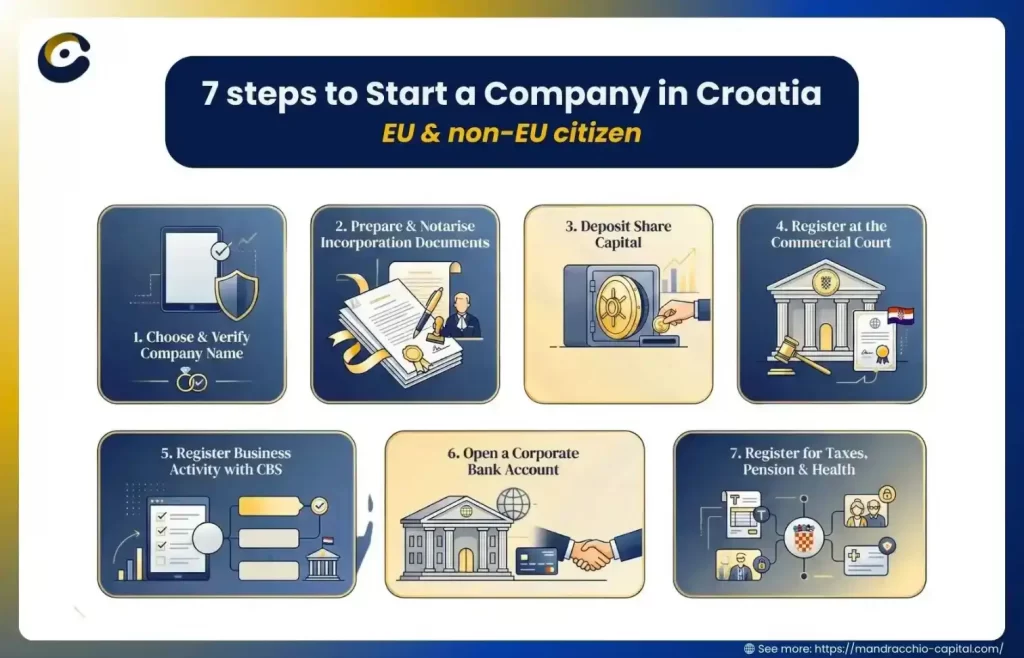
- Core process: name clearance → notarised documents → capital deposit → court registration → banking & tax setup.
- Typical timeline is 2–4 weeks when documents are prepared correctly – delays happen mainly from translations or bank compliance.
This guide is written specifically for foreign entrepreneurs from countries such as the United States, United Kingdom, Canada, Australia, New Zealand, and other non-EU jurisdictions who want to establish a company in Croatia with legal clarity and long-term stability.
Legal insight for this guide was reviewed by Šime Jozipović, founder and CEO of Mandracchio Capital and Professor of Finance and Business Law at the University of Split, specializing in EU corporate law, taxation, and international business regulation, with more than a decade of experience advising international investors and companies entering the Croatian and EU markets.

Can foreigners start a company in Croatia?
Yes. Foreign entrepreneurs can start and fully own a company in Croatia with no local partner requirement. The most common structure is a d.o.o. (limited liability company), which requires €2,500 in share capital. The process involves obtaining an OIB tax number, preparing notarized incorporation documents, depositing share capital, and registering the company with the Commercial Court.
Choosing the Right Company Structure
This is important: before you officially open a company in Croatia, you need to choose a business structure that fits your long-term goals (profitable and sustainable). Most foreign entrepreneurs choose the standard d.o.o. because it offers full limited liability, strong credibility, and 100% foreign ownership. To understand Why the d.o.o. Is the Gold Standard for Foreign Nationals: visit our article on d.o.o. limited liability company formation in Croatia and see what the process involves.
And if you’re unsure whether a d.o.o. or j.d.o.o. is a better fit for your plans, you can explore our comparison guide on d.o.o. vs. j.d.o.o. for a clearer decision.
If you’re from outside the EU, Croatia categorizes you as a “third-country national.” This means you may encounter additional paperwork or slightly longer verifications, especially if you intend to apply for Croatian residency as a director.
How to Start a Company in Croatia for foreigners: The Process
Step 1: Choosing and Verifying Your Company Name
Your first formal action in the process of starting a company in Croatia is selecting a business name and verifying its availability in the Croatian Court Register. Names must follow Croatian rules-they must be in Croatian or another EU language using the Latin alphabet.
If you’re from the US, UK, Canada, Australia, or New Zealand, you can handle name selection remotely, but you still need a Croatian notary or lawyer to verify availability.
EU citizens follow the same rules, but authorities often process their applications slightly faster due to easier ID verification.
Even small similarities to existing companies can cause rejection, so checking availability upfront saves time and frustration.
Step 2: Preparing and Notarising Incorporation Documents
Your incorporation documents-Articles of Association or Declaration of Incorporation-must be prepared and notarised in Croatia.
For non-citizens, this is often the first moment when translation requirements arise. If you don’t speak Croatian, a certified court interpreter must be present during signing. This applies to all non-EU nationals, including those from the US, UK, Canada, Australia, and New Zealand, to ensure you understand each legal clause.
EU citizens also notarise documents, but notaries validate their identity faster due to harmonized EU identification standards. Translators may still be required if the founder does not speak Croatian, but overall, EU nationals usually experience fewer administrative barriers.
This guide explains exactly which documents required to start a company in Croatia for foreign founders, how they differ for EU and non-EU founders, and how to prepare them properly so you don’t lose time, money, or business momentum: List of documents required to start a company in Croatia for Foreigner
Step 3: Depositing Your Share Capital
After notarisation, you’ll deposit your share capital into a temporary bank account or through FINA.
For EU citizens, banks typically open this account with minimal delay, and the standard requirement of €2,500 applies.
For non-EU nationals, including founders from the US, UK, Canada, Australia, and New Zealand, banks may conduct additional due diligence. They may request proof of the source of funds, tax residency certificates, or business background information. This is not a problem, it’s a standard EU anti-money-laundering safeguard.
Once the deposit is made, the bank issues a confirmation certificate required for the next step.
Step 4: Opening a Company in Croatia (Commercial Court Registration)
This is the legal moment when your business comes to life. Opening a company in Croatia requires submitting your notarised documents, share capital confirmation, and court fees to the Commercial Court.
If you’re from the US, UK, Canada, Australia, or New Zealand, you don’t need to appear in person as long as your power of attorney is properly notarised and apostilled. After approval, the Court issues the Registration Decision and your company’s OIB (Croatian tax ID). You’ll need this number to sign contracts, open a bank account, employ staff, and fulfill tax obligations.
EU citizens benefit from slightly faster verification, but both EU and non-EU founders follow identical legal steps at this stage.
Step 5: Registering with the Croatian Bureau of Statistics (CBS)
Once incorporated, your company receives its NKD code, the official classification of your business activity. This step is the same for everyone, regardless of nationality.
Whether you’re a non-EU founder from the US, UK, Canada, Australia, or New Zealand, or an EU citizen, the registration process does not differ. After submitting the required form and your Court Decision, CBS issues your classification, which you’ll use for tax, employment, and compliance filings.
Step 6: Opening a Corporate Bank Account
A corporate bank account is required before your company can start operating.
Most Croatian banks require at least one director or shareholder to be physically present.
For non-EU nationals, including those from the US, UK, Canada, Australia, and New Zealand, banks may ask for additional compliance documents such as tax residency proof, identity verification, or business purpose explanations. This is typical for cross-border entrepreneurs and not an indicator of risk.
EU citizens usually face fewer compliance checks because their documents follow harmonized EU standards, but all founders must undergo KYC procedures.
Step 7: Registering for Taxes, Pension, and Health Insurance

Finally, your company must register with Croatian tax authorities and with HZMO (pension) and HZZO (health).
For non-EU founders , particularly those from the US, UK, Canada, Australia, or New Zealand, this is also the moment to plan your residency path. If you intend to live in Croatia as the company’s director, your minimum gross salary must meet the legal threshold of 1.5× the Croatian average. Without this salary, you cannot obtain a work and residence permit.
EU citizens skip this requirement entirely. They do not need a work permit, and there is no legally required director salary for residency.
Obtain an OIB (Croatian Personal Identification Number)
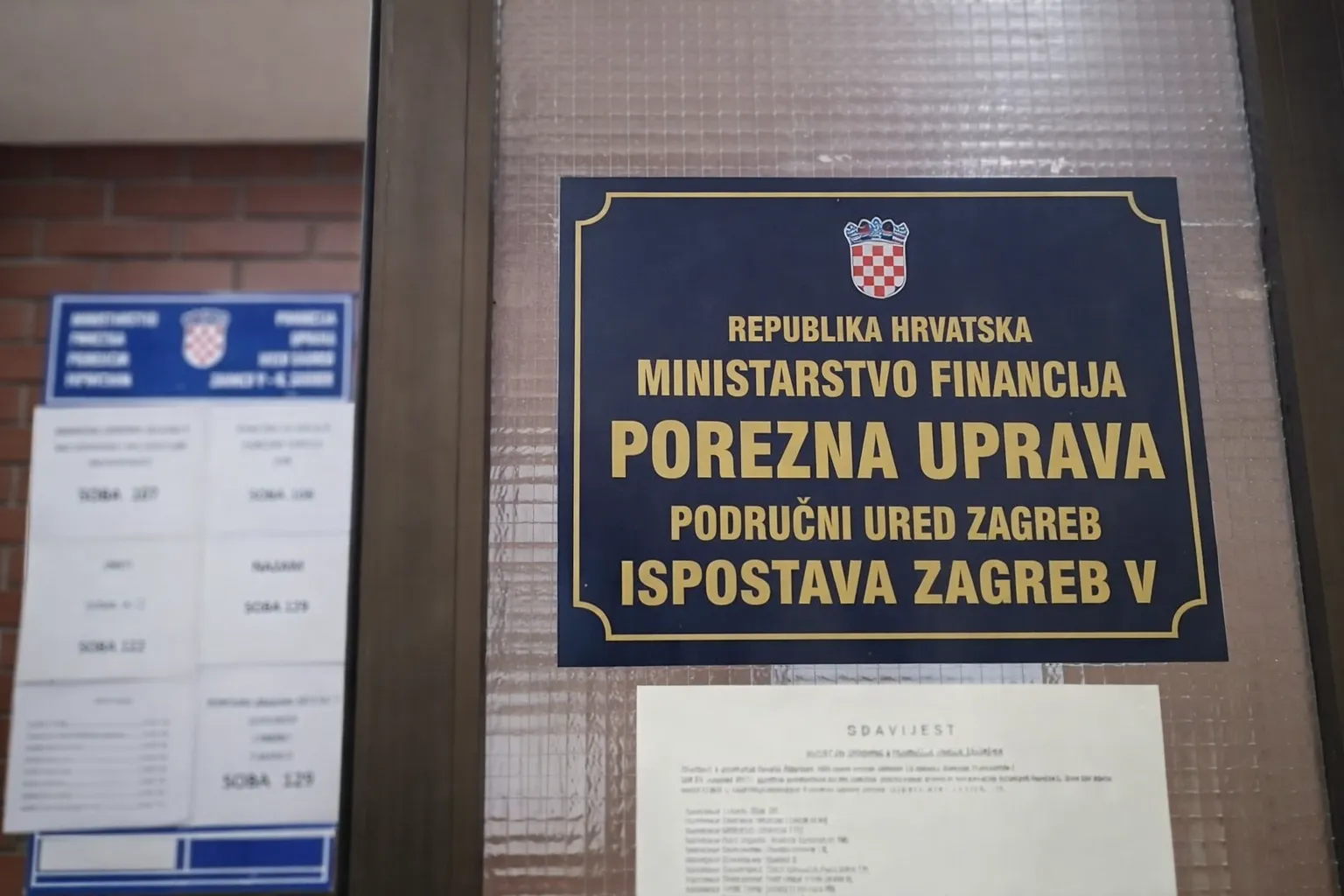
Before starting a company in Croatia, every foreign founder must obtain an OIB (Personal Identification Number) issued by the Croatian Tax Administration (Porezna uprava).
This number is required for company registration, opening a bank account, signing contracts, and tax filings.
Remember to register a Digital Certificate in Croatia
At this stage, it’s essential to register a digital certificate through FINA (Croatian financial institution), Croatia’s financial agency. This certificate is required to access nearly all electronic public services.
In practice, Croatian authorities including the Tax Administration (Porezna uprava), HZMO (pension), and HZZO (health insurance) now communicate primarily through electronic systems.
With a digital certificate:
- Your accountant can register and manage everything online
- Tax filings are submitted through e-Porezna
- Insurance and employment reporting is handled via e-Lana
For foreign founders, this step is often overlooked. You should ask your lawyer or accounting firm in Croatia to arrange the digital certificate as soon as your company documents are handed over.
In 2026, operating a Croatian company without a digital certificate can effectively paralyse daily operations, making it difficult or impossible to issue invoices or submit mandatory tax reports in compliance with the law.
Company Registration Platforms: HITRO.HR and START
Croatia offers two main digital platforms for company formation:
HITRO.HR – the traditional government service used through notaries or FINA offices
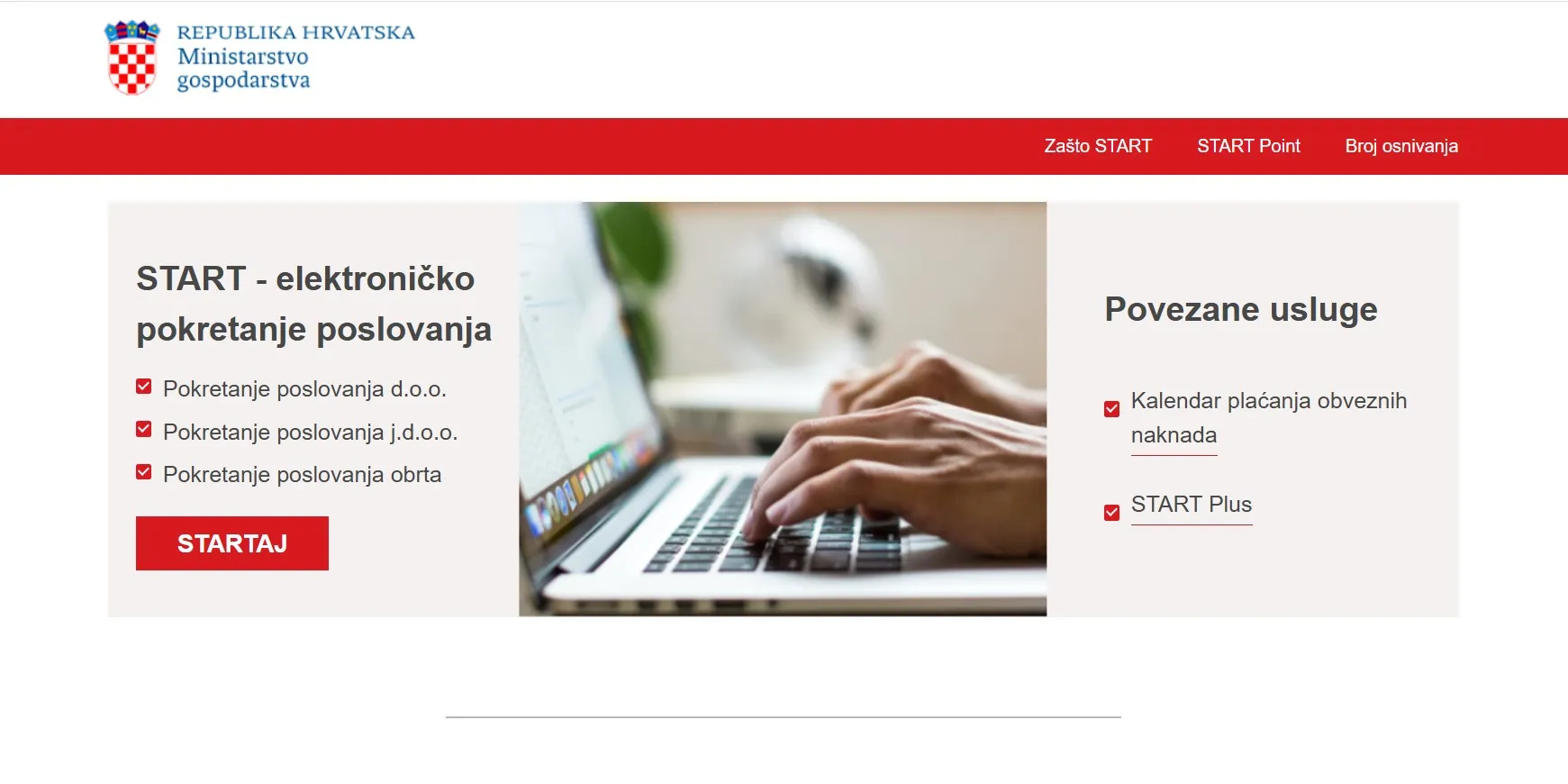
START – a newer online system designed to streamline company registration (Start a Croatian Company Online Using the START System)
In practice, many foreign founders still rely on lawyers or notaries because the START system requires Croatian digital identification.
Starting a Business in Croatia as an EU Citizen
For EU citizens, starting a business in Croatia is generally straightforward. As a member of the European Union, Croatia applies the principle of freedom of establishment, allowing EU nationals to live and work in Croatia without a separate work permit.
EU founders can therefore:
- establish a company in Croatia
- manage the company locally
- work as directors or entrepreneurs
If an EU citizen plans to stay in Croatia for longer than 90 days, they must typically register their residence with local authorities.
Starting a Business in Croatia as a Non-EU Citizen
For non-EU nationals, the legal ability to own a Croatian company does not automatically grant the right to live or work in Croatia.
Foreign founders from countries such as the United States, United Kingdom, Canada, Australia, or New Zealand may fully own a Croatian company, but if they intend to actively manage the business from within Croatia, they will usually need to obtain a residence and work permit.
This permit is typically issued under Croatia’s immigration and employment regulations, and the application process may involve demonstrating:
- a legitimate business activity
- financial capacity to operate the company
- compliance with Croatian corporate and tax regulations
Because immigration and corporate law intersect in this area, many foreign founders seek legal and tax guidance before establishing their business structure in Croatia.
Cost of Opening a Company in Croatia
Registering a company in Croatia usually includes (1) official registration fees, (2) professional support costs, and (3) mandatory share capital.
For detail breakdown: Cost of Opening a Company in Croatia: A Complete Breakdown
Legal Support for Foreign Founders Entering Croatia
At Mandracchio Capital, we support international founders by coordinating with experienced Croatian lawyers, tax advisors, and corporate service providers who understand cross-border business structures, foreign ownership rules, and regulatory compliance in Croatia.
Our role is to help founders navigate the process clearly and avoid the common mistakes that often slow down international company registrations.
About Mandracchio Capital
Mandracchio Capital was founded by Prof. Dr. Šime Jozipović, Associate Professor of Tax Law at the University of Split. The firm supports international founders, investors, and companies entering the Croatian and broader European Union market.
Across more than 500 supervised projects and €500+ million in established company value, the advisory team has helped foreign businesses structure compliant operations within the Croatian legal framework.
Based in Split, Croatia, Mandracchio Capital works with clients from the United States, United Kingdom, Canada, Australia, and across the European Union, helping them build legally sound and scalable business operations.
Explore Your Company Formation Options
If you are considering launching a business in Croatia, you can learn more about the legal process, documentation requirements, and practical steps involved in our detailed guide on company formation in Croatia service, where we explain how the incorporation process works and how to prepare for it properly.
For founders who want a structured setup process with coordinated legal support, our team can help guide you through the incorporation process from initial planning to operational readiness.
Frequently Asked Questions
Can a foreigner start a company in Croatia?
Yes. Foreigners can legally start and fully own a company in Croatia, and in most cases 100% foreign ownership is allowed. No Croatian partner is generally required. Both EU and non-EU nationals can register a Croatian company, although non-EU founders usually face additional document checks, banking compliance procedures, and residence-related steps.
What is the minimum capital required to open a company in Croatia?
For a standard d.o.o. (limited liability company), the minimum share capital is typically €2,500 A j.d.o.o. (simple limited liability company) can be formed with a symbolic minimum capital, often referenced as EUR 1. In practice, some non-EU founders inject higher capital when the company is part of a broader relocation or residence strategy, but this is a structuring decision rather than a legal requirement.
How long does company formation in Croatia take?
Most foreign founders complete company formation in 2–4 weeks, assuming documents are prepared correctly from the beginning. While the Commercial Court registration itself can be relatively fast, delays often arise from apostilles, certified translations, bank onboarding, and compliance checks.
Do I need an OIB before opening a company in Croatia?
Yes. An OIB (Croatian personal identification number) is required for founders and directors before the company can be registered. It is one of the first administrative steps and is necessary for company incorporation, banking, tax registration, and official filings.
What are the main steps to start a company in Croatia as a foreigner?
In most cases, the process includes:
- obtaining an OIB
- choosing the company structure, usually d.o.o. or j.d.o.o.
- checking and reserving the company name
- preparing and notarising incorporation documents
- securing a registered office address
- depositing share capital
- registering the company with the Commercial Court / HITRO.HR
- opening a company bank account and completing tax registration
This step-by-step structure is why “7 steps” guides are commonly used when explaining how to start a company in Croatia.
Can I live in Croatia after opening a company?
Opening a company does not automatically grant residency. EU citizens can relocate more easily under EU freedom of movement rules, but non-EU nationals usually need to obtain a residence and work permit if they intend to live and work in Croatia through their company. If the founder also acts as director, salary, social contributions, and compliance rules become important.
Do I need a Croatian accountant?
Yes. In practice, a Croatian accountant is essential. Companies must comply with regular obligations such as bookkeeping, VAT reporting, payroll administration, annual financial statements, and corporate tax filings. Without professional accounting support, foreign founders often face avoidable compliance issues.
Do I need a Croatian business address to register a company?
Yes. Every Croatian company must have a registered office address in Croatia. This address is required for incorporation documents, Commercial Court registration, and official government correspondence.
Do I need a Croatian bank account to start a company?
Usually, yes. Founders typically need a Croatian business bank account to deposit share capital and operate the company. In practice, bank onboarding can be one of the slowest steps in the process, particularly for foreign-owned companies, because banks may require additional identity checks, source-of-funds documentation, and sometimes in-person verification.
How much does it cost to register a company in Croatia?
The total cost generally includes state registration fees, notary fees, translations, bank setup costs, professional support, and share capital. For many foreign founders, the practical setup cost ranges from several hundred to a few thousand euros, depending on complexity. The minimum share capital itself depends on whether the company is formed as a d.o.o. or j.d.o.o.
Which company type is best for most foreign founders in Croatia?
For most international entrepreneurs, the d.o.o. is the most practical structure. It is better suited for long-term operations, foreign ownership, banking relationships, and business credibility. A j.d.o.o. can be useful for small or experimental projects, but many foreign founders prefer starting directly with a d.o.o. because it provides a more stable framework for real business activity.