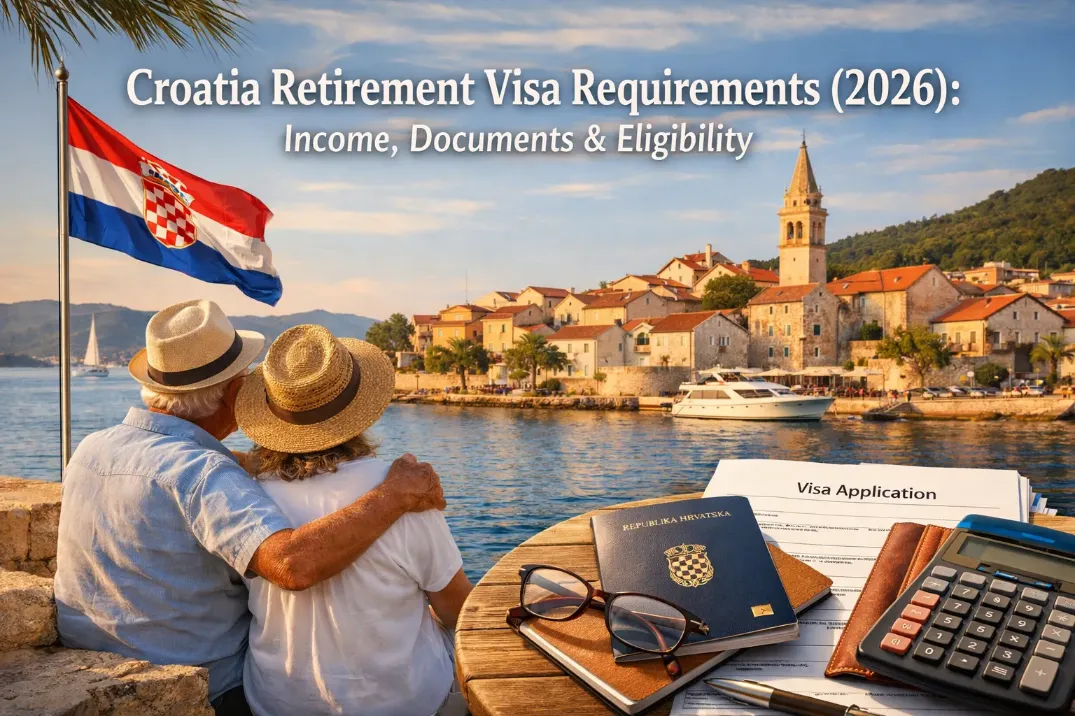
Is Croatia a good place to live?
Yes, for people who prioritize safety, Mediterranean lifestyle, EU stability, and a slower pace of life. Croatia consistently ranks among Europe’s safest countries, offers lower living costs than Western Europe, and provides Schengen access.
However, it is best suited for retirees, remote workers, entrepreneurs, and financially independent expats rather than those relying solely on local salaries.
Pros and Cons of Living in Croatia
| Pros | Cons |
|---|---|
| Very safe (low crime) | Slow bureaucracy |
| Mediterranean lifestyle | Public healthcare wait times |
| Lower cost than Western EU | Low local salaries |
| Schengen access | Summer price spikes in tourist areas |
| Clean air & nature | Croatian needed for admin processes |
Who Should NOT Move to Croatia?
Croatia is not the right fit for everyone. You may want to reconsider if:
- You rely on high local salaries (wages are lower than Western Europe/US).
- You expect fast bureaucracy administrative processes under the Aliens Act can be slow.
- You prefer large, high-intensity global cities.
- You dislike seasonality (busy summers, quiet winters on the coast).
Croatia works best for people who value safety, stability, and lifestyle over speed and aggressive career growth.
Lifestyle & Environment (What daily life feels like)
“The Coastline Is Still the First Thing That Hits You”
“Beautiful nature + coastline: Croatia is consistently described as stunning, especially along the coast, with clean nature and a pleasant environment.
Good climate + outdoor lifestyle: Weather is described as nice, supporting year-round outdoor living.”
— Sophie R. (UK), long-stay expat (coastal lifestyle focus)
Croatia appeals to people who want daily life to feel “lighter”, more walking, more fresh air, more time outside, and a slower pace that still feels connected to Europe. This is one of the biggest reasons Croatia stays attractive beyond the initial “vacation phase.”
“Istria Feels Like the Best Version of Europe”
“Strong lifestyle satisfaction in certain regions: Example: Poreč/Istria gets praised for climate, food, safety, and overall “best life” feeling.”
— Petra M. (Croatia), living in Poreč (married, 3 pets)
Certain regions (especially Istria) consistently stand out for people who want coastal living without the intensity of peak tourist centers. It’s often described as a place where you can build a long-term lifestyle, not just visit.
Best Places to Live in Croatia
Zagreb – Urban & International
Best for:
- Professionals
- Families
- Stronger job market
Split – Coastal Energy + History
Best for:
- Remote workers
- Lifestyle-focused expats
- Coastal living with activity
Istria (Poreč / Rovinj) – Lifestyle-First Living
Best for:
- Retirees
- Families
- Long-term stability
Read next: 7 Best Places to Live in Croatia: 2026 edition for foreigners
Safety & Social Stability (Peace of mind)
Croatia is considered one of the safest countries in the world, rated Level 1 (Exercise Normal Precautions) by the U.S. State Department due to low crime rates and high stable living standards.
“It’s the Kind of Safe You Notice in Small Moments”
“Croatia is extremely safe. Many people highlight Croatia as very safe, including for families, kids can move around more independently than in many countries. In smaller Croatian cities, kids often have more independence: walking to school, playing outside, roaming safely.”
— Marco B. (Italy) (family-oriented perspective)
For many expats, safety becomes a quality-of-life upgrade you feel immediately. It affects everything: how late you stay out, how your kids move around, and how relaxed daily routines become.
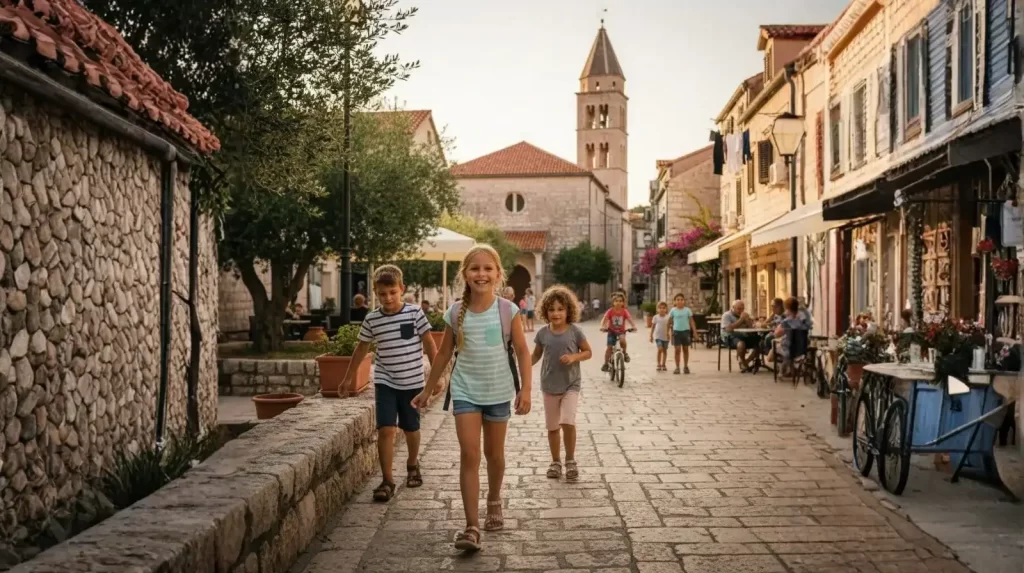
Q: Is Croatia Safe to Live In?
A: Yes, Croatia consistently ranks among Europe’s safest countries. Crime rates are low, communities are close-knit, and political conditions remain stable.
For families, retirees, and solo professionals alike, safety is one of the top reasons expats living in Croatia choose to settle here long term, whether in Zagreb, Split, or smaller coastal towns.
“Less Tension Than What I’m Used To in Western Europe”
“Less social tension vs some Western EU areas (per perception): Some mention fewer migration-related pressures compared to parts of Western Europe (this is more opinion-based, but it’s a positive perception).”
— Thomas K. (Austria) (comparison-based viewpoint)
This is more of a perception-based advantage, but it comes up often in expat discussions: Croatia can feel calmer socially than some large Western EU hubs, especially if you choose a smaller city or coastal town.
People, Culture & Quality of Life (The human side)
“It’s Welcoming and Life Moves at a Healthier Speed”
“Friendly people + family-oriented culture: The social vibe is often seen as welcoming and strongly family-centered, with a “moderate” or relaxed pace of life.”
— Ivana P. (Croatia) (local perspective)
Croatia tends to reward people who live locally rather than treating it like a short-term expat bubble. Many foreigners integrate best when they adapt to the culture: family-first rhythms, slower service expectations, and a more community-based lifestyle.
Digital Convenience & Infrastructure (Modern life runs smoothly)
“The Digital Side Is Surprisingly Strong”
“Solid mobile networks + digital convenience: People mention strong mobile coverage, advanced digital banking, and improving digital public services (e-government upgrades).”
— Luca F. (UK) (remote work / daily convenience focus)
Why Digital Nomads Choose Croatia?
Compared to other EU countries
- Lower lifestyle cost than many Western EU hubs, especially outside peak tourist zones
- Simpler day-to-day living in mid-sized cities (Split, Zadar, Rijeka, Zagreb)
- Better lifestyle-to-effort ratio: walkable cities, coastline access, public spaces
Compared to the US & UK
- Less pressure to optimize every aspect of life around income
- Fewer cost shocks in healthcare and daily living
- More separation between work and personal life
Compared to Asia (e.g., Vietnam, Thailand, Indonesia)
- Stronger legal and institutional predictability
- Easier long-term European planning
- Schengen travel access without constant visa resets
“Coming from Vietnam and spending time around Asia, what I noticed immediately in Croatia was the air quality and how much easier it feels to breathe and live day-to-day.
The sunny days and coastal lifestyle make a real difference to your mood and routine. you walk more, you slow down, and life feels healthier without trying too hard.”
— Anna Nguyen (Vietnam), digital nomad (quality-of-life focused)
If you want a European base that feels like real life, not just a transient nomad hub. Trade-off: Asia still wins on price and convenience. Croatia wins on stability and long-term credibility.
Read more: Living in Croatia as a Digital Nomad: An Asia Perspective
Healthcare Reality (Works best with the right setup)
“Public Is Slow… Private Makes It Manageable”
“Healthcare is workable with a hybrid approach: Public healthcare may be slow, but many expats say life is “fine” if you can use private clinics/dental for speed and convenience.”
— Emily W. (USA) (retiree-minded planning perspective)
This is the most realistic way many foreigners experience healthcare in Croatia: public access for stability, private clinics for speed, convenience, and often English-speaking service. If your planning includes healthcare strategy, the experience becomes much smoother.
Read more: Retiring in Croatia as an American: Available Visa and Monthly Costs
Family Life & Education (Raising kids in Croatia)
“It’s a Safe Place to Raise Kids and Family Life Is Strong”
“Good family life infrastructure (in many areas): Public preschools can be good (availability may vary), schools are comparable to the rest of Europe, and kids have many extracurricular options.”
— Maja K. (Croatia) (married, 2 kids)
Croatia can be a strong environment for families who value safety, community, and a slower pace. Parents often highlight that childhood feels more “free-range” compared to many countries, especially outside major tourist zones.
Cities & Social Life (Not just quiet retirement towns)
“Bigger Cities Still Have Energy”
“Good entertainment in bigger cities: Larger cities offer concerts, clubs, and activities for teenagers and young adults.”
— Noah D. (Netherlands) (young expat / city lifestyle)
Croatia isn’t only about quiet coastal retirement. Zagreb (and other larger cities) can provide a more active social calendar, while still offering access to nature and the sea within a reasonable distance.
Business & Entrepreneurship (EU base without Western EU overhead)
“Croatia Gave Me an EU Base Without Western Europe Overhead”
“Croatia gave me something I couldn’t find in bigger markets: I can run a serious EU-based business, but still live like a human.
My days aren’t built around commuting, stress, and constant pressure to scale at all costs. I can work, meet clients, and still have time for the sea, walking, and a normal routine.
It’s a lifestyle-first place that still lets you operate professionally, as long as you structure things correctly from the beginning.”— James H. (USA), entrepreneur (EU-based services, relocating with legal support)
Why Business Expats & Entrepreneurs Choose Croatia?
Compared to other EU countries
- Lower operating costs than Western Europe
- Less saturated competition in many advisory, professional, and service niches
- Ability to structure a company that feels EU-based without top-tier EU overhead
Compared to the US
- Lower litigation culture
- More predictable baseline costs
- Less pressure to scale aggressively at all costs
Compared to the UK
- Eurozone alignment for EU-facing business
- No single hyper-expensive city you must operate from to be taken seriously
Compared to Asia
- Stronger EU credibility for regulated, B2B, or professional services
- Easier cross-border EU operations once structured correctly
Croatia is best for founders who bring capital, clients, or remote income. It is not a country where local salaries or rapid VC ecosystems do the heavy lifting.
Read next: Starting a Business in Croatia for foreigner: 2026 Handbook
Retirees (Quiet EU retirement without “Western Mediterranean pricing”)
Why Retirees Choose Croatia?
Compared to other EU retirement destinations
- Mediterranean climate with lower price pressure than Italy, France, or Spain’s prime areas
- Smaller cities and towns with less congestion
- Strong public safety and walkability
Compared to the US
- More predictable healthcare costs
- Lower daily financial stress
- Slower pace of life
Compared to the UK
- More sunshine and outdoor living
- Better quality of life per euro in many regions
Compared to Asia
- Proximity to the rest of Europe for travel and family visits
- European legal and healthcare frameworks
- Less cultural and administrative distance for EU-minded retirees
Why retire in Croatia:
It offers a quiet, dignified European retirement without the premium pricing of Western Mediterranean hotspots. stability, calm, and lifestyle alongside EU access.
How to Move to Croatia (Easiest Options for Non-EU Citizens, Including the US)
If you’re a non-EU citizen (including Americans), the easiest way to move to Croatia usually depends on your lifestyle and income source. Most people choose a pathway that fits one of these profiles:
- Remote worker / freelancer → Digital Nomad Residence (short-term, up to 18 months)
- Financially independent / retiree-style lifestyle → Temporary residence based on proof of funds + accommodation
- Entrepreneur / business owner → Company setup + residence strategy (case-by-case)
- Family connection → Family reunification residence
- Long-term plan → Temporary residence renewals → potential permanent residence after meeting eligibility conditions
The “easiest” route is the one that matches your real situation (income, timeline, and whether you want to work locally or simply live in Croatia legally).
Final Thought on “Is Croatia a good place to live”
People choose Croatia not because it’s perfect but because it’s proportionate.
It offers:
- EU stability without EU excess
- Mediterranean living without Western Mediterranean prices
- A legal framework that supports long-term planning
For digital nomads, expats, entrepreneurs, and retirees who want to build a life (not just chase momentum), Croatia often becomes the place that simply makes sense.
What would you like to know next? Send us your question and we’ll guide you based on your situation.
FAQ – Is Croatia a good place to live
Is Croatia a good place to live?
Yes, for the right profile. Croatia tends to work best for people who value safety, lifestyle, and long-term stability over rapid career acceleration or high local salaries.
What are the average costs in Croatia for food, rent, medical, and daily life?
Costs vary a lot by location and lifestyle. Inland cities and long-term rentals are usually more affordable, while coastal tourist areas (especially in summer) can be significantly higher. Most retirees budget for housing, groceries, utilities, transport, and a mix of public/private healthcare.
How easy is it to travel from Croatia to other countries in Europe?
Very easy. Croatia is in the EU and Schengen, which makes regional travel simple. Many retirees enjoy quick access to Italy, Slovenia, Austria, Hungary, and other European destinations by flight, car, or ferry.
How hard is it to start a business in Croatia or move a US business there?
It’s doable, but it’s not “plug-and-play.” The difficulty depends on your industry, licensing requirements, tax setup, and whether you need residence through the business. The best outcomes usually come from proper legal structuring from day one and realistic expectations about administration.
English is my first language, how hard is it to communicate in Croatia? Will everyone speak English?
In major cities and coastal areas, English is widely spoken especially in tourism, restaurants, and younger communities. However, not everyone speaks English fluently, and official procedures (government offices, forms, legal steps) often require Croatian. Many retirees manage well day-to-day with English, but learning basic Croatian helps a lot for smoother integration.
What are the cons of living in Croatia?
For many people, the downsides are the trade-off for a calmer, safer life. Some common downsides include slower public administration, longer wait times in the public healthcare system, seasonal price increases in coastal areas, and limited local salary levels in many industries. Housing can also be expensive in popular cities and tourist zones, especially near the sea.
Is moving to Croatia worth it?
We’ll let one of our clients share this in their own words:
“For me, yes!! Moving to Croatia was absolutely worth it. It gave me the safety, sunshine, and lifestyle I was looking for, with the stability of living in the EU.
I wouldn’t recommend it if your main goal is chasing the highest local salary or a fast corporate career, but if you have remote income or savings and you want a calmer, better quality of life, Croatia just makes sense.
My lawyer (Prof. Dr. Šime Jozipović) from Mandracchio Capital helped me plan the move properly and structure everything the right way, so I didn’t waste months figuring it out alone.”
— Emma R. (UK), expat (relocated with remote income)