If you are researching how to retire in Croatia, the first thing to understand is this:
Croatia does not operate a traditional “retirement visa” like Portugal or Thailand.
Instead, foreign retirees obtain legal residence through a structured temporary residence system designed for financially independent individuals.
Every year, thousands of foreigners successfully retire in Croatia using this framework.
This guide explains:
- How to retire in Croatia legally
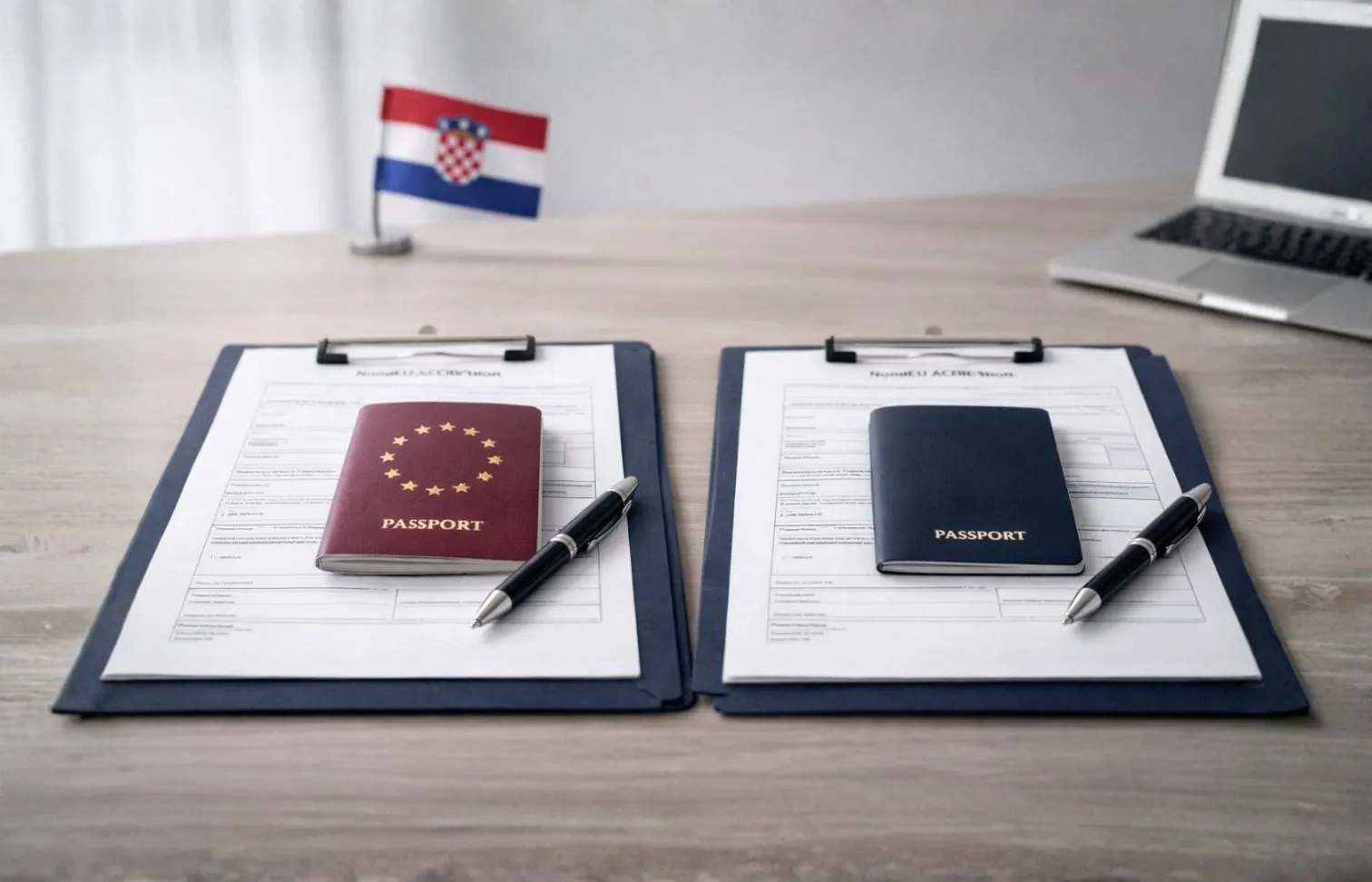
- The difference between EU and non-EU pathways
- The core requirements
- The step-by-step application flow
- How retirement leads to permanent residence
If you are still evaluating lifestyle, costs, and best regions, start here:
Retire in Croatia: Costs, Lifestyle & Best Places
If you want a detailed statutory breakdown of income thresholds and legal interpretation, see:
Croatia Retirement Visa: Legal Requirements & Income Rules
There Is No Dedicated Retirement Visa in Croatia
Croatia does not issue a specific retirement visa in Croatia for non-EU citizens. Instead, retirees qualify under existing legal bases such as financial independence, property ownership, or long-term accommodation ( qualify under residence categories defined in the Aliens Act).
This means how to retire in Croatia is procedural, not automatic. Age alone does not grant residency. You must qualify under Croatian immigration law.
“In Croatia, residency is granted based on legal eligibility, not on whether you are retired.”
The good news is that the system is clear, renewable, and leads to permanent residence when handled correctly.
How to Retire in Croatia if You Are an EU Citizen
EU/EEA and Swiss citizens retire in Croatia under EU free-movement law.
You do not need a visa or residence permit to enter Croatia. To stay long-term, you must register your residence after arrival.
To retire in Croatia as an EU citizen, you must:
- Register your address
- Show health insurance
- Demonstrate sufficient financial means
After five continuous years of legal residence, EU citizens obtain permanent residence automatically under EU law.
There is:
- No language exam
- No criminal record legalization
- No income test at the permanent stage
This makes how to retire in Croatia much simpler for EU nationals.
How to Retire in Croatia if You Are a Non-EU Citizen
Non-EU citizens (such as Americans, Canadians, Australians, and most Asians) must apply for a Temporary Residence Permit.
Detailed guides for US citizen: Retiring in Croatia as an American
Temporary residence is granted for one year and renewed annually. After five consecutive years, you may apply for permanent residence.
This is the legal framework behind how to retire in Croatia for non-EU nationals.
Step 1: Enter Croatia Visa-Free (If Eligible)
Many non-EU nationals including U.S., UK, Canadian, and Australian citizenscan enter Croatia and stay up to 90 days within a 180-day period under Schengen rules.
Most retirees use this window to secure housing, insurance, and documents before filing.
Step 2: Secure Long-Term Accommodation
To apply for temporary residence, you must show legal accommodation in Croatia, typically through:
- A registered 12-month lease contract, or
- Proof of property ownership in Croatia (used as your home)
In some cities, police administrations may request prepaid rent for the full year, especially for first-time applications.
Step 3: Show Proof of Passive Income
You must demonstrate stable, sufficient income from abroad, such as:
- Pension income
- Dividends
- Rental income
- Savings withdrawals
You must also show that you will not work for a Croatian employer under this residence basis.
Step 4: Obtain Private Health Insurance
Before entering Croatia’s public system, applicants usually need:
- Valid private health insurance covering Croatia
- Proof of coverage submitted with the application
After approval, retirees may become eligible to register with the Croatian public healthcare system (HZZO) depending on their residence status and local practice.
Step 5: Prepare Apostilled Documents
Common documents include:
- Criminal background check
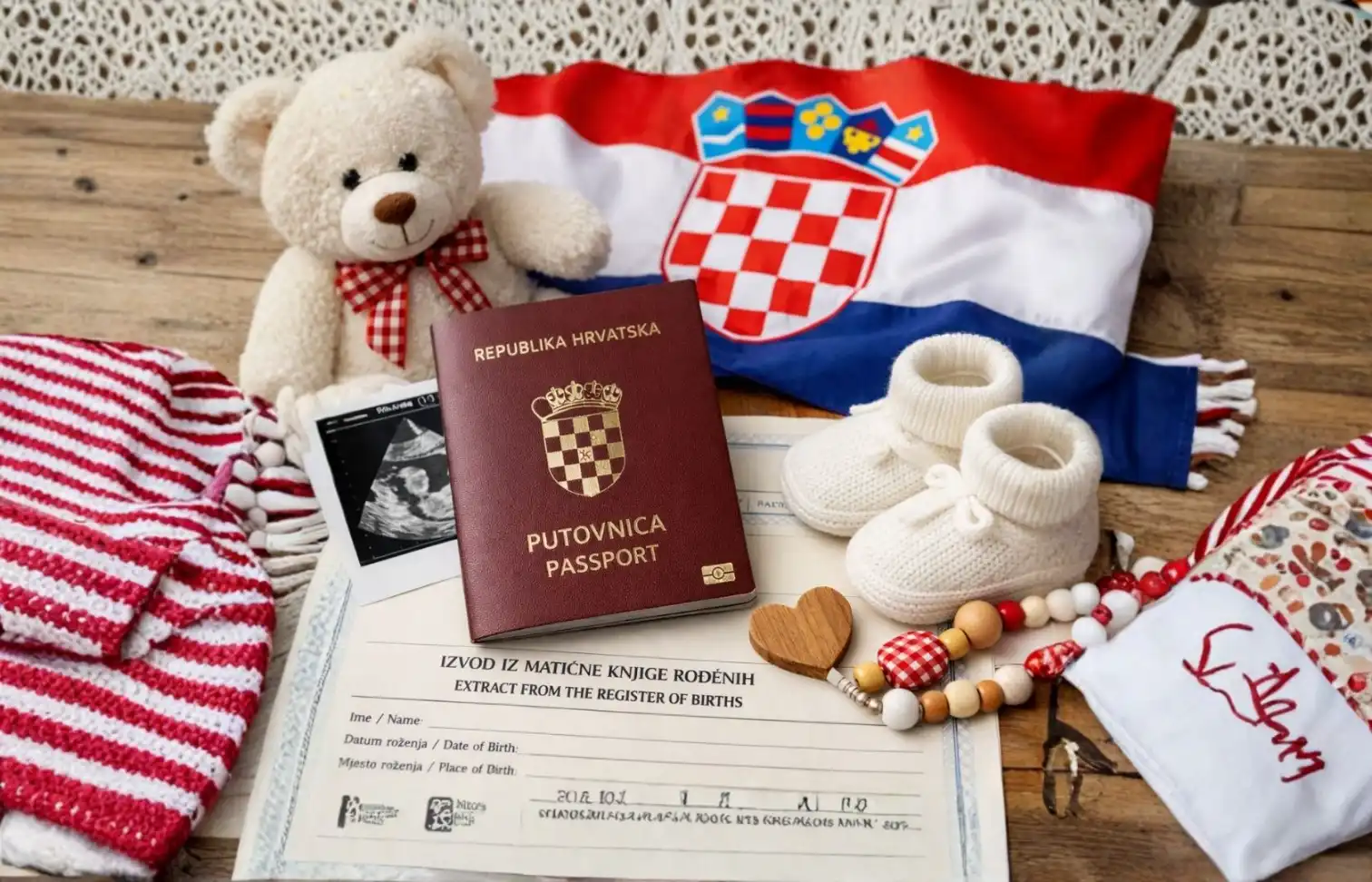
- Birth certificate (sometimes requested depending on basis and office)
- Proof of income / pension documentation
- Passport copies
Foreign documents generally must be:
- Apostilled (if applicable), and
- Translated into Croatian by a certified court translator
Step 6: Submit the Application
You can typically apply either:
- At a Croatian embassy/consulate abroad, or
- At the local police administration (MUP) in Croatia if you entered visa-free
After approval, you will usually:
- Register your address
- Provide biometrics (fingerprints + photo)
- Receive your biometric residence card
Step 7: Renew Annually
Temporary residence is typically issued for 12 months.
To maintain continuity toward permanent residence, renew before expiry each year and avoid gaps.
Step 8: Apply for Permanent Residence After 5 Years
After five consecutive years of lawful temporary residence under the Aliens Act, non-EU retirees may apply for permanent residence.
Permanent residence provides long-term security and removes the need for annual renewals.
5 Requirements to Retire in Croatia
As of February 1, 2026, the price for supplementary health insurance in Croatia will increase to €15 per month, which is equivalent to €180 annually.
These requirements to retire in Croatia apply regardless of nationality.
According to the Aliens Act, third-country nationals (non-EU/EEA) must meet these five criteria to be granted a one-year stay for personal, non-work reasons:
| Requirement | Description |
| 1. Proof of Purpose | Retirees must provide evidence of why they are staying. This is usually a Pension Statement (translated and apostilled) or a bank statement showing significant passive income. |
| 2. Sufficient Funds | You must prove you have at least the minimum monthly amount set by the government (currently approx. €950-€1,200 per person per month). This can be shown through 12 months of savings in a Croatian or foreign bank. |
| 3. Health Insurance | You must hold health insurance valid for Croatia. While many start with private travel insurance, retirees are usually required to register with HZZO (the state health system) upon arrival. |
| 4. Proof of Housing | A notarized rental agreement (Ugovor o najmu) or a title deed (Vlasnički list) if you own property in Croatia. |
| 5. Criminal Record | A background check from your home country, issued within the last 6 months, apostilled, and translated by a certified Croatian court interpreter. |
1. Proof of Purpose
You must demonstrate financial independence.
Typically this includes pension statements, passive income evidence, or significant savings.
2. Sufficient Financial Means
Authorities require proof you can support yourself without employment in Croatia.
In practice, retirees often demonstrate approximately €950–€1,200 per month per person, or equivalent savings covering a 12-month period.
3. Health Insurance
Applicants must hold health insurance valid in Croatia.
After residence approval, most retirees register with the
Croatian Health Insurance Fund.
4. Proof of Accommodation
You must provide:
- A registered 12-month lease (Ugovor o najmu), or
- Proof of property ownership (Vlasnički list)
Short-term bookings such as Airbnb or Booking.com are not accepted.
5. Criminal Background Check
Issued within the last six months, apostilled, and translated into Croatian.
Retiring in Croatia: Application process (Simplified)
Retiring in Croatia is a two-stage legal process, first through a Croatian consulate, then inside Croatia with the police (MUP).
1) Apply from abroad
Non-EU citizens (US, UK, Canada, etc.) submit their retirement residence application at a Croatian embassy or consulate. The file is reviewed by the local Croatian police (MUP) in the city where you plan to live. Once approved, you receive a long-stay (D) visa if required to enter Croatia.
2) Finalize in Croatia
After arrival, you:
- Register your address
- Provide biometrics (fingerprints and photo)
- Pay the residence card fees
- Receive a temporary confirmation while your card is produced
Your biometric residence card is usually ready within a few weeks. Once approved, you must apply for a biometric residence card at the local police station (MUP). The administrative fee for this is approximately €45 – €60.
This permit allows you to live in Croatia year-round and renew annually and, over time, it can lead to permanent residence.
The “Six-Month Rule”: If you apply for a stay under “Other Purposes,” you are typically only allowed to stay for one year and cannot renew immediately. You must leave for 6 months before applying again.
Path to Permanent Residence
After five consecutive years of legal temporary residence, retirees may apply for permanent residence.
This is why planning how to retire in Croatia correctly from year one matters, your permit type determines whether your time counts.
For a detailed breakdown, read this: How to get Permanent Residency in Croatia: It’s actually “Long-Term Residence”
6 Mistakes Retirees Make When Retire in Croatia
- Assuming property purchase grants residency
- Letting residence lapse
- Underestimating summer rental prices
- Ignoring tax residency trigger
- Using Airbnb contracts
- Applying too late within 90-day window
Mandracchio Capital – Legal & Immigration Advisory
This guide was prepared by the legal team at Mandracchio Capital, an advisory firm based in Croatia specializing in:
- Immigration and residence structuring
- Retirement relocation planning
- Tax positioning for foreign nationals
- Corporate and investment advisory
With years of experience assisting non-EU citizens including American, English, Canadian retirees the team provides structured guidance designed to reduce administrative delays and compliance risks.
FAQ – How to Retire in Croatia
How to retire in Croatia?
To retire in Croatia as a non-EU citizen, you must obtain a temporary residence permit based on financial independence under Croatia’s Aliens Act. Croatia does not issue a standalone retirement visa.
The process generally includes:
- Securing long-term accommodation (registered 12-month lease or property ownership)
- Demonstrating sufficient financial means to support yourself without working in Croatia
- Obtaining valid health insurance
- Submitting apostilled and translated documents (such as a criminal background check)
- Applying either at a Croatian consulate abroad or at the local police administration (MUP) if eligible to apply from within Croatia
Temporary residence is typically granted for one year and must be renewed annually. After five consecutive years of lawful residence, you may apply for permanent residence.
Is there a retirement visa in Croatia?
No. There is no standalone retirement visa in Croatia, but retirees qualify through temporary residence.
What documents are required to apply?
While requirements may vary by police administration (MUP), applicants typically need:
- Valid passport
- Proof of accommodation (registered 12-month lease or property ownership)
- Proof of sufficient financial means
- Valid health insurance covering Croatia
- Criminal background check (apostilled and translated)
Foreign documents generally must be apostilled (if applicable) and translated by a certified Croatian court translator.
How much income do I need to qualify?
There is no single fixed number written into law, but authorities require proof that you can support yourself without working in Croatia. In practice, applicants demonstrate stable monthly income or sufficient savings covering approximately 12 months of living expenses.
Income may include pensions, dividends, rental income, or savings withdrawals.
Can I apply from inside Croatia?
If you are eligible to enter visa-free (e.g., U.S., UK, Canada, Australia), you may apply at the local police administration (MUP) while legally present in Croatia within your Schengen stay window.
Alternatively, you can apply through a Croatian embassy or consulate abroad.
How long does the process take?
Processing times vary by municipality and workload. Applicants should expect administrative review, possible supplemental document requests, and a follow-up appointment for biometrics before receiving the residence card.
Can I work while retired in Croatia?
No. Residence based on financial independence does not permit employment with a Croatian employer. Separate legal grounds are required if you intend to work.
Does buying property automatically grant residence?
No. Property ownership alone does not grant residency. However, owning property may satisfy the accommodation requirement within a temporary residence application.
How do renewals work?
Temporary residence is generally issued for 12 months. To preserve eligibility for permanent residence, you must renew before expiry and avoid gaps in lawful stay.
When can I apply for permanent residence?
After five consecutive years of lawful temporary residence under the Aliens Act, non-EU nationals may apply for permanent residence (long-term residence), provided continuity and legal conditions are met.
What are the most common TRP pathways for retirees in Croatia?
1. Long-term lease (sometimes prepaid): A lease is commonly used to prove secured accommodation for TRP applications.
2. Property ownership: Buying a home doesn’t grant residence automatically, but it can support a TRP file as proof of accommodation.
3. Digital Nomad Residence (up to 12 months): Available for remote workers with foreign-sourced income; not a retiree-specific permit.