Croatia operates a universal healthcare system based on mandatory social insurance, providing broad medical coverage to residents through the Croatian Health Insurance Fund (HZZO – Hrvatski zavod za zdravstveno osiguranje).
The system combines public healthcare institutions, supplementary insurance, and private medical providers, creating a hybrid structure common across much of Europe.
For foreigners considering moving to Croatia, retiring in Croatia, or living in Croatia long-term, understanding how healthcare works is essential. Access to healthcare often depends on residency status, insurance enrollment, and the public referral system, which differs from fully private systems such as those in the United States.
This guide covers everything you need to know: how the system works, what types of insurance are available, how to register with HZZO, how to find a doctor, how the referral system operates, and how costs compare to the United States.
Topics Covered in This Guide:
- Croatia Healthcare System Overview
- Types of Health Insurance in Croatia
- Is Healthcare Free in Croatia?
- Is Healthcare in Croatia Good?
- Healthcare Costs in Croatia
- Healthcare in Croatia for Foreigners and Expats
- Healthcare in Croatia for Retirees
- Public vs Private Healthcare
- Hospitals and Medical Infrastructure
- How to Register with HZZO
- How to Choose a Family Doctor
- How the Referral System (Uputnica) Works
- Finding English-Speaking Doctors
- Healthcare in Croatia vs USA
The goal is to provide a practical, realistic overview of healthcare in Croatia for foreign residents and retirees.
Croatia Healthcare System Overview
The Croatian healthcare system is primarily based on social health insurance administered by the Croatian Health Insurance Fund (HZZO). Approximately 83% of healthcare spending in Croatia is publicly funded, placing it in line with other European social insurance models such as those used in Germany and Austria.
Key structural features of the system include:
- Mandatory health insurance for all residents
- Public healthcare providers funded by insurance contributions
- Supplementary insurance options covering copayments
- Private healthcare providers operating alongside the public system
Public healthcare coverage typically includes general practitioner visits, specialist consultations, hospital treatment, emergency care, prescription medications, and certain medical devices.
The system operates through three layers of coverage: mandatory public insurance (obvezno), supplementary insurance (dopunsko), and additional private insurance (dodatno).
Types of Health Insurance in Croatia
Obvezno – Mandatory Public Health Insurance
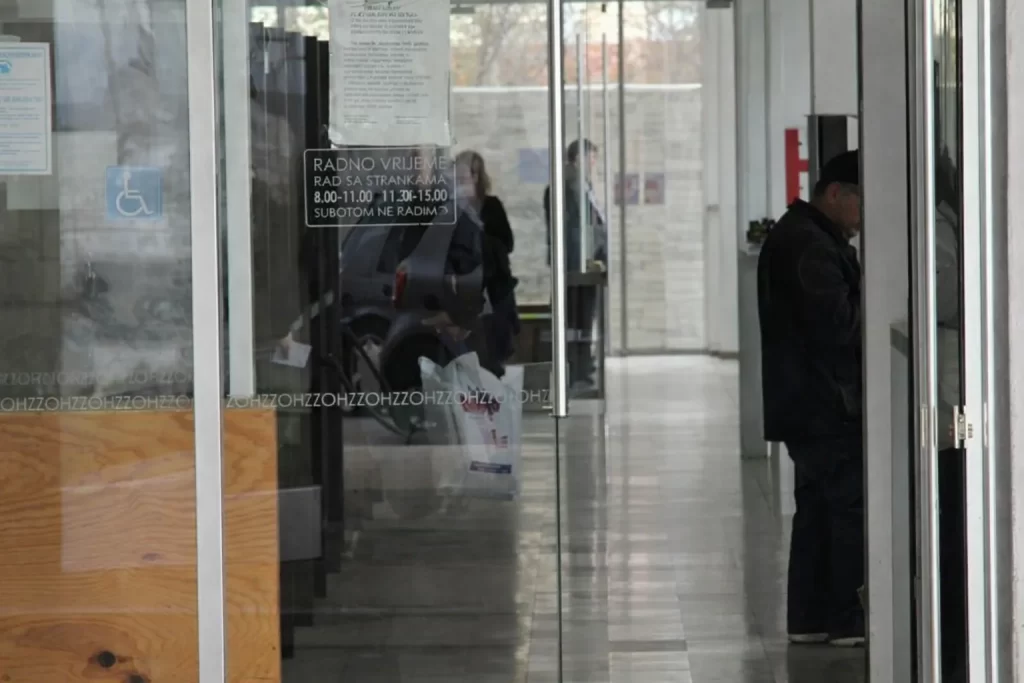
Obvezno zdravstveno osiguranje is the foundation of the Croatian healthcare system, administered by HZZO. All residents of Croatia must have health coverage. Employees and self-employed individuals contribute automatically through payroll deductions, while other residents pay monthly contributions directly.
Obvezno insurance covers:
- Primary care (family doctor visits)
- Specialist consultations
- Hospital treatment
- Emergency care
- Prescription medications
Certain services require copayments, which is why many residents also obtain supplementary coverage.
Dopunsko – Supplementary Insurance
Dopunsko zdravstveno osiguranje is optional supplementary insurance designed to cover the copayments within the public healthcare system. It can be purchased from HZZO directly, private insurers, or some banks.
With dopunsko coverage, out-of-pocket costs for doctor visits, diagnostic tests, hospital stays, and prescription medications are significantly reduced or eliminated. Because dopunsko policies are relatively inexpensive, the majority of Croatian residents carry this additional coverage.
Dodatno – Additional Private Health Insurance
Dodatno zdravstveno osiguranje represents the highest level of private healthcare coverage in Croatia. Unlike dopunsko, which supplements the public system, dodatno insurance provides expanded access to private healthcare services, including:
- Faster specialist appointments
- Preventive examinations
- Extended diagnostics
- Private hospital treatment
Dodatno insurance is offered exclusively by private insurers. Many expats and international residents combine public HZZO coverage with private dodatno insurance to gain faster access to specialists and private clinics.
Is Healthcare Free in Croatia?
Healthcare in Croatia is not entirely free, even for insured residents. While the public healthcare system covers most medical services, patients typically pay copayments for certain treatments, medications, or hospital stays.
| Service | Cost Structure |
| GP visit | Usually fully covered |
| Specialist visit | Small copayment |
| Hospital stay | Daily fee applies |
| Prescription drugs | Partial coverage |
| Emergency care | Covered |
Many Croatian residents purchase supplementary (dopunsko) insurance to cover these copayments. For foreigners obtaining Croatian residency, joining the public insurance system typically means paying monthly contributions plus occasional copayments, rather than full private healthcare prices.
Is Healthcare in Croatia Good?
Overall, healthcare in Croatia is considered good by regional European standards, particularly in major urban centers. Croatia integrates with the broader EU healthcare framework and maintains well-trained medical professionals and strong hospital infrastructure.
Strengths of the Croatian healthcare system include:
- Well-trained doctors and medical professionals
- Strong public hospital infrastructure in cities
- Both public and private providers available
- Integration with EU healthcare standards
However, there are challenges common to many public European systems:
- Waiting times for non-urgent specialist procedures
- Regional gaps in access – rural areas have fewer specialists
- Administrative processes can be complex for newcomers
Many residents and expats use private clinics for faster diagnostics or specialist appointments, while relying on public hospitals for major treatments or emergencies.
Healthcare Costs in Croatia

Healthcare costs in Croatia are significantly lower than in Western Europe or the United States. This is one of the reasons Croatia is frequently ranked among the best places to retire in Europe.
| Service | Approximate Cost (Private) |
| GP visit | Covered by insurance |
| Specialist consultation | €70–150 |
| MRI scan | €250–600 |
| Private dental treatment | €80–300 |
| Blood tests / diagnostics | €40–200 |
| Hospital stay (public, per day) | €10–40 copayment |
These figures apply to private clinics. If you are enrolled in public insurance with dopunsko coverage, many of these costs are reduced to zero or minimal copayments.
Healthcare in Croatia vs USA
For Americans considering a move to Croatia, the cost comparison is striking. Even without public insurance, private healthcare in Croatia is a fraction of US costs.
Healthcare in Croatia vs USA: Cost Comparison
| Healthcare Service | Croatia (Private) | USA (Average) |
| GP visit | Covered by insurance | $150–300 |
| Specialist consultation | €70–150 | $200–500 |
| MRI scan | €250–600 | $1,000–3,000 |
| CT scan | €150–400 | $500–2,000 |
| Blood tests (comprehensive) | €50–150 | $200–800 |
| Dental cleaning | €40–80 | $100–300 |
| Dental filling | €80–200 | $150–400 |
| Private dental treatment | €80–300 | $200–1,000 |
| Hospital stay (per day) | €100–300 | $2,000–5,000 |
For retirees leaving the American healthcare system, enrolling in Croatia’s public insurance (HZZO) combined with a dopunsko supplementary policy typically costs a few hundred euros per month – far less than US premiums.
Healthcare in Croatia for Foreigners and Expats
Foreigners and expats living in Croatia typically access healthcare through a combination of public health insurance and private medical services. The exact structure depends on residency status, length of stay, and whether the person is working, retired, or temporarily residing.
In most cases, foreign residents must first obtain legal residence and then register with HZZO to access the public healthcare system.
Who Must Enroll in Public Insurance?
The following categories of foreign residents are generally required to enroll in HZZO:
- Employed workers in Croatia
- Self-employed individuals registered in Croatia
- Retirees with Croatian residency who do not have coverage from another EU country
- Digital nomads and other non-working residents who hold a Croatian residence permit
Using Private Healthcare as an Expat
While public healthcare covers most medical needs, many expats also use private clinics for certain services. Common reasons include:
- Shorter waiting times for specialist appointments
- English-speaking doctors and medical staff
- Faster diagnostic testing
- Greater convenience and comfort
Private healthcare in Croatia remains relatively affordable compared to Western Europe or the United States, which makes a hybrid approach practical for many residents.
Healthcare in Croatia for Digital nomads
Digital nomads holding a Croatian residence permit have flexibility when it comes to healthcare coverage:
- Private health insurance is mandatory during application: You must provide proof of valid private health insurance covering your entire stay when applying for the digital nomad visa.
- State health insurance (HZZO) is optional: Unlike other foreign residents, digital nomads are exempt from mandatory enrollment in Croatia’s state health insurance system (HZZO).
- You can choose your coverage: After receiving your permit, you may continue using your private policy or optionally enroll in HZZO if you prefer public healthcare access.
This exemption gives digital nomads the freedom to maintain their existing international health insurance or choose a plan that best fits their needs and budget.
Healthcare in Croatia for Retirees

Healthcare is often the deciding factor when evaluating retirement abroad.
Is Healthcare Good in Croatia?
Yes. Croatia has a universal public healthcare system (HZZO) and a well-developed private sector.
Public Healthcare
Once legally resident, retirees may register for Croatia’s public healthcare system. Contributions are relatively affordable compared to US private insurance.
Benefits include:
- Nationwide coverage
- Access to hospitals and specialists
- Low-cost prescriptions
However:
- Wait times can be longer
- Some staff may not speak fluent English
Private Healthcare
Many expats use private clinics for:
- Faster appointments
- English-speaking doctors
- Routine and specialist visits
Private costs are often dramatically lower than in the US.
Healthcare Quality Considerations
Croatia’s healthcare system is generally considered strong for routine and moderate medical care.
Retirees with complex or specialized medical needs should research specialist availability in major cities such as Zagreb or Rijeka.
Understanding how Croatia’s public pension system works is also important for long-term financial clarity.
Health Insurance Costs for Retirees in Croatia
| Insurance Type | Monthly Cost |
|---|---|
| Private international expat insurance | €50 – €150+ |
| Croatian public health insurance (HZZO) | approx. €90 – €100 |
| HZZO supplementary insurance (dopunsko) | about €15 |
Third-country nationals who obtain Croatian residence are generally required to enroll in the Croatian Health Insurance Fund (HZZO) unless covered by another eligible system.
Public health insurance contributions for foreign residents are typically around €90–€100 per month, while optional supplementary insurance (dopunsko) costs roughly €15 per month as of 2026.
Many retirees initially rely on private international health insurance during the residence application process, which typically costs €50–€150+ per month depending on coverage and age.
Once residence is granted, most retirees transition to HZZO coverage, which provides access to Croatia’s public healthcare network.
Foreign Pension Contributions and Health Insurance
Retirees receiving a foreign pension while holding permanent residence (prebivalište) in Croatia should understand how health insurance contributions may be calculated.
If you receive a foreign pension, you are required to inform HZZO of that income. In practice, HZZO will only know about a foreign pension if it is reported by the resident or visible through Croatian financial reporting channels.
Once declared, individuals with foreign pensions may be required to contribute 16.5% of their pension income toward Croatian public health insurance, depending on their residency status and applicable regulations.
The Croatian Tax Administration (Porezna uprava) determines the exact contribution amount based on the pension income reported.
As of 2026:
| Contribution Rule | Amount |
|---|---|
| Minimum monthly contribution | approx. €125 |
| Maximum assessment base | €11,958 |
| Contribution rate | 16.5% of pension income |
These rules are defined under the Zakon o doprinosima (Law on Contributions).
For retirees receiving pensions from countries with higher living standards, the contribution can be significantly higher than the standard HZZO monthly premium typically paid by other foreign residents.
Tax Considerations for Foreign Pensions
In addition to health insurance contributions, retirees should also consider the tax treatment of foreign pension income.
Whether a foreign pension is taxed in Croatia depends on:
- Croatian tax residency status
- the double taxation treaty between Croatia and the pension’s country of origin
- how the pension is structured and paid
Because pension taxation rules vary widely between countries, retirees should review their situation carefully before relocating.
Public vs Private Healthcare in Croatia
| Feature | Public Healthcare | Private Healthcare |
| Funding | HZZO insurance contributions | Direct payment or private insurance |
| Cost | Low (with dopunsko) | Moderate by European standards |
| Waiting times | Longer for non-urgent care | Usually fast |
| Availability | Nationwide | Concentrated in cities |
| Language | Croatian (primarily) | Often English-speaking staff |
| Quality | Generally good | High, modern facilities |
Most expats and long-term residents use both systems: public insurance for major treatments and hospitalizations, private clinics for faster specialist access and diagnostics.
Hospitals and Medical Infrastructure in Croatia
Croatia maintains several major hospital centers known as KBC (Klinički bolnički centar – Clinical Hospital Centers) located in:
- Zagreb (KBC Zagreb, KBC Rebro, KBC Sestre milosrdnice)
- Split (KBC Split)
- Rijeka (KBC Rijeka)
- Osijek (KBC Osijek)
These hospitals provide advanced medical services including:
- Complex surgical procedures
- Oncology treatment and cancer care
- Intensive care units (ICU)
- Emergency services (24/7)
- Specialized departments for all major medical fields
- Modern diagnostic equipment (MRI, CT, PET scans)
Healthcare accessibility tends to be strongest in urban regions, while smaller towns may rely on regional hospitals (opća bolnica) and health centers (dom zdravlja).
Major coastal cities also have well-equipped hospitals serving both residents and the large seasonal tourist population.
How to Register with HZZO
Registering for mandatory public health insurance with the Croatian Health Insurance Fund (HZZO) is a required step for most foreign residents. The process typically follows these steps:
- Obtain a Croatian residence permit (privremeni boravak or stalni boravak)
- Get a Croatian personal identification number (OIB – Osobni identifikacijski broj) from the Tax Administration
- Gather required documents: passport or ID, proof of address in Croatia, OIB number, and residence permit
- Visit your nearest HZZO office (there are offices in all major cities)
- Submit your registration application and pay the first monthly contribution if applicable
- Receive your health insurance card (iskaznica zdravstvenog osiguranja)
Registration with HZZO typically takes place shortly after residency approval. Once registered, you will receive a health card that must be presented at all public healthcare facilities.
Monthly contribution amounts vary depending on your status (employed, self-employed, or inactive). Your employer handles contributions automatically if you are working under a Croatian employment contract.
How to Choose a Family Doctor in Croatia
The family doctor (doktor obiteljske medicine) is your primary point of contact within the Croatian public healthcare system. Choosing a family doctor is one of the first practical steps after HZZO registration.
How to get a family doctor in Croatia:
- Search for available doctors on the HZZO website or contact your local HZZO office
- Check whether the doctor has capacity for new patients (not all doctors accept new patients)
- Contact the doctor’s office to confirm availability and ask about the registration process
- Fill out the registration form (obrazac prijave)
- Submit the form at the doctor’s office, with your HZZO health card and ID
- Wait for confirmation – this is usually processed quickly
Once registered with a family doctor, that doctor becomes your gateway to the public healthcare system. Specialist referrals, diagnostic tests, and sick leave certificates all flow through your family doctor.
If you are unable to find a doctor with availability in your area, contact your local HZZO office for assistance. They are required to assign you a doctor if no private practice is available.
How the Referral System (Uputnica) Works
One of the most important concepts for navigating Croatian public healthcare is the uputnica – the medical referral system.
In Croatia’s public healthcare system, you generally cannot visit a specialist directly without a referral from your family doctor. The uputnica is an official referral document that:
- Authorizes you to visit a specific specialist or diagnostic center
- Is required for the visit to be covered by your public insurance
- Is usually issued during your family doctor appointment
How the uputnica process works:
- Visit your family doctor and explain your symptoms or concern
- If the doctor determines a specialist is needed, they issue an uputnica
- The uputnica specifies the type of specialist (e.g., cardiologist, orthopedist)
- You take the uputnica to book an appointment at the specialist’s office
- The visit is then covered by your HZZO insurance (with any applicable copayment)
Emergency care does not require a referral. You can go directly to a hospital emergency department (hitna pomoć) at any time.
Many expats use private clinics precisely to bypass the referral system and access specialists directly. Private specialist visits do not require an uputnica, but they are paid out of pocket or through private insurance.
Finding English-Speaking Doctors in Croatia
Croatia has a large number of English-speaking physicians, particularly in major cities such as Zagreb, Split, Rijeka, Dubrovnik, and coastal areas popular with expats.
Where to find English-speaking doctors:
- Ask at your nearest HZZO office for a list of English-speaking family doctors in your area
- Expat communities and Facebook groups (such as Expats in Croatia or similar) often maintain informal lists of recommended English-speaking doctors
- Private clinics and polyclinics in major cities almost always have English-speaking staff
- Your country’s embassy in Zagreb may maintain a referral list of English-speaking medical professionals
In tourist and expat-heavy regions such as Istria, Dalmatia, and the islands, many doctors are accustomed to treating international patients and routinely communicate in English, German, or Italian.
If language is a concern in rural areas, bringing a Croatian-speaking friend or translator to appointments can be helpful, especially for complex consultations.
Healthcare in Croatia for Tourists
Tourists visiting Croatia can access medical care through travel insurance, the European Health Insurance Card (EHIC) for EU citizens, private clinics, and emergency services.
Emergency medical services are available nationwide. Croatia maintains modern hospital infrastructure in major cities and tourist regions, and pharmacies (ljekarna) are widely available with extended hours, especially in coastal tourist destinations.
EU citizens with an EHIC card are entitled to access Croatian public healthcare at the same rates as Croatian residents during their visit. Non-EU tourists, including Americans and Canadians, should ensure they have adequate travel health insurance before visiting.
FAQ
Is healthcare good in Croatia?
Yes. The Croatian healthcare system provides a solid level of medical care supported by mandatory public insurance, modern hospitals, and trained physicians. Public hospitals such as Zagreb University Hospital and Split Clinical Hospital Center deliver a wide range of medical services.
Private healthcare clinics in Croatia offer faster access to specialist doctors and shorter waiting times. Overall, Croatia meets EU healthcare standards and is widely considered one of the better-value healthcare destinations in Europe.
Is healthcare free in Croatia for citizens?
Healthcare in Croatia is not completely free. Residents contribute to the system through mandatory health insurance with the Croatian Health Insurance Fund (HZZO).
Some services involve copayments, but most residents purchase dopunsko (supplementary insurance) which removes or significantly reduces out-of-pocket costs for doctor visits, hospital stays, and medical treatment.
Do foreigners get healthcare in Croatia?
Yes. Foreign residents with legal residence permits are generally required to enroll in HZZO public health insurance, which allows them to access Croatia public healthcare on the same basis as Croatian citizens.
Expats may also choose private health insurance policies from international providers such as Cigna Global or Allianz Care for faster access to private clinics and specialist consultations.
What happens if you get sick in Croatia as a foreigner?
Tourists usually rely on travel insurance or private clinics for medical treatment in Croatia. If you are a legal resident enrolled in HZZO, you can use the public healthcare system through your health insurance card.
Emergency medical care in Croatia is available to everyone regardless of insurance status, particularly in urgent or life-threatening situations.
How much does it cost to see a doctor in Croatia?
A GP visit in Croatia is usually covered by public insurance through HZZO. Specialist consultations may require a small copayment unless the patient holds dopunsko supplementary insurance.
Private specialist visits in Croatia typically cost around €70–€150, depending on the clinic and type of treatment.
Private vs public healthcare in Croatia: which is better?
Both systems serve different needs. Public healthcare in Croatia offers comprehensive medical coverage through HZZO and is widely used by residents.
Private healthcare in Croatia provides shorter waiting times, English-speaking doctors, and more flexible scheduling. Many expats combine public insurance with private healthcare access for faster specialist treatment.
How good is healthcare in Croatia for expats?
Healthcare in Croatia is generally considered reliable for expats, particularly in major cities such as Zagreb, Split, and Rijeka, where hospitals and medical facilities are well equipped.
Expats often use a combination of Croatian public healthcare (HZZO) and private clinics to balance affordability with faster specialist access.
Do I need health insurance to live in Croatia?
Yes. Most foreigners living in Croatia must have health insurance as part of their residence permit requirements.
In many cases this means registering with HZZO, although some temporary residence categories may allow approved private international health insurance instead.
Are there English-speaking doctors in Croatia?
Yes. Many doctors in Croatia speak English, particularly in private clinics and hospitals in major cities and tourist regions.
Expats commonly find English-speaking specialist doctors, dentists, and private clinics in Zagreb, Split, Dubrovnik, and other larger cities.
Can I use my US health insurance in Croatia?
Most US domestic health insurance plans do not provide full coverage abroad. Americans living in Croatia usually purchase international health insurance or enroll in the Croatian public healthcare system through HZZO.
Some expats maintain international policies that cover treatment in both Croatia and other countries.
Is dental care affordable in Croatia?
Yes. Dental care in Croatia is widely known for being significantly more affordable than in the United States and many Western European countries.
Private dental clinics offer high-quality treatment, and Croatia has also become a growing destination for dental tourism and specialized dental procedures.
How do expats register for healthcare in Croatia?
Foreign residents typically register for healthcare through the Croatian Health Insurance Fund (HZZO) after receiving their residence permit.
Registration usually requires:
- a valid residence permit
- an OIB personal identification number
- proof of employment or residence status
Once registered, residents receive a health insurance card that allows access to public medical services across Croatia.
Summary
Croatia’s healthcare system offers a genuine combination of affordability, quality, and access that makes it one of the most attractive destinations in Europe for expats and retirees. The public system, administered by HZZO, provides universal coverage for residents, while the private sector fills in gaps with faster access and English-speaking professionals.
The key steps for any foreign resident are: obtain legal residency, register with HZZO, enroll with a family doctor, and consider supplementary dopunsko or private dodatno insurance based on your needs.
With medical costs significantly lower than in the United States or Western Europe, and EU-standard care available in major cities, Croatia stands out as a practical and livable option for long-term relocation.