If you are a foreigner planning to live, work, invest, or start a business in Croatia, one of the first and most important administrative steps is obtaining a Croatia OIB number.
The OIB (Osobni identifikacijski broj) is not just a tax number. It is Croatia’s core personal identification system, used across all legal, financial, and government institutions. Without it, you cannot meaningfully interact with Croatian authorities, open a bank account, register a company, or complete most administrative processes.
In practice, obtaining an OIB is often the first step before residency, banking, or business setup.
My name is Šime Jozipović, founder and CEO of Mandracchio Capital. As a Croatian lawyer based in Split, with a Master of Laws (LL.M.) from Harvard Law School and a doctorate in international tax planning.
For more than a decade, I have advised foreign individuals, investors, and companies on entering the Croatian and EU legal system. In nearly every case, the Croatia OIB number is the starting point.
In this guide, I explain what an OIB is in Croatia, how foreigners can obtain it, and how it connects to residency, banking, taxation, and company formation.
Key Information About the Croatia OIB Number
- Purpose: Required for opening bank accounts, purchasing property, signing utility contracts, employment, company registration, and fulfilling tax obligations.
- Format: 11 randomly generated digits.
- Validity: Assigned once and valid for life.
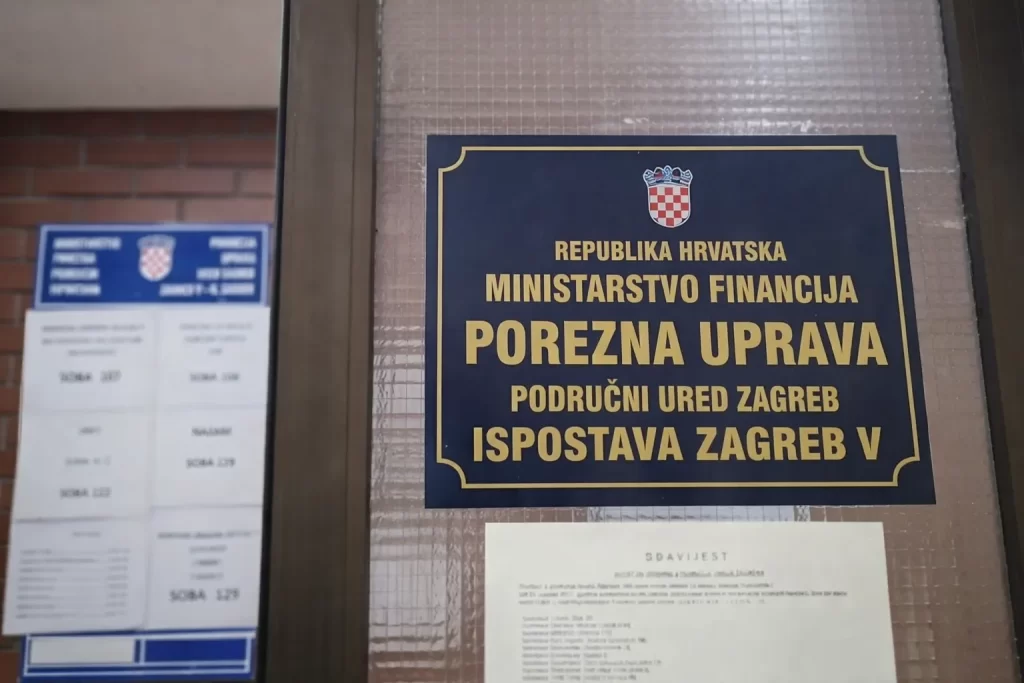
- Issuing Authority: Croatian Tax Administration (Porezna uprava).
What Is the Croatian OIB (Osobni identifikacijski broj)?
The Croatian OIB (Osobni identifikacijski broj) is a unique 11-digit personal identification number required for residents, foreigners, and legal entities to carry out legal, financial, or administrative actions in Croatia.
It is permanently assigned by the Croatian Tax Administration and never expires. Once issued, the Croatia OIB number remains linked to the individual or entity for life.
Foreigners can obtain it in person, through a Croatian embassy, or remotely, with processing time typically taking around eight days depending on the application method.
- Single universal personal ID
- Used for all purposes, including:
- Taxation
- Banking
- Residency permits
- Property ownership
- Company registration
- Health insurance
- Legal and notarial acts
- There is no separate tax number or civil ID alongside the OIB
In practice, the Croatia OIB number combines the roles of personal ID, tax ID, and administrative ID into one system.
Even as the EU prepares for the introduction of the Digital Euro, identification requirements such as obtaining a Croatia OIB number will remain essential for banking, taxation, and compliance purposes.
Why You Need an OIB
From a foreigner’s perspective, the OIB is the entry key into the Croatian administrative system.
Foreign nationals need the Croatia OIB number to:
- Apply for Croatia residence permits
- Open personal or business bank accounts
- Open a mobile phone account
- Register a company (d.o.o. or j.d.o.o.)
- Act as a director or shareholder
- Purchase real estate/ Buy property in Croatia
- Sign long-term contracts
- Pay taxes or receive income
- Register utility services (electricity, water, gas, internet)
- Enroll in the Croatian state health insurance system
Without it, there is no legal or financial footprint in Croatia.
The OIB system applies equally to EU and non-EU nationals. The Croatia OIB number follows the same rules for everyone; differences arise later in residency and work authorization requirements, not at the OIB stage.
Is the OIB the Same as Residency?
Short answer: No. But this is a common misconception. The Croatia OIB number:
- Does not grant the right to live in Croatia
- Does not allow employment
- Is not a residence permit
It is a purely administrative identifier and is often required before residency or company registration can even begin. Many foreigners receive their OIB months before their residence permit is approved.
How to Get OIB in Croatia as a Foreigner
If you are wondering how to get an OIB, the Croatia OIB number can be obtained through several legal channels.
Apply in Person in Croatia
You may apply at any local office of the Croatian Tax Administration.
Typical requirements:
- Valid passport
- Completed application form
- Croatian address (temporary addresses are usually accepted)
Online Application for EU Citizens
EU citizens can apply online, and it is not restricted only to the e-Građani system (which requires existing credentials).
e-Građani: This is typically for people who already have a digital ID (e-Citizens). If you are an EU citizen without a Croatian ID yet, you use the Cross-Border Cooperation Node or the web form mentioned above.
Although the Digital ID is linked to your OIB, they are not the same. For many foreigners, the Croatian OIB and Digital ID (e-Citizens system) are often confused, but they serve very different functions. Read more in our detailed guide: Croatia Digital ID (e-Citizens): What Foreigners Need to Know
Foreigners (both EU and non-EU) may request an OIB remotely by contacting the Croatian Tax Administration through its official “Pišite nam” contact system or designated email channels. Typically, this involves submitting a scanned passport and completed application form. Processing practices may vary by office.
Requirements Checklist
- Passport: Original + Copy.
- Application Form: Usually available in English/Croatian.
- Power of Attorney (POA): If using a representative, this must be in Croatian or translated by a court-certified translator (sudski tumač).
- Fee: You are correct; the OIB is free of charge.
How to Get an OIB in Croatia

Applying for an OIB is straightforward and can be done after arriving in Croatia or even before arrival if you authorize a representative through a power of attorney. There is no requirement to begin the residency application process first.
To apply, you generally only need:
- A valid passport or acceptable identification document
- A completed application form
The OIB is issued free of charge.
Step 1: Complete the OIB Application Form
Applicants must complete the official form:
Zahtjev za određivanjem i dodjeljivanjem osobnog identifikacijskog broja (OIB)
(Application for the determination and assignment of the personal identification number)
The form is available in multiple languages, including:
- Croatian
- English
- German
Step 2: Enclose an Identification Document
When submitting the application, you must present your passport and provide a copy, which will be submitted with the request.
If a passport is not available, the following identification documents may be accepted:
- EU national identity card (for EU citizens)
- National identification document from the country of citizenship, with proof of citizenship
- Croatian ID card (osobna iskaznica), for Croatian citizens
Applications for Companies
If applying for an OIB for a company, the identification document is replaced with a deed of establishment, court decision, or registry extract.
The document must be:
- Written in Croatian, or
- Translated into Croatian by a certified court interpreter
Power of Attorney Applications
If someone applies on your behalf, a power of attorney must be included.
The power of attorney must be:
- Notarized
- Written in Croatian or translated into Croatian by a certified court interpreter
This option is commonly used by foreign founders and investors applying remotely.
Step 3: Submit the Application at the Tax Administration
You may submit your application at any local office of the Croatian Tax Administration (Porezna uprava), regardless of where you intend to live.
In many cases:
- The OIB is issued within minutes
- If not issued immediately, it will be prepared for later collection or sent to your registered address
Once issued, keep the confirmation document in a safe place. If lost, a replacement certificate can be requested at any time.
After your first residence permit is issued, your OIB will also appear on:
- Your residence permit card
- Your Croatian health insurance card, if applicable
OIB for Starting a Business in Croatia
For entrepreneurs, the Croatia OIB number is essential to company formation.
It is required to:
- Register founders and shareholders
- Appoint company directors
- Register with the Commercial Court
- Open a corporate bank account
- Register for VAT when applicable
Each individual involved must have their own OIB, and the company itself receives a separate identifier after incorporation.
OIB and Taxes: What Foreigners Should Know
The Croatia OIB number also serves as your tax identification number.
It is used to:
- Track taxable income
- File personal and corporate tax returns
- Register for VAT
- Link health and pension contributions when applicable
Holding an OIB does not automatically make you a tax resident. Tax residency depends on physical presence, center of life, and applicable double taxation treaties.
How to Check an Existing OIB
Foreigners sometimes need to verify an existing OIB if documentation is lost or the number was issued years earlier. The Croatia OIB number can be confirmed through:
The Croatia OIB number can be confirmed through:
- The Croatian Tax Administration (Porezna uprava):
- In-Person: You can visit any local branch with your passport. They can issue a Duplicate OIB Certificate (Potvrda o OIB-u) on the spot.
- Online Inquiry: There is an official OIB validation tool, but it only confirms whether an OIB is valid, it does not reveal or retrieve an unknown number
- Official Documents and Records:
- Tax & Real Estate Records: If you own property, your OIB is listed on the Title Deed (Vlasnički list) or any local utility bills.
- Financial Records: Check your Croatian bank statements or the original contract used to open the account.
- Company Registry: If you are a director or shareholder of a Croatian company, your OIB is publicly listed in the Court Registry (Sudski registar).
- Notarial Acts: Any contract verified by a Croatian Public Notary (Javni bilježnik) must contain your OIB.
Because the OIB is permanent, it remains valid indefinitely.
Common Mistakes Foreigners Make
Despite its simplicity, errors at the OIB stage can cause delays across banking, residency, and business registration. Common mistakes include:
- Assuming the OIB grants residency rights
- Applying too late in the process
- Errors in name spelling or passport details
- Believing one OIB covers both personal and company use
The OIB system applies equally to EU and non-EU nationals. The Croatia OIB number follows the same rules for everyone; differences arise later in residency and work authorization requirements, not at the OIB stage.
Frequently Asked Questions (FAQ)
What Is an OIB Number in Croatia?
Many newcomers ask what an OIB number in Croatia actually represents. An OIB is Croatia’s official personal and tax identification number, used across all public systems. In practical terms, the Croatia OIB number functions as the reference point for nearly every interaction with authorities, banks, and courts.
Is the Croatia OIB number mandatory for foreigners?
Yes. Any foreigner engaging in legal, financial, or administrative activities in Croatia must have an OIB.
How long does it take to get an OIB?
In-person applications may be processed the same day, while remote applications typically take up to eight days.
Does an OIB expire?
No. Once issued, it is valid for life.
Can I apply for an OIB without living in Croatia?
Yes. Applications can be submitted through embassies, representatives, or official remote channels.
Can foreigners get an OIB in Croatia?
Yes. Foreigners can legally obtain an OIB in Croatia even if they do not yet have residence status. The OIB is available to EU and non-EU nationals and can be issued in person, through a Croatian embassy, or remotely via an authorized representative. It is often required before applying for residence, opening a bank account, or starting a business.
What is the ID number in Croatia?
The primary identification number used in Croatia is the OIB (Osobni identifikacijski broj). It is a unique 11-digit number assigned by the Croatian Tax Administration and used for all legal, tax, banking, and administrative purposes by individuals and legal entities.