Croatia looks like a dream on paper: stunning coastline, safe cities, EU membership, and a booming tourism image. But once you actually try to build a business here, many foreign founders realize something fast: the downsides of doing business in Croatia are real, and Croatia is not a low-friction playground.
Here are the biggest downsides of doing business in Croatia, shared from the perspective of someone who’s been through the process.
Croatia can be a solid EU base if you enter with the right expectations. But for many foreign founders, the biggest shock isn’t the market, it’s the system friction.
Below are the most common downsides of doing business in Croatia that foreigners experience, without the doom-and-gloom.

Doing business in Croatia: a brief context
Croatia offers a stable EU legal framework, full foreign ownership in most sectors, and access to the single market. It attracts foreign founders through lifestyle appeal, strategic location, and growing international interest in tourism, real estate, and services.
At the same time, Croatia operates within a structured, rules-heavy administrative system. Processes tend to be formal, document-driven, and easier to navigate with local experience. Understanding this broader landscape helps explain why many of the downsides below tend to surprise foreign founders.
Who this article is for
This article is written for foreign founders, investors, and operators who are seriously Starting a business in Croatia, considering it as a business base, not for short-term freelancers or digital nomads passing through.
If you’re planning to register a company, hire locally, invest capital, or operate long-term in the EU, these downsides are the ones that tend to matter most in practice.
Bureaucracy is heavy (and time-consuming)
Croatia is not a “fast admin” country. Many processes involve multiple steps, paperwork, and waiting periods, even for simple business tasks.
For foreigners, the hardest part is that timelines can be unclear, so planning operations (or launching quickly) becomes difficult.
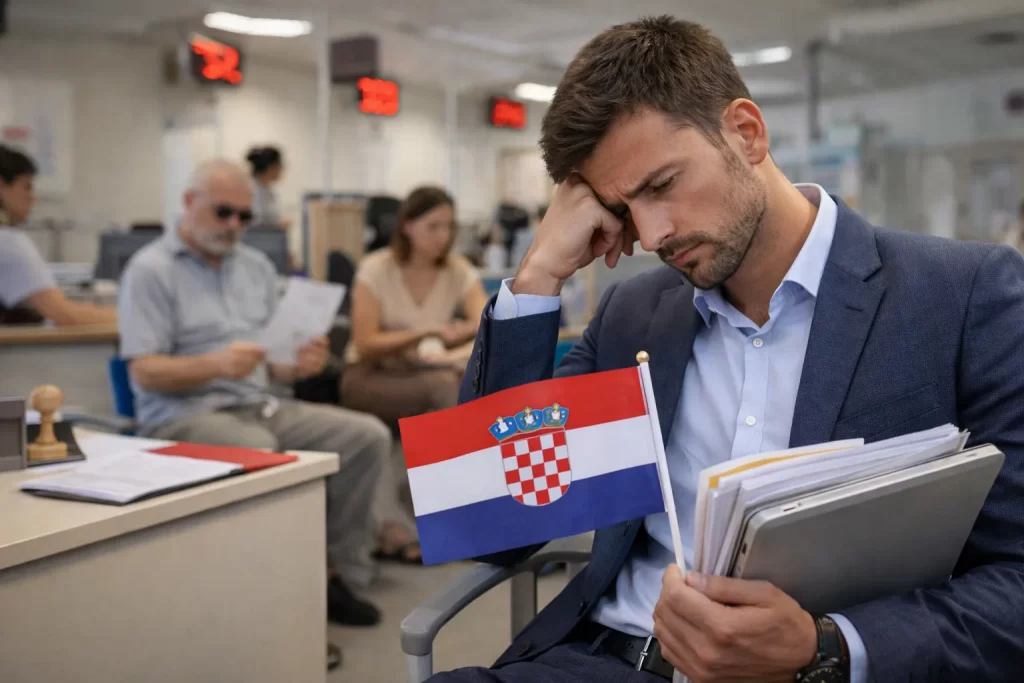
Things can move slower without local context
Even when the rules exist on paper, foreigners often struggle because they don’t know:
- which office handles what
- what documents are “must-have” vs “nice-to-have”
- what order steps should be done in
- how to avoid re-submitting or getting delayed
This doesn’t mean it’s corrupt, it means the system is easier for locals who already understand it.
Hiring costs can be higher than expected
Foreign founders are often surprised by the full employer cost of hiring, beyond the net salary.
So while Croatia can have strong talent, building a team requires careful budgeting and good payroll planning.
Hiring costs are still lower than in the US or UK, but often higher than foreign founders initially expect. This gap usually comes from employer contributions and payroll obligations beyond net salary, which makes careful budgeting essential when building a team in Croatia.
Taxes and recurring fees can feel complex
There are multiple layers: payroll-related costs, corporate taxes, and other required payments depending on your setup.
It’s manageable, but foreigners often underestimate how important proper accounting structure is from day one.
Tourism can work but it’s not “plug-and-play”
Tourism isn’t a bad sector at all (Croatia is famous for a reason).
But for foreigners, the challenge is that tourism is highly seasonal, operationally heavy, and often requires strong local coordination.
If you’re entering tourism, it’s best to do it with:
- clear compliance planning
- reliable local partners
- realistic expectations on seasonality and margins
Banking can be slow and conservative
Opening and maintaining business banking in Croatia can take longer than foreign founders expect, especially for non-EU owners.
Banks are conservative, compliance-driven, and often require in-person visits, translated documents, and additional explanations about business activity.
This isn’t unique to Croatia, but it can slow down early operations if banking isn’t planned early.
Company ownership does not automatically mean residence
One common misconception among foreign founders is assuming that owning or registering a company in Croatia automatically gives them the right to live there.
It doesn’t.
Company ownership and immigration status are handled under separate legal frameworks. You can fully own a Croatian company, even 100%, without having the right to reside in the country long-term.
For non-EU founders in particular, residence usually requires:
- A separate temporary residence permit
- A valid legal basis (such as work, business activity, or other qualifying grounds)
- Compliance with timing, documentation, and renewal rules
This distinction often catches founders off guard. They successfully set up the company, only to realize later that their ability to stay in Croatia is still limited to short stays unless residence is properly arranged.
The takeaway: business structure and immigration planning need to be aligned from the start, especially if you intend to operate on the ground rather than remotely.
The practical takeaway
Croatia can absolutely work for foreign founders especially when you:
- Structure your business correctly from day one
- Choose the right industry and operating model
- Avoid improvising around legal and tax obligations
The real advantage comes from having a strong local “shield”: a high-quality lawyer and accountant who keep you compliant, efficient, and future-proof.
That’s exactly why Mandracchio Capital exists: to help foreign founders build in Croatia safely, legally, and strategically.
In practice, this means working with advisors who are:
- Independent from the “old system”
- Not pushing risky shortcuts
- Experienced in structuring foreign-owned businesses correctly from the start
Frequently asked questions – downsides of doing business in Croatia
Is Croatia bad for foreign businesses?
No. Croatia can work well for foreign businesses, but it isn’t low-friction. Most challenges come from bureaucracy, system complexity, and unfamiliar processes rather than from the market itself.
Is Croatia cheaper than Western Europe for hiring?
Generally, yes. Hiring costs in Croatia are still lower than in Western Europe, but they are often higher than foreign founders initially expect once employer contributions and payroll obligations are included.
Can foreigners own 100% of a Croatian company?
Yes. Foreigners can legally own 100% of a Croatian company in most industries. Ownership, however, does not automatically grant residency or work rights in Croatia.
Is bureaucracy getting better in Croatia?
Gradually, yes. Some processes have improved through digitalization, but many administrative procedures remain slow and document-heavy, especially for foreigners without local guidance.