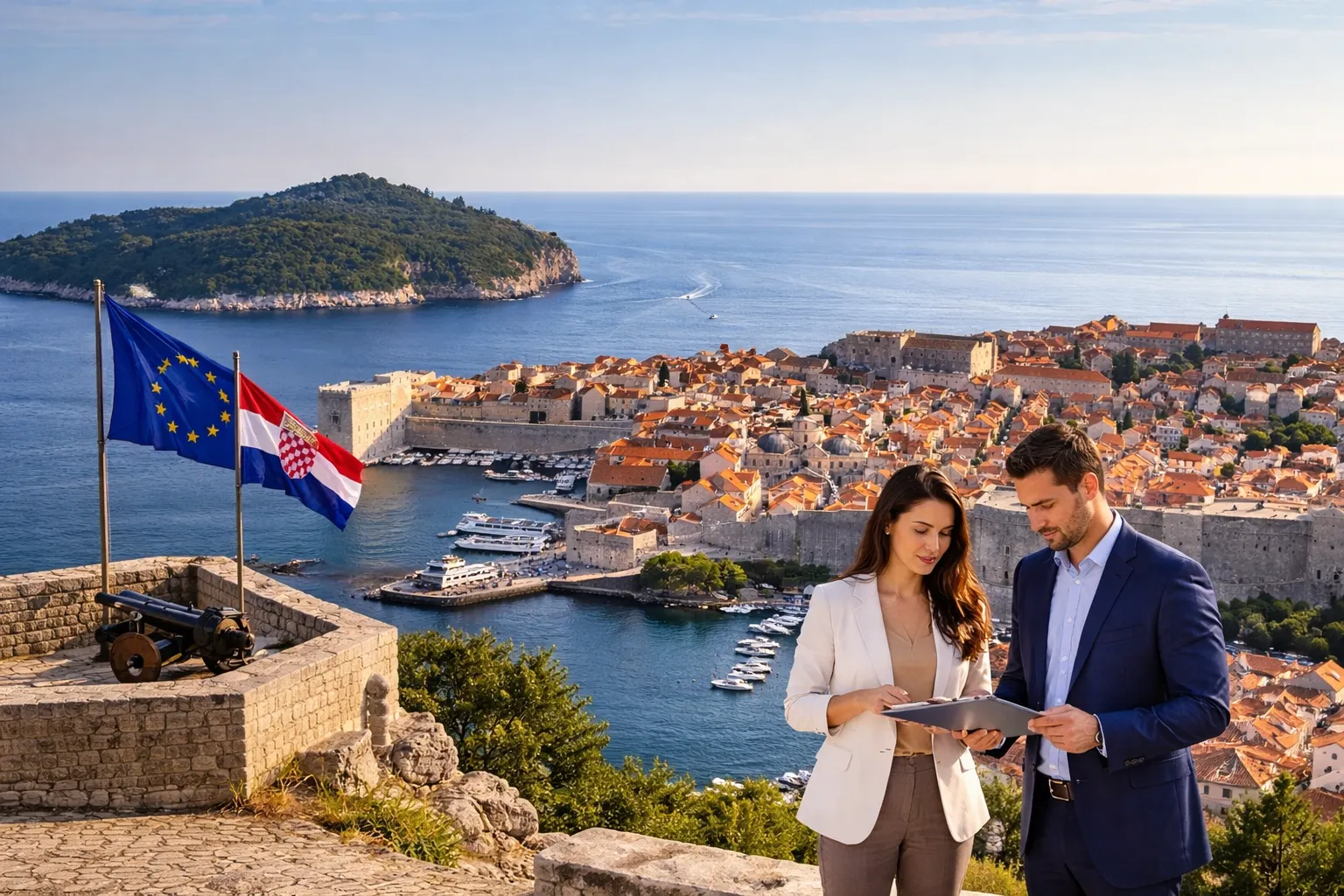
Croatia may be smaller than some of its EU neighbors, but its potential for investors is undeniable. Since joining both the Eurozone and Schengen, Croatia has evolved into one of Europe’s most stable and connected economies – a place where opportunity meets lifestyle.
In this guide, we’ll break down the most promising investment opportunities in Croatia, how foreign investors can legally enter the market, and why the country is rapidly becoming a strategic base for entrepreneurs, investors, and global companies.
Key Takeaways
- Many investment opportunities in Croatia as it is a stable, Eurozone-based country with rising GDP and investor confidence.
- Key sectors include tourism, clean energy, IT, real estate, and manufacturing.
- Strong investment incentives and EU support make entry easier.
- Strategic location + lifestyle = a rare blend of business and wellbeing.

Why Foreign Investors Choose Croatia?
Foreign investors can:
- Establish or co-found Croatian companies
- Acquire shares, rights, and obligations on equal terms
- Participate fully in commercial and investment activities
Croatia offers a rare and powerful combination of economic strength, regulatory stability, and an unparalleled Mediterranean lifestyle. For founders and investors, the timing has never been better to explore the growing investment opportunities in Croatia and establish a long-term base in the region.
Croatia’s investment security is built on its status as a fully integrated European nation: it’s a member of the EU, the Schengen Area, and the Eurozone. This integration guarantees frictionless access to the vast Single Market and eliminates currency risk for Euro transactions. Economically, the country is stable, projecting over 3% GDP growth in 2026, driven by EU funding, a resilient labor market, and strong domestic demand.
The government continues to attract capital with compelling incentives. A key advantage is the potential for Profit Tax Rate Reductions up to 100% for substantial projects meeting investment and job creation criteria. These incentives – combined with streamlined access to EU funding sources – support high-value sectors such as R&D, IT, clean energy, and advanced manufacturing. This environment expands the range of investment options in Croatia for both early-stage investors and established global firms.
In essence, Croatia offers a uniquely balanced proposition: the financial and regulatory security of a top-tier European economy, matched with a superior quality of life. This makes it a secure, competitive, and highly appealing hub for business expansion, relocation, and the retention of top international talent.
But Croatia is not a shortcut market.
While the country offers real upside for investors, it also requires patience, local understanding, and proper structuring. Administrative processes can move slower than in larger EU economies, rules are applied conservatively, and success depends less on headline investment amounts and more on substance, compliance, and long-term commitment. For a candid breakdown of the challenges foreign founders actually face, see our detailed analysis on the downsides of doing business in Croatia. For investors who approach Croatia strategically, this is manageable but it’s not a place for passive or hands-off execution.
Legal Guarantees for Foreign Investment
Croatia’s investment framework is anchored in its Constitution, which provides strong legal protection for foreign capital. In particular:
- Rights acquired through investment cannot be restricted retroactively by law or administrative acts
- Free transfer and repatriation of profits and invested capital are guaranteed
- Investors benefit from Croatia’s alignment with EU legal standards and protections
These guarantees create a predictable and secure environment for both strategic and portfolio investors.
Access to the EU Market & Global Value Chains
As a full EU Member State, Croatia offers direct access to:
- The EU Single Market of 500+ million consumers
- EU trade frameworks, supply chains, and regulatory harmonisation
Croatia has also identified 13 strategic global value chains where it aims to specialize and attract investment. Priority sectors include:
- Biopharmaceuticals
- Healthcare services
- Sustainable food production and processing
- Intelligent transport systems
- Information and communication technology (ICT)
For each of these sectors, Croatia has developed targeted action plans designed to attract capital, technology, and expertise into globally competitive segments of the economy.
Real Estate & Property Ownership for Foreigners
Property ownership rules depend on nationality:
- EU citizens and EU-based legal entities may acquire real estate in Croatia under the same conditions as Croatian nationals (with limited exceptions such as agricultural land and protected areas).
- Non-EU nationals may acquire property only if reciprocity exists between Croatia and their home country.
Importantly, a Croatian company (d.o.o.), once established, is considered a domestic legal entity and may acquire property without these restrictions, a structure frequently used by foreign investors.
EU Funding, Grants & Incentives
Croatia provides extensive access to:
- EU structural funds
- Recovery and Resilience Facility (RRF) programs
- National investment incentives
Foreign investors do not need Croatian citizenship or prior residence to apply for many EU grant programs. However, if funding is awarded, the investor must establish a Croatian presence before funds are disbursed.
This makes Croatia particularly attractive for projects in:
- Innovation & R&D
- Green energy
- Digital transformation
- Advanced manufacturing
A Business Environment Built for Stability
Croatia combines:
- Political and economic stability
- A highly educated, multilingual workforce
- Modern transport and logistics infrastructure
- Competitive corporate tax rates (10–18%)
- Investment incentives that can reach up to 100% profit tax relief for qualifying projects
Together, these factors position Croatia as a safe, EU-aligned gateway for companies seeking both regional reach and long-term operational certainty.
5 Key High-Growth Investment Sectors
Croatia’s economy is diversifying rapidly. Here are the industries currently driving growth and attracting foreign investment:
1. Tourism & Hospitality Evolution

Croatia’s tourism model is shifting from high-volume seasons to high-value, sustainable development:
- Coastal redevelopment and marina upgrades
- Family hotels & heritage renovations
- Eco-resorts and wellness facilities
- Boutique hotel concessions
Related reading: Tourism Projects & Concessions in Croatia (2026 Guide)
2. Clean & Renewable Energy
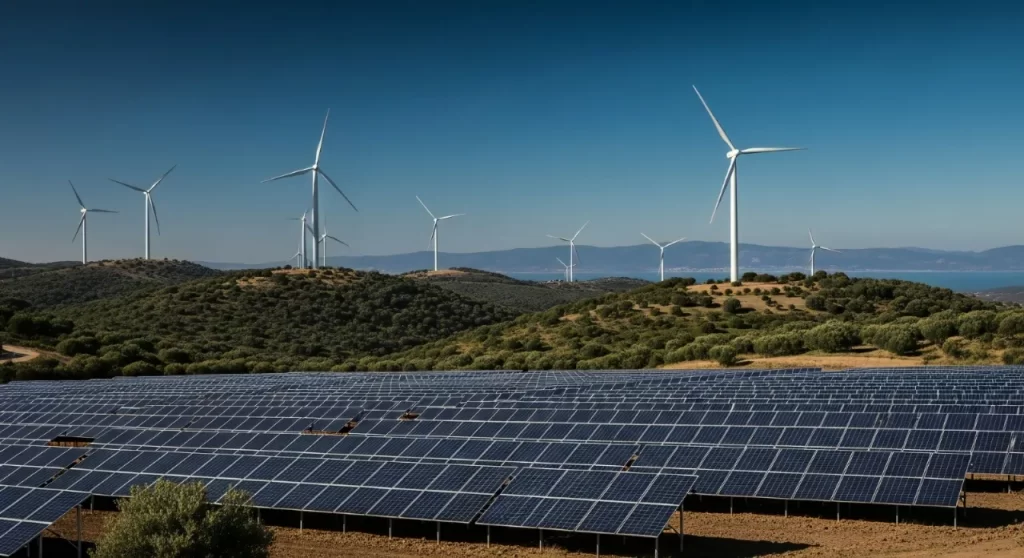
Croatia is aggressively expanding its renewable capacity with EU support.
- Wind, solar, geothermal projects
- Grid expansion and energy storage
- Government-backed incentives for green transition
Croatia plans to add 2,500 MW of new renewable capacity by 2030 – one of the region’s fastest growth plans.
Related: EU Funding Programs for Expansion
3. Technology & Digital Infrastructure

Zagreb, Split, and Rijeka are becoming recognized tech hubs.
The development of major tech parks (including the largest tech park recently opened in Split) signals long-term commitment to innovation.
Related reading: Tech Sector Investment in Croatia
4. Real Estate & Coastal Development
The Adriatic remains a magnet for long-term investors:
- Luxury coastal developments
- Mixed-use complexes
- Long-term rental and expat housing
- Strategic redevelopment zones
See more: Buying Property in Croatia (Guide for Foreigners)
5. Manufacturing, Pharmaceuticals & Agritech
Croatia is positioned as a production bridge between Western Europe and the Balkans.
- Pharmaceuticals & medical devices
- Food processing & agritech
- Automotive components & precision manufacturing
- Industrial zones with incentive eligibility
Well-developed logistics links (ports, highways, EU corridors) make Croatia a cost-efficient production base.
For further exploration, please read Key Sectors Attracting Foreign Investment
Investment Incentives and Tax Benefits
Croatia doesn’t just welcome investors, it actively rewards them. Through tax reliefs, grants, and employment incentives under the Investment Promotion Act, qualifying projects in manufacturing, innovation, R&D, and high-value services can significantly reduce operating costs.
With a 10–18% corporate tax rate, a low 3% real estate transfer tax, and strong access to EU funding programs (including the Recovery and Resilience Facility), Croatia offers one of the most competitive investment environments in the EU.
The result is a market that is stable, transparent, and designed for long-term returns across sectors such as technology, renewables, tourism, and advanced manufacturing.
To see how these incentives work in practice – and which projects qualify – explore our in-depth guide: Croatia Investment Incentives Explained: What Foreign Investors Can Actually Claim
For official details on current investment promotion measures, visit the Ministry of Economy and Sustainable Development.
A Strategic Gateway for Global Entrepreneur
Beyond business, Croatia offers residency by investment and relocation options for entrepreneurs, investors, and families who want to establish a European base.
Its location-bordering Italy, Slovenia, Hungary, and the Adriatic – positions it perfectly for trade, logistics, and lifestyle.
Foreign investors can:
- Establish a Croatian company (d.o.o.) and gain temporary residence
- Invest in real estate and apply for residence based on ownership
- Benefit from double taxation agreements with over 60 countries
Market Challenges & Regulatory Realities
No country is without challenges, and Croatia’s business environment still faces bureaucracy, slow court processes, and regional inconsistencies.
However, ongoing digitalization, judicial reforms, and EU funding are improving transparency and efficiency across the board.
The trend is clear: Croatia is steadily shifting from a tourism-dependent market to a diversified EU hub for innovation, sustainability, and entrepreneurship.
Read more: Doing Business in Croatia: What Foreign Investors Should Know
About Mandracchio Capital
At Mandracchio Capital, we help international clients build, move, or expand their businesses in Croatia with clarity and regulatory confidence. We are legal experts who guide you through the full process, connect you with the best tax consultants and lawyers in Croatia, and ensure your company setup, compliance, and documentation are handled correctly.
Whether you want to start a company in Croatia, move your company to Croatia, open a branch in Croatia, establish a new European base, launch a lifestyle business, or plan a long-term relocation, Mandracchio Capital is your trusted destination for entering Croatia with precision and support.
Frequently Asked Questions
1) Is Croatia a good place to invest?
Yes. Croatia offers a range of opportunity for investment in Croatia supported by EU membership, Euro currency stability, steady GDP growth, and expanding government incentive programs.
2) What are the best sectors to invest in Croatia?
Some of the most attractive investment options in Croatia are concentrated in high-potential sectors such as: tourism, renewable energy, IT/technology, real estate, manufacturing, and life sciences.
3) Can foreigners own companies or property in Croatia?
Yes. Foreigners can establish and own Croatian companies.
Property ownership is unrestricted for EU citizens; non-EU citizens may purchase through reciprocity rules and approval.
4) What is the corporate tax rate in Croatia?
Corporate income tax is 10% for companies with annual revenue ≤ €1M, and 18% for larger enterprises.
5) What residence permit do I need to invest in Croatia?
Most foreign investors apply for temporary residence based on business or company ownership. This typically requires establishing or investing in a Croatian company, demonstrating active business operations, and meeting minimum capital, employment, and compliance requirements. The permit is issued annually and can lead to permanent residence after five years if maintained correctly.
6) Can I invest in Croatia through a company, and how should it be structured?
Yes, many foreign investors use Croatian companies to invest in businesses, real estate, or long-term projects. However, how the company is structured matters far more than simply forming one. The wrong setup can lead to residency issues, tax inefficiencies, compliance delays, or weak asset protection, especially when investment and residence planning are not aligned from the start.
If your goal involves residency by investment, property acquisition, or capital deployment in Croatia, structure comes before execution.
Explore our Investor Services to structure your investment entity correctly.
7) How to form a company or start an LLC (d.o.o.) in Croatia?
To start an LLC (d.o.o.) in Croatia, you’ll need a notarized founding document (Articles of Association/Declaration), deposit share capital (min €2,700), open a corporate bank account, register with the Trade Register (court), get an OIB (tax ID), and register for taxes/pensions, often using the online START system for citizens or a local agent/notary for foreigners, while ensuring proper registration with Croatian Pension (HZMO) & Health (HZZO) funds and getting necessary licenses. See our full guide: Company Formation in Croatia: Common Company Type for Foreign Investors