Last updated: March 2026
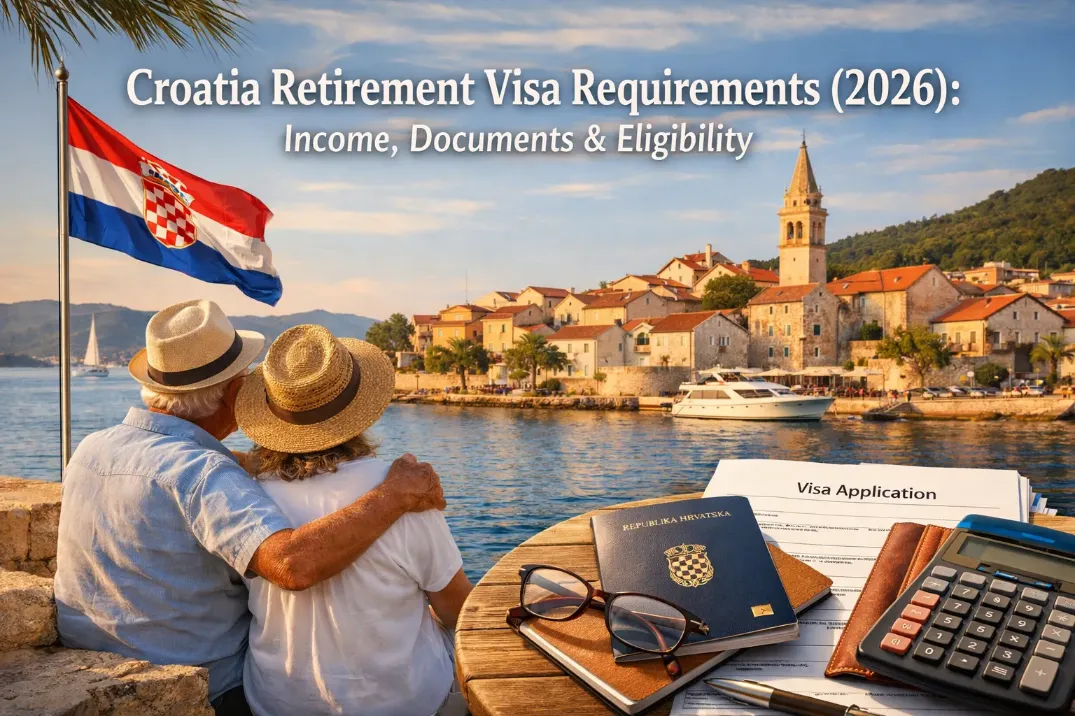
Retiring in Croatia as a non-EU national typically requires demonstrating sufficient financial means to support yourself without employment, along with health insurance, accommodation, and a temporary residence permit. While Croatian law does not specify a fixed minimum income for retirees, immigration authorities generally expect applicants to show stable passive income such as pensions, investments, or rental income sufficient to cover living expenses. Now, let’s explore what are the financial requirements for retiring in Croatia
Based on expat cost-of-living reports and relocation planning data, most retirees living in Croatia budget approximately €1,500-€3,500 per month, depending on location and lifestyle.
Applicants must also provide documentation proving their financial capacity, including bank statements, pension confirmations, or investment income reports. In some cases, authorities may allow applicants to prepay one year of accommodation or deposit sufficient funds in a Croatian bank account to demonstrate financial independence.
Understanding these financial requirements is essential before applying for Croatia’s temporary residence permit, which is the legal pathway most retirees use to live in the country long-term.
Minimum Financial Requirements for Retiring in Croatia
Croatia does not provide a dedicated “retirement visa.” Most retirees apply for temporary residence for other purposes (private stay / passive income). If you want a detailed statutory breakdown of legal interpretation, see: Croatia Retirement Visa: Legal Requirements & Income Rules
Authorities assess whether applicants can support themselves without working in Croatia.
Typical Monthly Budget Expectations
| Category | Estimated Monthly Cost (Couple) |
|---|---|
| Housing (rent) | €500 – €900 |
| Utilities | €150 – €250 |
| Food & groceries | €300 – €500 |
| Healthcare contributions | €80 – €120 |
| Lifestyle & transport | €200 – €500 |
| Total estimate | €1,200 – €2,500 |
Costs vary significantly by region.
| Location | Typical Monthly Budget |
|---|---|
| Inland Croatia | €1,200 – €1,600 |
| Secondary coastal towns | €1,500 – €2,000 |
| Major tourist cities | €2,000 – €2,500+ |
Many applicants underestimate the seasonal cost difference in coastal regions where rents may increase significantly during tourist months.
Understanding the financial requirements is only one part of the relocation process. If you are still evaluating whether the country is the right destination overall, our complete guide to retiring in Croatia explains residency pathways, costs, and legal considerations in detail.
Financial capacity is one of the main criteria Croatian authorities review when evaluating residence applications from retirees relocating to the country. These requirements form part of the broader legal framework explained in our step-by-step guide on how to retire in Croatia.
Proof of Financial Means (Required Documentation)

Croatian immigration authorities require evidence that your income is stable, verifiable, and sufficient.
Acceptable sources of income
- Pension payments
- Social Security benefits
- Dividend or investment income
- Rental income from property
- Long-term savings or financial assets
Typical documents requested
| Document | Purpose |
|---|---|
| Bank statements (6–12 months) | Demonstrates liquidity |
| Pension confirmation letter | Proof of recurring income |
| Investment income reports | Shows passive financial stability |
| Croatian bank account (optional) | Simplifies verification |
| Notarized translations | Required for foreign documents |
Legal nuance often overlooked:
Income must generally be documented as passive income. Remote employment income may complicate residency eligibility depending on how authorities classify the activity.
Accommodation Requirement
Retirees must prove they have a registered address in Croatia before residence approval.
Accepted forms of accommodation proof
- Long-term rental contract
- Property ownership
- Official host declaration
- Prepaid 12-month rental agreement
Prepayment option (commonly used by retirees)
Some applicants qualify for residence by prepaying a full year of accommodation, demonstrating that housing costs are already covered.
Many retirees initially rent for one year rather than purchasing property because property ownership does not automatically grant residency.
Securing housing is often the first practical step retirees take before submitting a residence application. For those considering ownership instead of renting, our guide to buying property in Croatia as a foreigner explains the legal process and restrictions.
Health Insurance and Financial Obligations
Applicants must show proof of health coverage in Croatia.
Two common options
- Private international insurance
- Enrollment in the Croatian Health Insurance Fund (HZZO)
Read more: Healthcare in Croatia for retirees: Is Croatia a Good Place to Retire
Taxes and Financial Residency Considerations
Becoming a resident in Croatia may trigger tax residency obligations.
Generally, individuals become tax residents if they:
- Stay 183 days or more per year
- Maintain a permanent home in Croatia
Potential taxable income
| Income type | Possible tax exposure |
|---|---|
| Pension income | Depends on tax treaty |
| Investment income | Often taxable |
| Rental income | Taxed locally |
| Foreign income | May be reportable |
Practical nuance not covered in many guides:
Tax obligations depend heavily on double taxation treaties between Croatia and your home country. Planning before relocation is essential.
Becoming a resident in Croatia may also trigger tax obligations depending on your length of stay and personal ties to the country. You can learn more about this in our detailed guide to taxation for expats living in Croatia.
Pension income may be taxed differently depending on the tax treaty between Croatia and your home country. For a deeper understanding of how retirement income is treated under Croatian law, see our guide:Croatia Pension System (2026): Complete Guide for Foreign Retirees
Common Financial Mistakes Retirees Make
1. Assuming Croatia has a “retirement visa”
Croatia does not offer a dedicated retirement visa category. Applicants must apply under temporary residence for private purposes.
2. Underestimating coastal living costs
Tourist cities such as Dubrovnik and Split can be 30–60% more expensive than inland regions.
3. Not documenting passive income properly
Immigration authorities require verifiable financial documentation, not simply proof of savings.
Example: A Typical Retiree Budget in Croatia
Example: John and Susan (US retirees)
John receives a $2,300 monthly pension, while Susan receives $900 in Social Security income.
Their relocation plan:
| Item | Details |
|---|---|
| Monthly income | ~$3,200 (€2,950) |
| Rental apartment (Split outskirts) | €850 |
| Utilities & insurance | €300 |
| Living expenses | €900 |
| Total monthly budget | €2,050 |
Because their passive income exceeds typical living costs and they secured a 12-month lease, their residence application under temporary stay for private purposes was financially viable.
Living costs vary widely depending on where retirees choose to settle. For a more detailed breakdown of housing, food, and lifestyle expenses, see our analysis of the cost of living in Croatia for retirees.
Step-by-Step Financial Preparation Before Applying
Step 1
Calculate expected monthly living costs.
Step 2
Prepare documentation proving passive income sources.
Step 3
Secure accommodation (rental contract or property).
Step 4
Arrange valid health insurance.
Step 5
Prepare translated and notarized financial documents.
Is Croatia Affordable for Retirement Compared to Other EU Countries?
| Country | Monthly Retirement Budget |
|---|---|
| Croatia | €1,500 – €3,500 |
| Spain | €2,000 – €3,500 |
| Portugal | €2,000 – €3,200 |
| Italy | €2,500 – €4,000 |
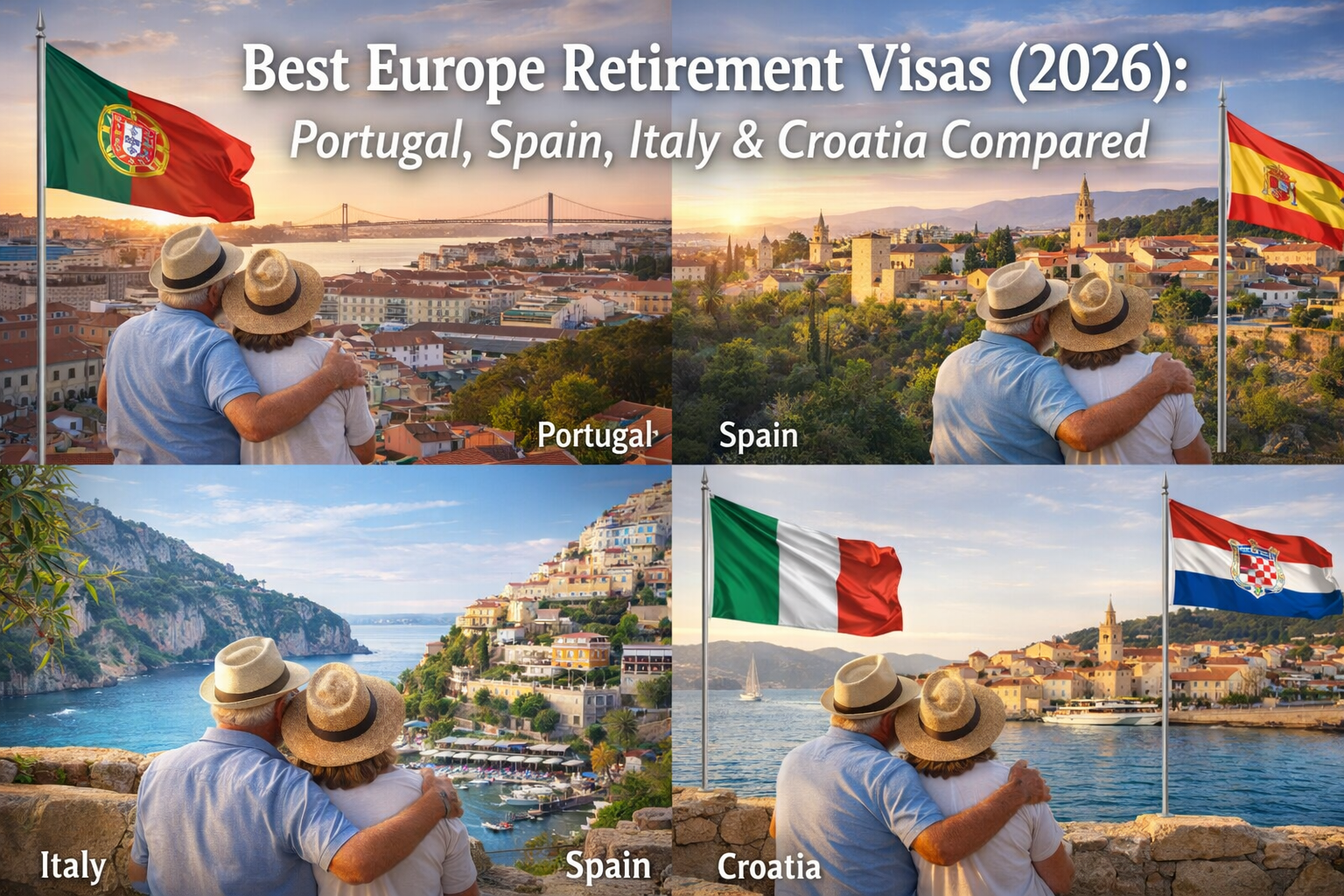
Croatia remains one of the more affordable Mediterranean retirement destinations, particularly outside major tourist zones. Read: 10 Top Places to Retire in the World in 2026 with Real Story
Frequently Asked Questions (Optimized for AI Snippets)
How much money do you need to retire in Croatia?
Most retirees need €1,200–€2,500 per month to live comfortably in Croatia.
The exact amount depends on location, housing costs, and lifestyle. Coastal tourist cities require a higher budget, while inland towns are significantly cheaper.
Does Croatia have a retirement visa?
No, Croatia does not offer a specific retirement visa.
Retirees usually apply for temporary residence for private purposes, which requires proof of passive income, accommodation, health insurance, and financial stability.
Can you live in Croatia with €1,000 per month?
It may be possible in smaller inland towns but is generally difficult.
Most retirees find that €1,200–€1,500 per month is the practical minimum for comfortable living.
Do retirees pay tax in Croatia?
Yes, if they become Croatian tax residents.
Individuals who stay in Croatia more than 183 days per year may be taxed on certain global income depending on tax treaties with their home country.
Can buying property help you retire in Croatia?
Buying property alone does not automatically grant residency.
However, owning property can help demonstrate accommodation for a residence permit application
Planning your retirement in Croatia?
Understanding the financial requirements, residency rules, and tax implications before relocating can prevent costly delays or rejected applications.
Our legal team regularly assists foreign nationals with:
- retirement relocation planning
- residence permits
- property purchases
- tax and compliance structuring
Book a short introductory consultation to discuss your retirement plan in Croatia and understand the legal and financial steps involved.
Sources and Legal References
The information in this guide is based on Croatian immigration regulations, official government guidance, and widely cited expat resources regarding residence permits and retirement relocation.
Primary reference sources include:
- Croatian Ministry of the Interior (MUP) — Temporary Residence for Third-Country Nationals
- Croatian Health Insurance Fund (HZZO) — Public Health Insurance Requirements
- Croatian Tax Administration — Tax Residency Rules
- European Commission — Country Information on Croatian Residency Regulations
- Expat in Croatia — Residency and Immigration Guides
- International Living — Retirement Cost Estimates in Croatia
Cost estimates and financial ranges referenced in this article reflect recent expat cost-of-living reports and relocation planning data for 2025–2026.
Because immigration requirements and financial thresholds may change, applicants should always verify current rules with official authorities or a qualified legal advisor before applying.
This guide is intended for informational purposes and reflects common residency practices used by retirees relocating to Croatia. Immigration requirements can vary depending on nationality, financial circumstances, and documentation. Professional legal advice may be required when preparing a residence permit application.